Read the Printed Fill Mark on a Milk Carton Versus the Serving Measure
A milk carton carries at least three different numbers that all involve volume, and none of them automatically tells you how much milk to pour into a drink. The net contents printed on the side state what the sealed carton holds in total. The nutrition facts panel lists a serving size used for labeling purposes. Your recipe or drink plan names a third amount entirely. Mixing these up leads to either a weak matcha latte or an unexpectedly empty carton before the week ends. This article walks through how to read each figure, why they differ, and how to use all three together when planning a home-cafe drink without inventing results that only a controlled test could confirm.
Read the note ↓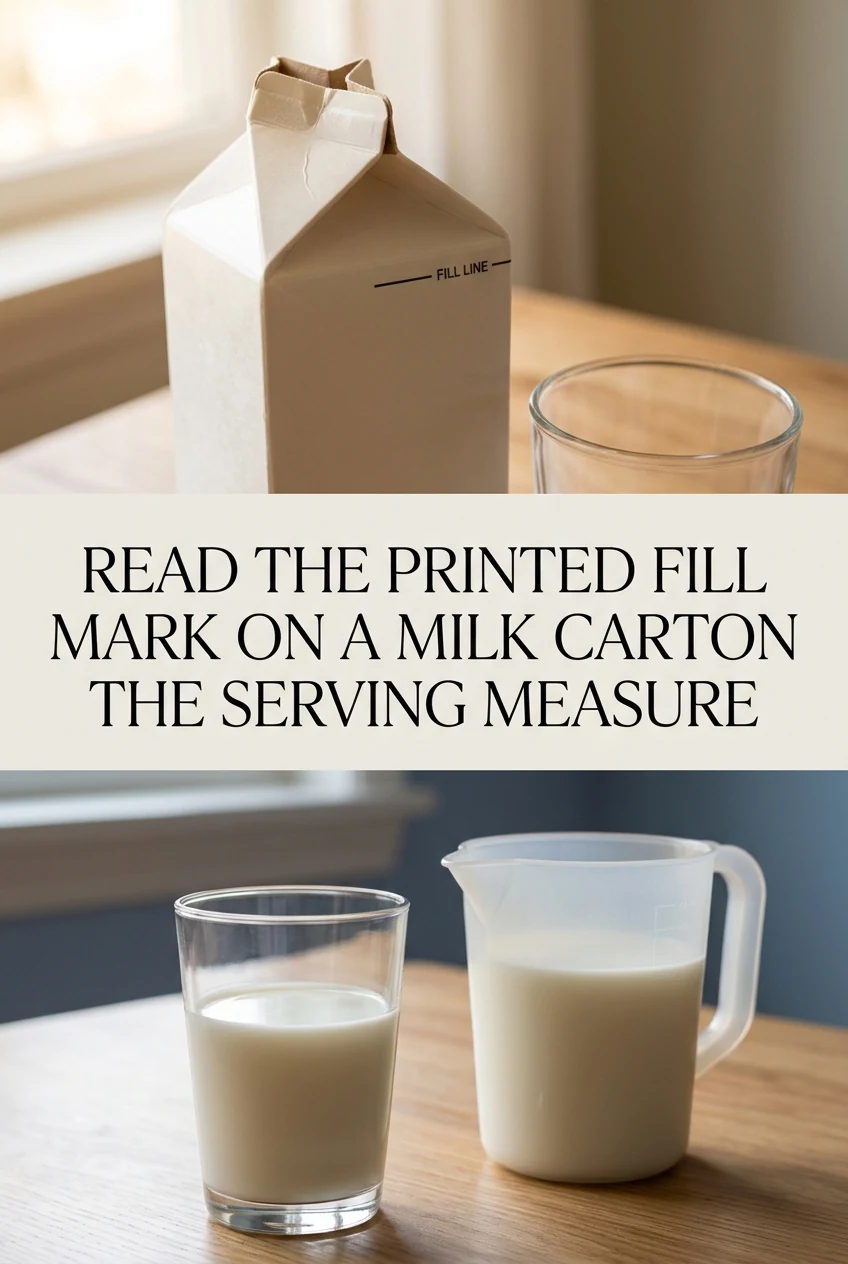
AI-generated editorial concept created for this article. The image is not a technical diagram or a tested result.
What the Net Contents Line Actually Tells You
The net contents declaration appears on the principal display panel of the carton, usually near the bottom. It states the total volume the manufacturer filled into that package, expressed in fluid ounces, milliliters, or both. A common small carton might read 236 mL or 8 fl oz. A larger format might read 1.89 L or 64 fl oz. This number is a regulatory statement about the package, not a suggestion for how much to use at once. It tells you the upper limit of what is available inside, nothing more. When you are planning how many drinks a single carton can supply, this is the figure you divide by your chosen drink amount.
How the Nutrition Facts Serving Size Is Set
The serving size on the nutrition facts panel is established for labeling consistency so that consumers can compare products. For whole, reduced-fat, and low-fat cow's milk, a common reference serving size is 240 mL or approximately 8 fl oz, though the exact figure on your carton may vary by brand and country of sale. This number is not a recommendation that you drink exactly that volume, nor is it calibrated to any particular recipe. It exists so the calorie, fat, protein, and micronutrient rows on the panel are calculated from a standardized base. If your matcha latte calls for 180 mL of milk, the nutrition panel's 240 mL serving size does not apply directly to your drink without adjustment.
Identifying Your Recipe's Actual Milk Amount
A recipe or drink plan specifies its own milk amount based on the intended yield, the strength of other ingredients, and the size of the cup being used. This is the only figure that controls how much milk you actually pour. Write it down before you open the carton. If your matcha latte plan calls for 150 mL of cold oat-and-dairy blend or 180 mL of full-fat milk, that number is independent of both the carton's net contents and the nutrition label's serving size. Treat the recipe amount as the working unit and use the other two figures only for the calculations described below.
A Worked Planning Example Using All Three Numbers
Suppose you have a 946 mL carton of whole milk. The nutrition facts panel lists a 240 mL serving. Your matcha latte plan calls for 200 mL of milk per drink. First, divide the net contents by your drink amount: 946 divided by 200 equals approximately 4.7, meaning the carton can supply roughly four full drinks with some milk remaining. Second, if you want to estimate nutrition figures for your actual 200 mL pour rather than the panel's 240 mL reference, multiply each panel value by 200 divided by 240, which is approximately 0.83. For example, if the panel shows 8 g of protein per 240 mL serving, your 200 mL portion contains roughly 6.6 g by proportion. This is an illustrative calculation plan, not a laboratory-tested result. Third, the leftover milk after four drinks is roughly 146 mL, which you can note for a smaller subsequent drink or another recipe. Refrigerate the open carton promptly according to the carton's own storage instructions and use it within the timeframe the maker specifies on the package.
Applying This to a Fruit-and-Matcha Drink
A cold fruit-and-matcha drink might combine sifted ceremonial-grade matcha whisked with a small amount of warm water, a measured pour of cold milk, and a splash of mango or passion-fruit juice. Each liquid component has its own measured amount. The milk carton's net contents tell you how many batches the carton can support. The nutrition panel helps you scale label data to your actual pour if you choose to track it. Your drink plan's milk figure is what you measure into the cup or shaker. Use a kitchen scale or a marked measuring jug for accuracy. If the drink includes a flavoring such as vanilla syrup, confirm the product is explicitly labeled alcohol-free before use. Combine ingredients in the order your drink plan specifies, taste, and adjust milk or juice volume to your preference, then record the amounts that worked so you can repeat the drink consistently.
A little more
to know.
Can I use the nutrition facts serving size as my drink portion?
You can choose to, but it is not required. The nutrition facts serving size is a standardized reference for label calculations, not a drink recommendation. Your actual pour should match what your recipe or drink plan specifies. If those happen to be the same number, the panel figures apply directly. If they differ, scale the panel values proportionally as shown in the worked example above.
What should I do with the milk left over after measuring my drink amount?
Reseal or cover the carton and return it to the refrigerator promptly. Follow the storage instructions printed on the carton itself, including any use-by or best-before date the maker has provided. Do not rely on a general estimate of how long open milk keeps, as conditions vary by refrigerator and handling. Plan your next drink or recipe around the remaining volume you noted during your carton calculation.
Original editorial guidance and recipe formulations, not independently kitchen-tested. Times are estimates and depend on equipment and product directions. Cooked bases need additional cooling and refrigeration before cold serving. Images are AI-generated illustrations; appearance and yield may vary. Check actual ingredient labels, allergens, and any certification you require. We do not certify products. Read our approach.
Save to Pinterest ↗ANOTHER IDEA FOR THE COUNTER