Layer High-Density Fruit Bases Under Matcha Infusions
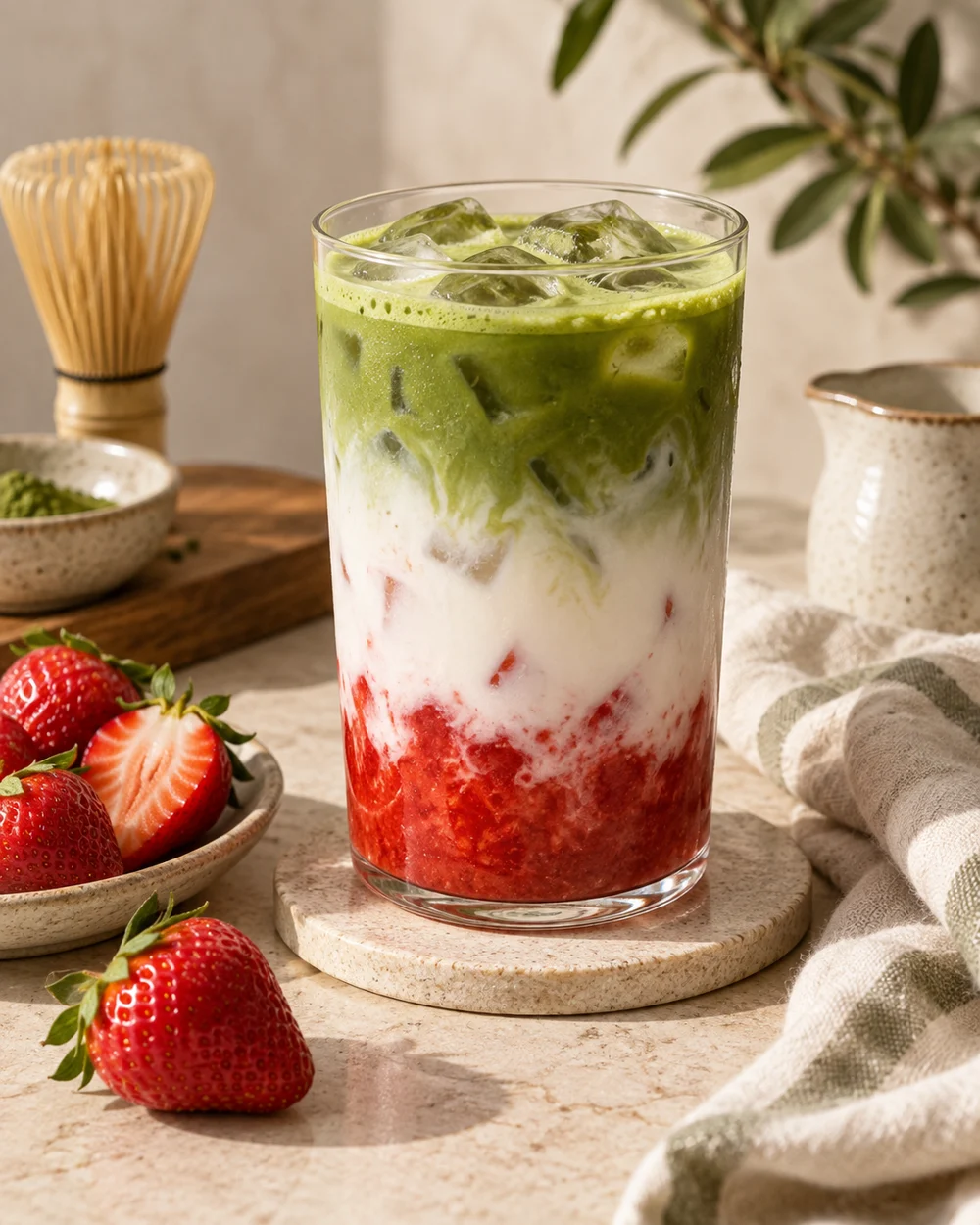
Constructing a crisp, visual line between vibrant green matcha and colorful fruit relies on fluid density rather than pouring luck. Whisked matcha consists largely of water with suspended leaf particles, giving it a density close to plain water. A fruit foundation must possess a higher density from dissolved sugars and puree solids to support this upper layer without bleeding. Understanding how dissolved solids and viscosity help maintain distinct layers allows home baristas to pour clean, presentation-grade two-tone beverages repeatedly without premature blending.
Read the note ↓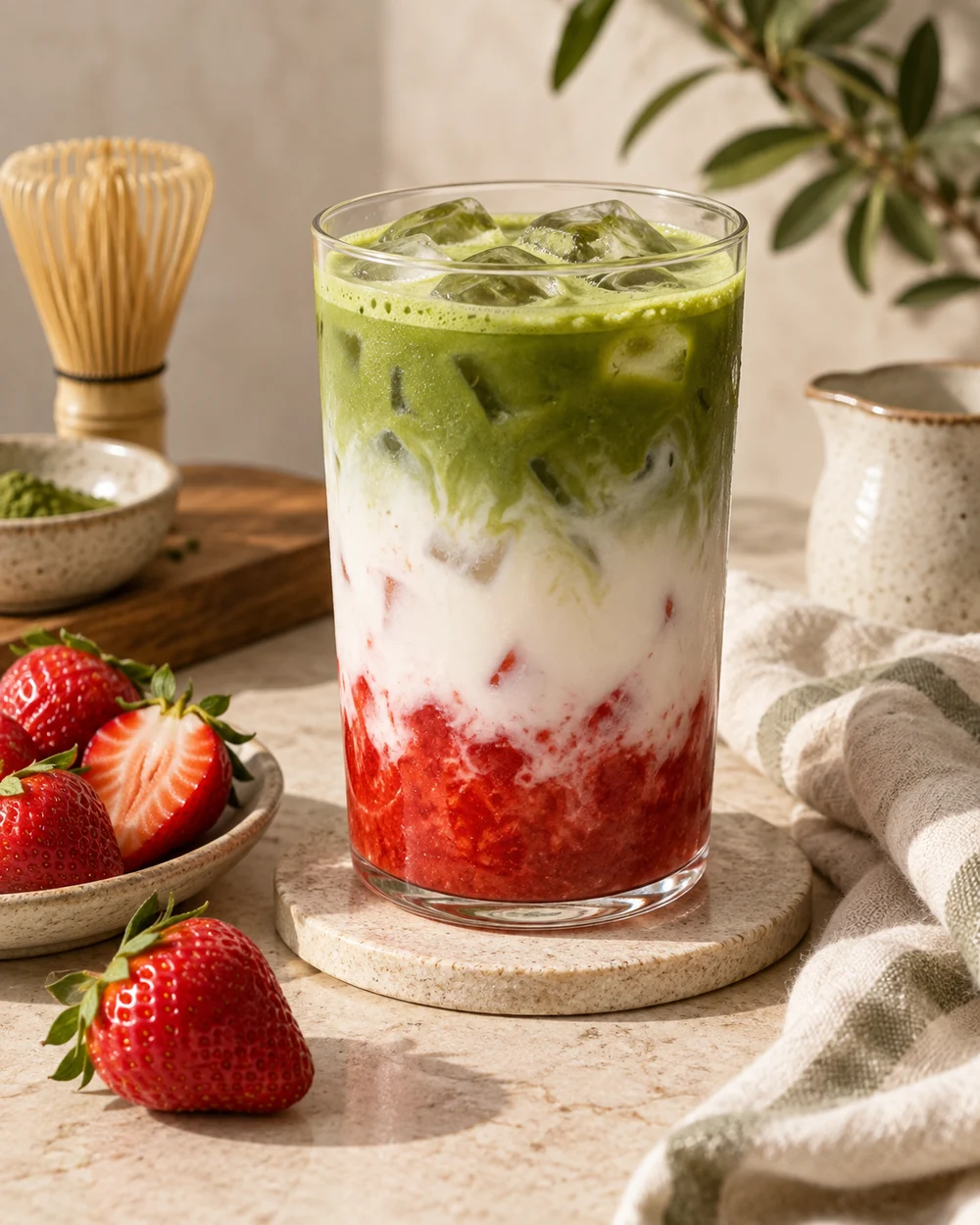
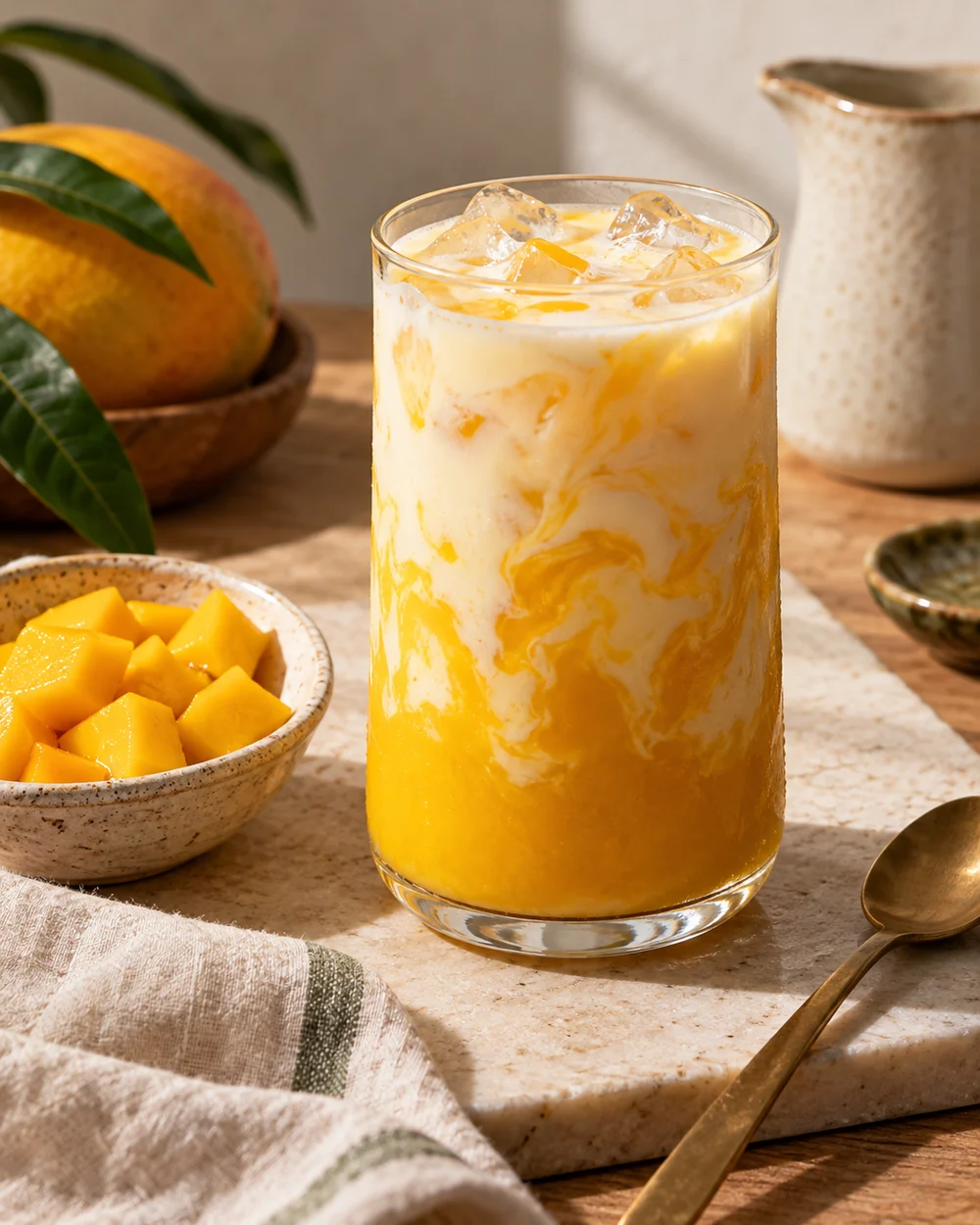
Representative category illustration reused from our editorial library; it does not depict this specific project or a tested result.
Measuring Dissolved Solids in Fruit Bases
Density separation demands that the bottom base contain higher dissolved sugars than the top suspension. A thin fruit juice will mingle quickly with whisked green tea because their densities match too closely. Instead, select a dense fruit puree sweetened with simple syrup or sugar. As an illustrative planning example, blending 80 grams of strawberry puree with 40 grams of rich simple syrup creates an adequately dense foundation that stays planted firmly at the base of a clear drinking glass.
Structuring the Intermediate Ice Buffer
Pouring tea directly onto fruit puree disrupts the boundary between layers through force of flow. Filling the glass completely with ice cubes creates a physical barrier that slows the incoming liquid. As the poured tea cascades gently over the ice, its downward speed decreases before it reaches the fruit layer below. Pack the cubes closely from the fruit level up to the glass rim, as wide gaps allow liquid to plunge straight down and cause premature mixing.
Whisking a Low-Turbulence Matcha Suspension
Prepare the top tier by sifting two grams of matcha powder through a fine screen to eliminate compressed clumps. Whisk with 60 milliliters of warm water at 75 degrees Celsius until the tea disperses uniformly into a smooth, thin liquid. Avoid excessive frothing if maximum visual contrast is desired; thick microfoam clings stubbornly to ice cubes, delaying downward descent and creating a ragged, uneven interface instead of a sharp, razor-clean horizontal boundary across the glass cylinder.
Pouring Techniques Using a Spoon Deflector
To introduce the top layer, position the back of a wide bar spoon just over the highest ice cube. Pour the whisked matcha slowly onto the rounded back of the spoon in a thin, continuous trickle. The metal surface spreads the stream outward across the ice rather than concentrating the liquid in one spot. This allows the green tea to trickle down gently around the cubes until it rests cleanly atop the denser fruit foundation.
Maintaining Separation Before Service
Temperature differentials influence boundary durability. Serving the layered beverage promptly keeps the transition crisp. If left sitting, ambient heat melts ice edges, diluting the fruit boundary and initiating natural diffusion between the layers. Keep prepared components refrigerated at 4 degrees Celsius until assembly. If whole pasteurized dairy or plant milks are introduced as a middle layer, calibrate their density between the fruit and the tea by using sweetened dairy to preserve three distinct horizontal bands.
A little more
to know.
Why does the matcha layer sink into mango puree despite careful pouring?
Purees thinned with water lose density rapidly. If a fruit mixture contains excess water, its specific gravity drops below the threshold needed to support green tea, allowing the upper layer to sink through.
Can I assemble these layered drinks an hour ahead of serving?
No, natural molecular diffusion occurs over time regardless of density. Ice also melts steadily, diluting the interface and muddying the visual separation within ten to fifteen minutes of initial assembly.
Original editorial guidance and recipe formulations, not independently kitchen-tested. Times are estimates and depend on equipment and product directions. Cooked bases need additional cooling and refrigeration before cold serving. Images are AI-generated illustrations; appearance and yield may vary. Check actual ingredient labels, allergens, and any certification you require. We do not certify products. Read our approach.
Save to Pinterest ↗ANOTHER IDEA FOR THE COUNTER