Build a Fruit and Matcha Iced Cup Using a Two-Step Chill Method
Whisking matcha powder directly into cold liquid produces clumps and a muddy appearance because the powder does not fully hydrate without warmth. Mixing warm matcha into cold fruit juice immediately creates a cloudy, grey-green result as the temperature difference causes rapid mixing of the layers. The two-step chill method solves both problems by preparing and cooling the matcha separately before the final assembly, giving you a cleaner visual layer and a smoother texture in the finished cup.
Read the note ↓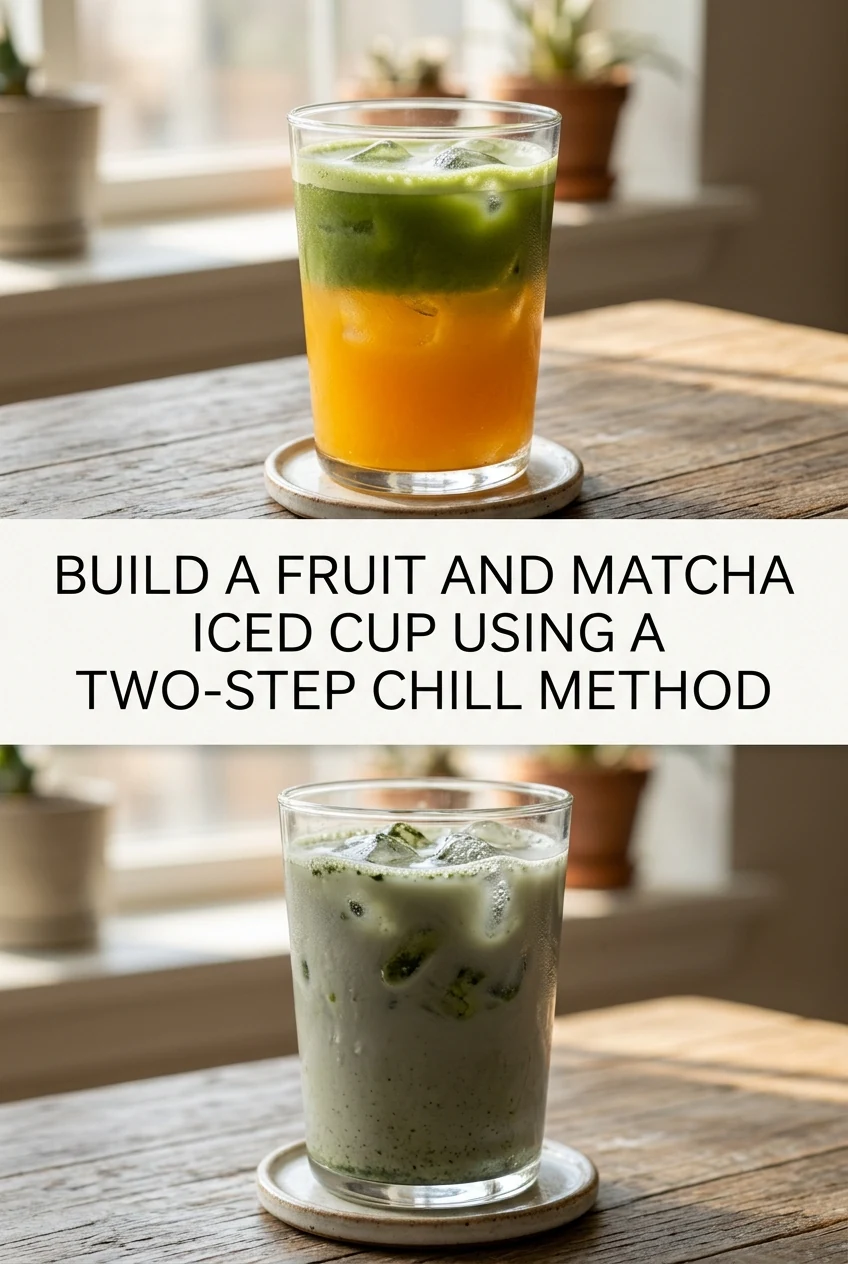
AI-generated editorial concept created for this article. The image is not a technical diagram or a tested result.
Preparing the Matcha Base
Sift one teaspoon of matcha powder, approximately two to three grams, into a small bowl or wide cup to break up any clumps. Add 60 millilitres of water that has been heated to around 70 to 80 degrees Celsius, not boiling, and whisk in a brisk zigzag motion for 20 to 30 seconds until the surface shows a light foam and no visible powder remains. The warm water hydrates the matcha fully. This quantity is an illustrative starting point; adjust to your preferred strength.
Chilling the Matcha Before Assembly
Pour the whisked matcha into a small container and place it in the refrigerator uncovered for 15 to 20 minutes, or set it over a small bowl of ice water and stir gently for two to three minutes until it reaches roughly room temperature or below. The goal is to bring the matcha to a temperature close to the fruit juice before combining them. Skipping this step and pouring warm matcha over cold juice causes turbulence that blends the layers immediately and produces the cloudy result the method is designed to avoid.
Choosing and Preparing the Fruit Component
Cold-pressed or pasteurised fruit juice works well here. A light-coloured juice such as white grape, yuzu, or apple creates a visible contrast with the green matcha layer. A darker juice such as pomegranate or berry will blend visually with the matcha and reduce the layered effect, though the flavour combination can still be pleasant. Use 120 to 150 millilitres of juice per serving. Pour the juice over ice in the serving glass first so it is already cold and settled before you add the matcha.
Assembling the Layered Cup
Fill a 350 to 400 millilitre glass with ice and pour the cold fruit juice over it. Hold a spoon just above the juice surface, curved side up, and pour the chilled matcha slowly over the back of the spoon. This slows the pour and lets the matcha settle on top of the juice rather than plunging through it. The density difference between the two liquids helps maintain the layer briefly. The layer will begin to blend naturally once the drink is stirred or after a few minutes, which is expected.
Serving and Storage Considerations
Serve the assembled cup immediately for the clearest layer presentation. If you are preparing multiple cups, keep the chilled matcha in a covered container in the refrigerator and assemble each glass to order rather than pre-building them. Matcha oxidises and loses its bright green colour over time once prepared, so use the chilled matcha base within an hour of whisking for the best appearance. Do not store assembled iced cups; the ice dilutes the drink and the layer disappears quickly.
A little more
to know.
Can I whisk the matcha into cold water instead of warm water and skip the chilling step?
Cold water does not fully hydrate matcha powder, leaving fine clumps suspended in the liquid. The warm-water step is what produces a smooth, fully dissolved base. Chilling afterward is what makes layered assembly possible.
Does the type of matcha grade affect how well it layers?
Finely milled culinary or ceremonial grade matcha both whisk smoothly when prepared correctly. Coarser or older matcha may clump more and produce a less uniform base regardless of temperature, which can affect how cleanly it sits on the juice.
Original editorial guidance and recipe formulations, not independently kitchen-tested. Times are estimates and depend on equipment and product directions. Cooked bases need additional cooling and refrigeration before cold serving. Images are AI-generated illustrations; appearance and yield may vary. Check actual ingredient labels, allergens, and any certification you require. We do not certify products. Read our approach.
Save to Pinterest ↗ANOTHER IDEA FOR THE COUNTER