Balance Fruit Density in Layered Matcha Coolers
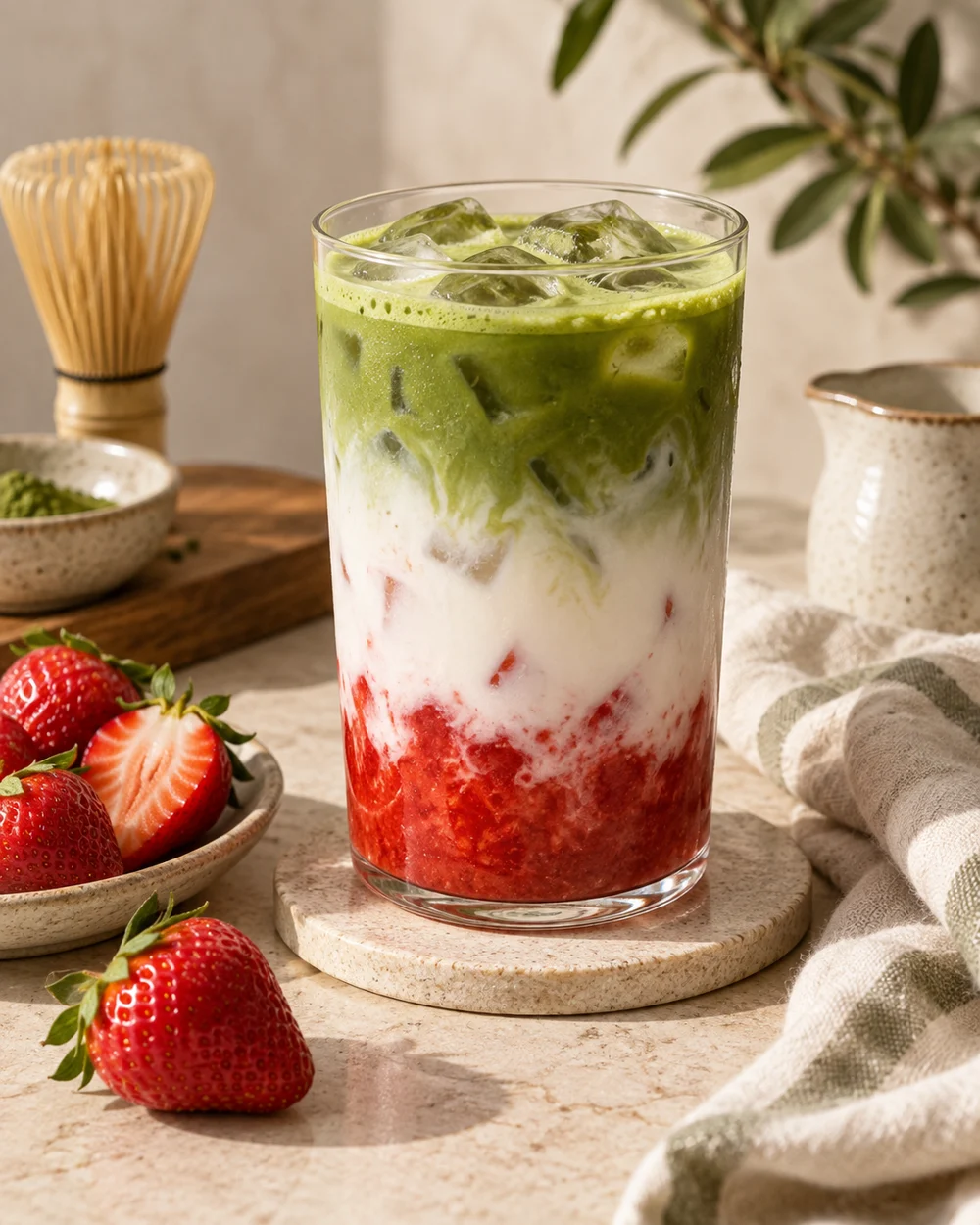
Layered iced drinks delight visually, but home attempts can easily collapse into a muddy blend before reaching the table. Clean separation between fruit compote, milk, and whisked green tea depends on differences in density alongside gentle pouring. Dense, sugar-rich fruit bases settle at the bottom of the glass, while lighter liquids rest above when poured carefully over ice. By adjusting the consistency of your fruit layer and using ice cubes to buffer your pour, you can assemble distinct, colorful layered drinks at home.
Read the note ↓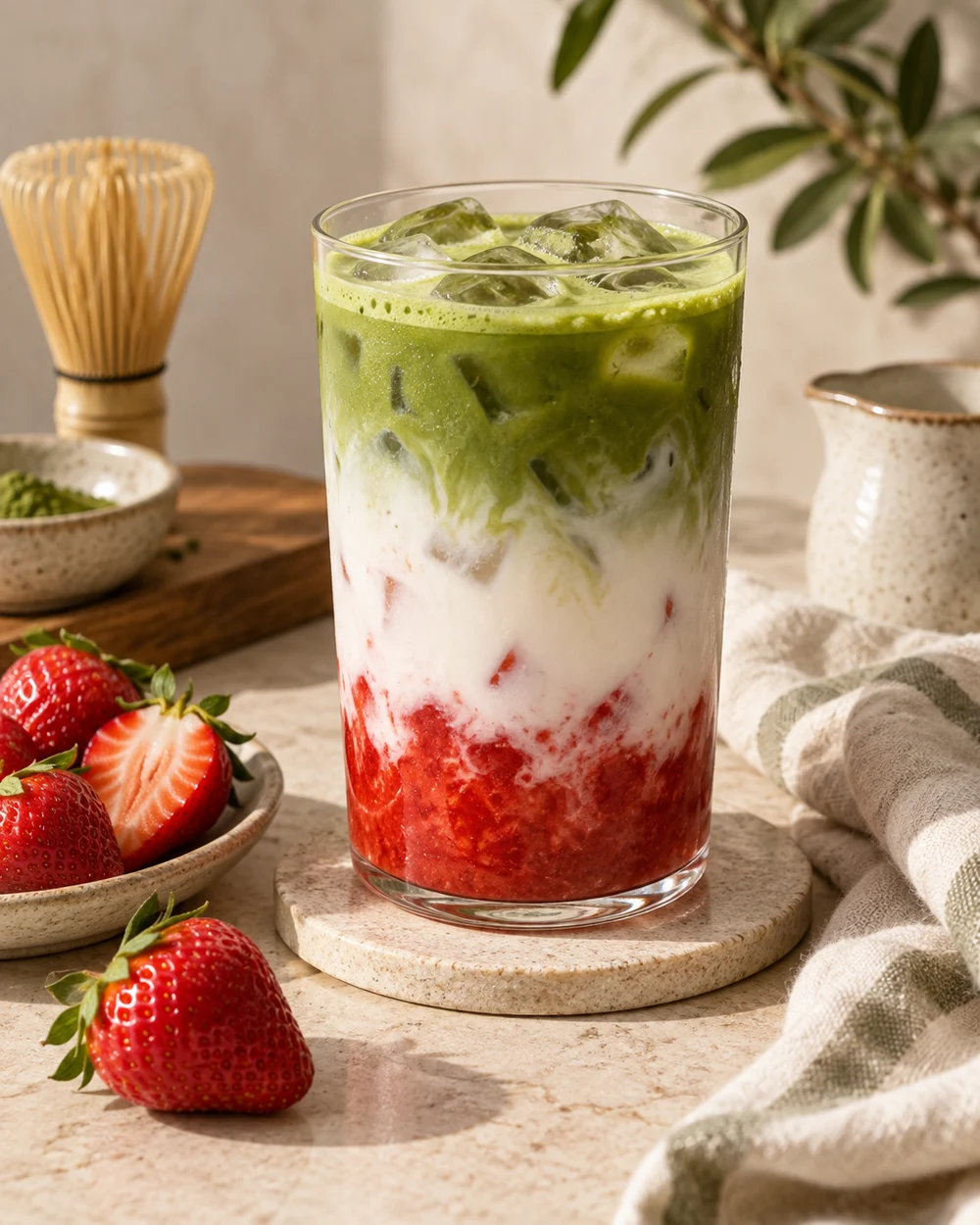
Representative category illustration reused from our editorial library; it does not depict this specific project or a tested result.
Understanding Density Differences
Layers remain distinct when each successive liquid is less dense than the one below it. Cooking fruit with sugar creates a dense, viscous compote that stays anchored at the bottom of the glass. Dairy or barista oat milk has an intermediate density, allowing it to rest over the fruit when poured gently. Whisked matcha is primarily water with suspended tea powder, making it the lightest layer. If the fruit puree is too thin or watery, milk poured on top easily breaks through the base and mixes immediately.
Formulating the Fruit Foundation
Prepare a thick fruit base using 60 grams of finely crushed fresh strawberries and 15 grams of simple syrup. Simmer the mixture briefly over low heat until the fruit softens and excess free water evaporates, creating a cohesive compote. Cool the mixture thoroughly in the refrigerator to 4C. Cold liquids are denser than warm ones, so chilling the fruit base reinforces its ability to support the subsequent liquid layers without bleed.
Milk Selection and Ice Placement
Spoon the 75 grams of chilled strawberry compote directly into the bottom of a tall, narrow 350-milliliter glass. Fill the glass completely with ice cubes, stacking them gently down into the compote layer. Ice cubes act as a physical buffer and dispersion baffle. Pour 120 milliliters of cold pasteurized whole milk or barista-grade oat milk directly over the ice cubes, pouring slowly onto a cube near the top rather than splashing directly into the compote.
Whisking and Layering the Matcha
Sift 2 grams of matcha powder into a small bowl and whisk thoroughly with 40 milliliters of warm water at roughly 70C until evenly dispersed with a fine froth. Keep this top layer unsweetened; adding syrup or sugar increases its density, which can cause the tea to sink into the milk. Pour the whisked matcha slowly over an ice cube near the rim of the glass. The ice absorbs the downward momentum of the pour, allowing the green tea to settle gently across the top of the milk.
Illustrative Layering Proportions
As a practical planning guide, spooning 75 grams of chilled strawberry compote into the glass, filling with ice, adding 120 milliliters of cold milk, and finishing with roughly 40 milliliters of unsweetened whisked matcha produces clearly defined bands of color. This framework offers a dependable starting ratio for a standard 350-milliliter glass, though varying juiciness in fresh fruit may require slight adjustments to the compote thickness.
A little more
to know.
Can frozen thawed strawberries be used without cooking?
Thawed strawberries release excessive free water that thins the purée, lowering its density. If using thawed fruit, simmer it with sugar until thickened, or strain off excess watery juice before weighing out your compote base.
What happens if sweetened condensed milk is used instead?
Sweetened condensed milk has a very high specific gravity and will sink beneath standard fruit purée. If using condensed milk, stir it directly into the fruit base or use it as the very bottom layer beneath the compote.
Original editorial guidance and recipe formulations, not independently kitchen-tested. Times are estimates and depend on equipment and product directions. Cooked bases need additional cooling and refrigeration before cold serving. Images are AI-generated illustrations; appearance and yield may vary. Check actual ingredient labels, allergens, and any certification you require. We do not certify products. Read our approach.
Save to Pinterest ↗ANOTHER IDEA FOR THE COUNTER