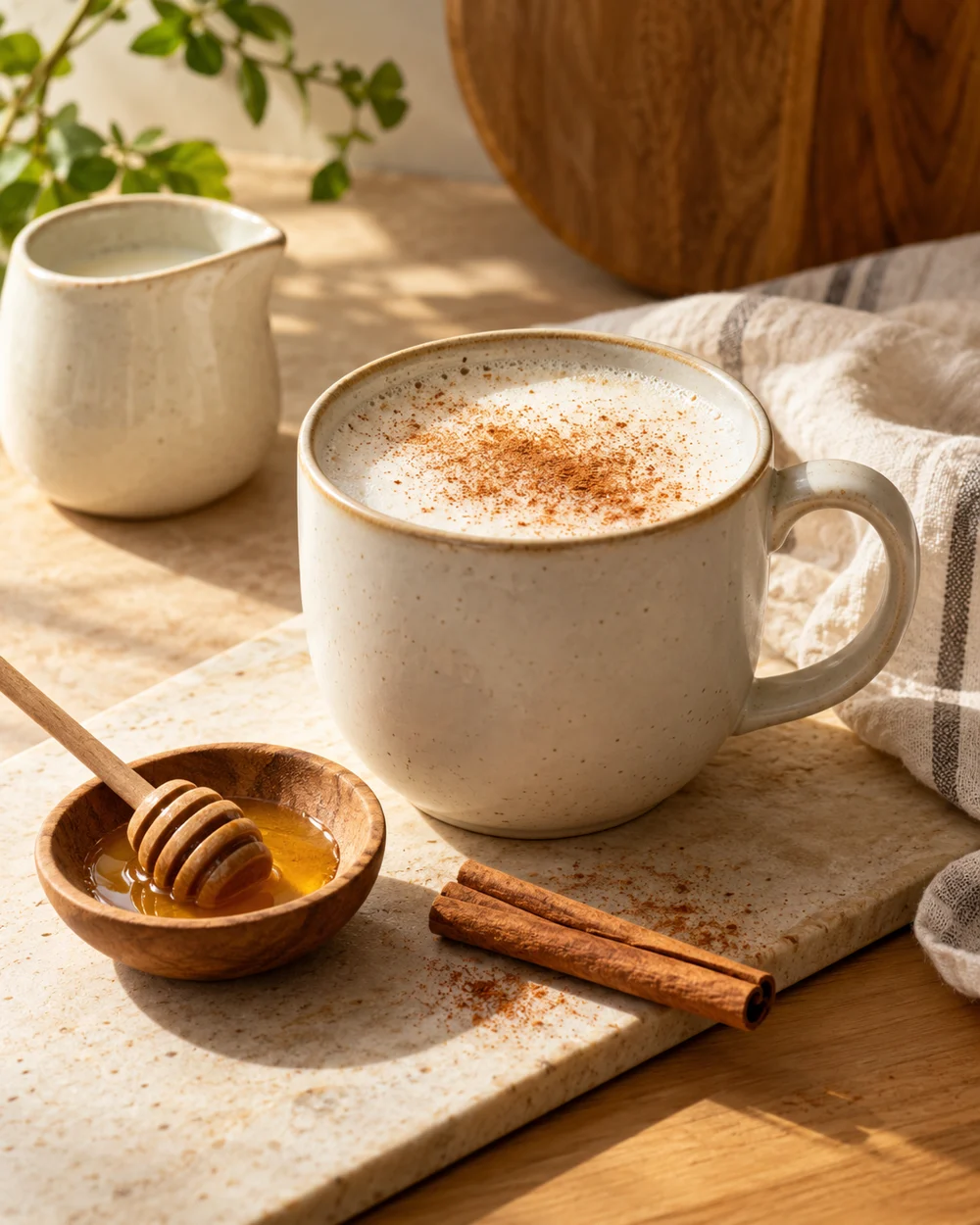
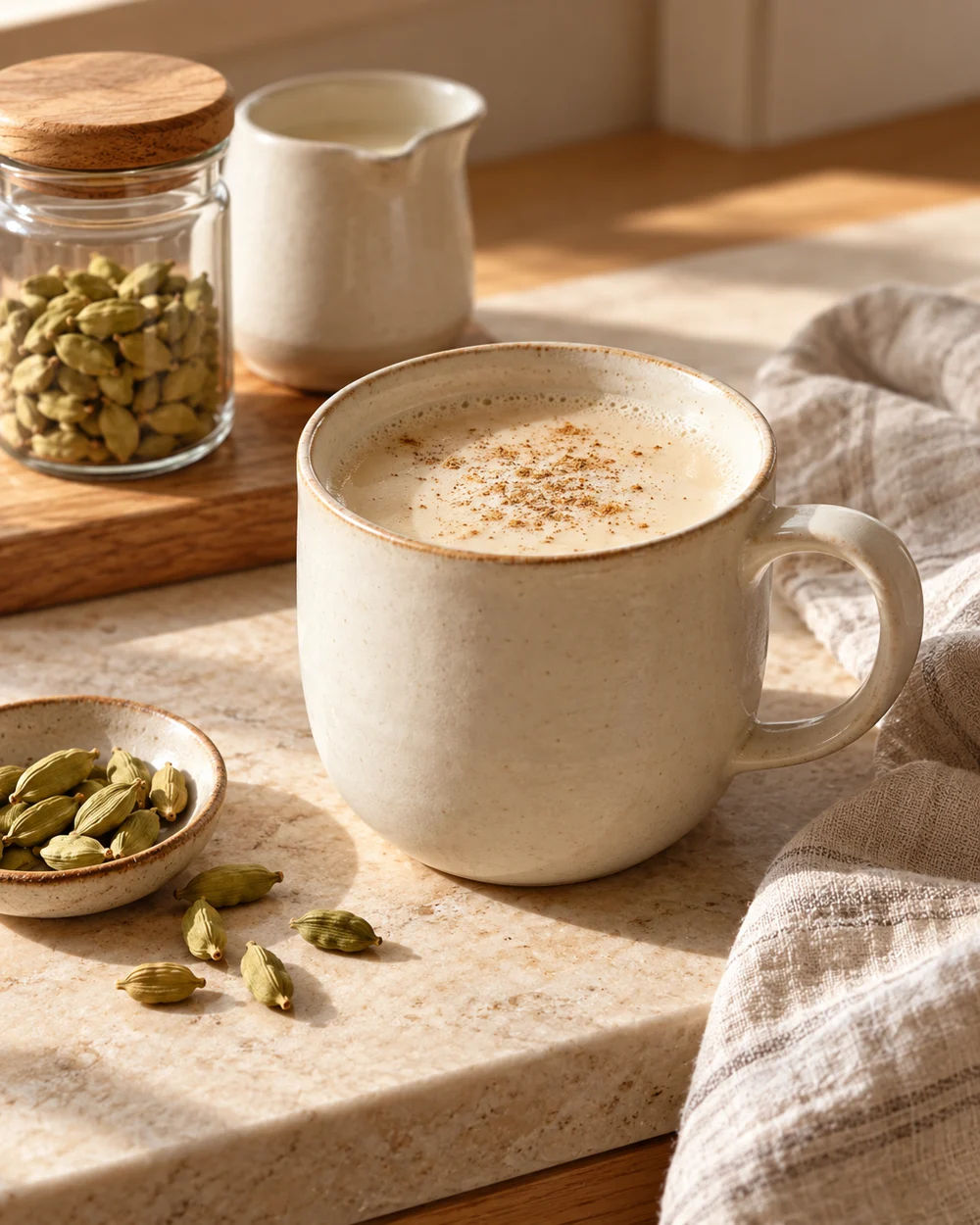
Warm Rooibos and Almond Milk Cup With Cardamom
Rooibos brewed to a strong concentrate carries a deep, naturally sweet flavour that pairs well with the mild nuttiness of warmed almond milk. Because almond milk can separate visibly when poured into a very hot liquid, the approach here keeps both components at a gentler temperature before combining them. A pinch of ground cardamom added at the end rounds the cup with a lightly spiced finish. The steps below describe one illustrative plan rather than a claim of tested or guaranteed results.
Read the note ↓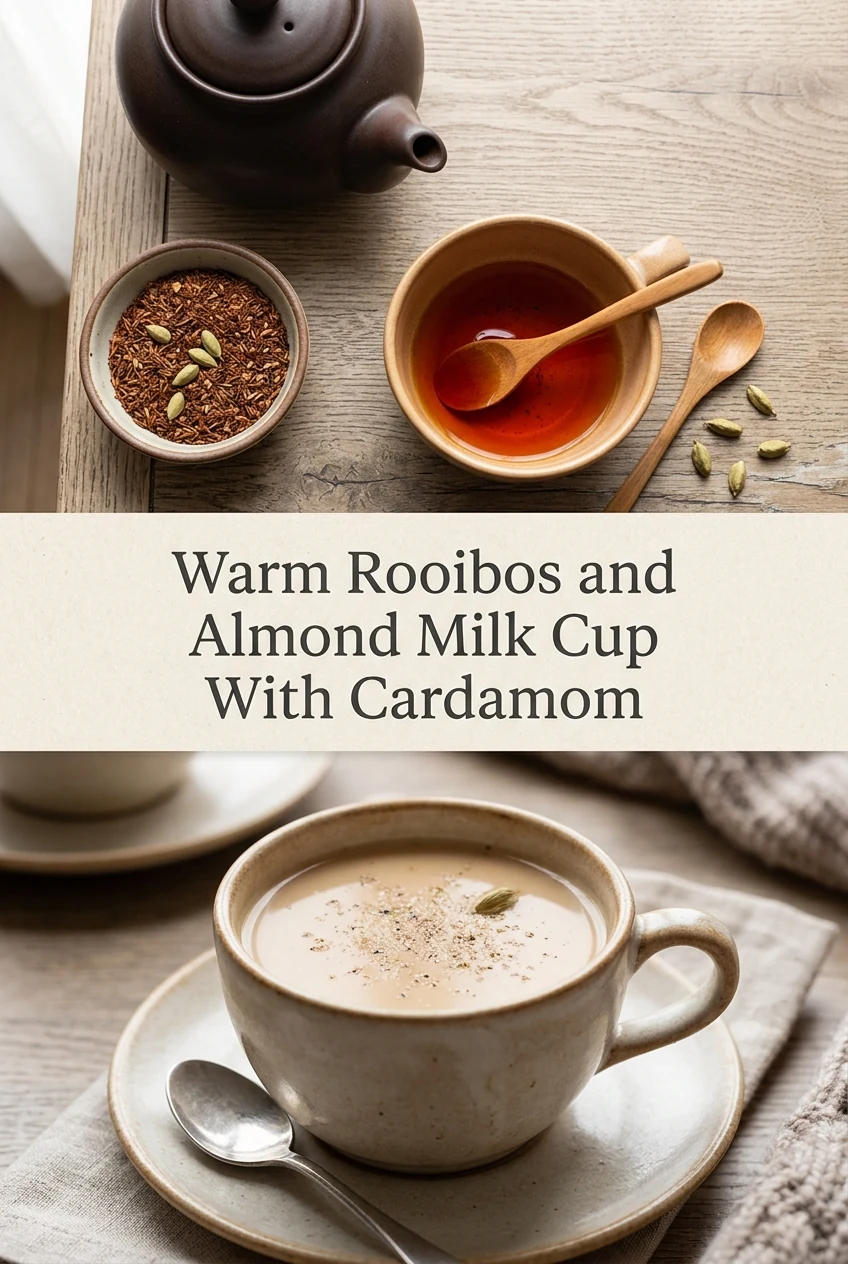
AI-generated editorial concept created for this article. The image is not a technical diagram or a tested result.
Choosing Your Rooibos and Almond Milk
Loose-leaf or bagged rooibos both work for a concentrate. Loose-leaf gives you more control over the quantity, while a standard tea bag is convenient for a single cup. For almond milk, choose an unsweetened variety if you prefer to control sweetness yourself, or a lightly sweetened version if you want the cardamom to stand out against a slightly sweet base. Check the label to confirm the almond milk contains no additives that may affect how it behaves when heated; some stabiliser blends hold together more evenly on low heat than others. Ground cardamom from a sealed jar gives a cleaner aroma than pre-ground powder that has been open for a long time.
Brewing a Strong Rooibos Concentrate
Measure roughly 200 millilitres of cold water into a small saucepan. Add one heaped teaspoon of loose-leaf rooibos or one standard tea bag. Bring the water to a gentle boil over medium heat, then reduce the heat and let the rooibos steep for five to seven minutes. A longer steep produces a darker, more robust concentrate. Once steeping is complete, remove the leaves or bag and set the saucepan aside. Allow the concentrate to rest off the heat for two to three minutes so it drops below a rolling simmer. This brief cooling period is the practical step that reduces visible separation when the almond milk is added later.
Warming the Almond Milk Separately
Pour approximately 150 millilitres of almond milk into a separate small saucepan. Place it over low heat and warm it gently, stirring occasionally, until it is steaming but not bubbling. Almond milk can scorch or develop a skin if left unattended over higher heat, so keeping the flame low and staying nearby is worthwhile. Once the milk is steaming, remove it from the heat. In this illustrative plan, the rooibos concentrate and the almond milk are now both warm rather than one being significantly hotter than the other, which is the condition that helps reduce the visible curdling effect.
Combining and Adding Cardamom
Pour the rooibos concentrate into your cup first. Then pour the warmed almond milk slowly over the back of a spoon held just above the surface of the rooibos. This gentle pouring method encourages the two liquids to meet gradually. Finally, add a small pinch of ground cardamom directly into the cup and stir once or twice to distribute it. The resulting cup in this example holds roughly 350 millilitres total, with the rooibos concentrate making up just over half the volume and the almond milk contributing the remainder. Adjust the ratio in future attempts based on how strong or mild you prefer the flavour.
Adjusting the Cup to Your Preference
If the cup tastes too strong, reduce the steeping time to four minutes or use slightly less loose-leaf rooibos next time. If the almond milk flavour is too faint, increase the milk portion to 180 millilitres and reduce the concentrate to 170 millilitres, keeping the total near 350 millilitres. For a more pronounced cardamom note, add the pinch before pouring the milk so it disperses through both liquids. A small amount of halal-certified honey stirred in at the end adds sweetness without masking the rooibos character. Any alcohol-free vanilla flavouring used should be explicitly labelled as such on the product packaging.
A little more
to know.
Why does almond milk separate in hot rooibos and how does this method address it?
Almond milk separates visibly when it contacts a very hot liquid because the heat causes the proteins and fats in the milk to react quickly. This method addresses the issue by allowing the rooibos concentrate to cool slightly off the heat before combining and by warming the almond milk separately so both liquids are at a comparable temperature when they meet. This approach reduces but does not entirely eliminate the possibility of separation, as results depend on the specific product used.
Can I use a different plant-based milk in place of almond milk?
Oat milk and cashew milk are two alternatives that behave similarly on low heat and carry a mild flavour that complements rooibos. Each will change the overall taste and texture of the cup. Apply the same principle of warming the alternative milk gently and separately before combining it with the cooled concentrate. Check the label of any plant-based milk you choose to confirm it suits your dietary requirements.
Original editorial guidance and recipe formulations, not independently kitchen-tested. Times are estimates and depend on equipment and product directions. Cooked bases need additional cooling and refrigeration before cold serving. Images are AI-generated illustrations; appearance and yield may vary. Check actual ingredient labels, allergens, and any certification you require. We do not certify products. Read our approach.
Save to Pinterest ↗ANOTHER IDEA FOR THE COUNTER