Warm Jasmine Milk Tea: Brewing the Tea Separately Before Adding Milk
Jasmine tea carries delicate floral notes that depend on a brief, correctly tempered steep. Adding cold or room-temperature milk directly to the steeping vessel lowers water temperature immediately and dilutes the tea before it has developed full flavour. Brewing a small concentrated portion in plain hot water first, then combining it with separately warmed milk, gives you control over both the tea strength and the final serving temperature without sacrificing the floral character.
Read the note ↓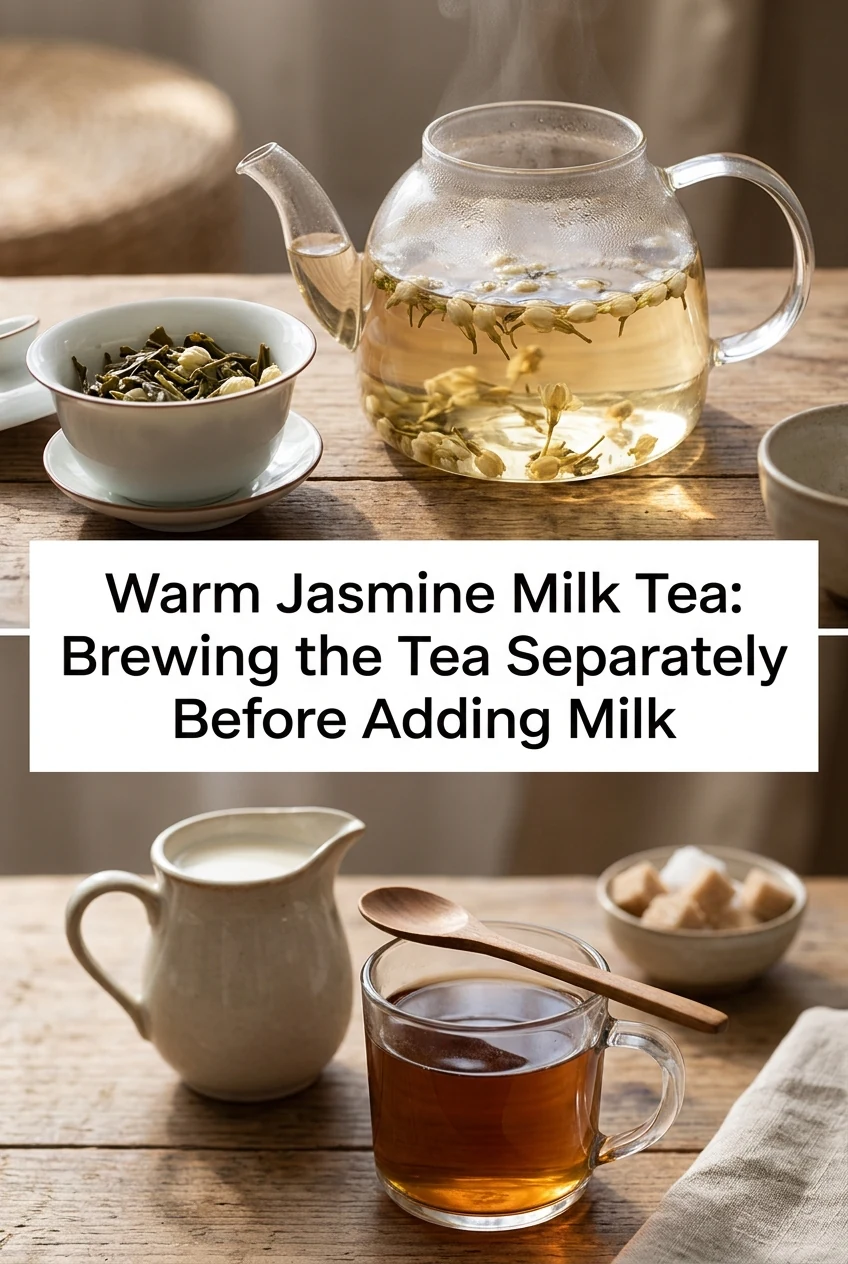
AI-generated editorial concept created for this article. The image is not a technical diagram or a tested result.
Understanding Why Milk Disrupts the Steep
Jasmine tea, whether green or white based, is typically steeped at 75 to 85 degrees Celsius for two to three minutes. Milk added during steeping drops the water temperature below this range almost immediately, slowing extraction and producing a thin, grassy result rather than a rounded floral cup. Milk proteins also bind to some tea compounds during steeping, which can mute the jasmine scent. Keeping the two liquids separate until after brewing avoids both problems.
Brewing the Concentrated Tea Portion
Use approximately 2 grams of loose jasmine tea or one standard tea bag for every 100 millilitres of water, which is roughly double the strength of a plain cup. Heat filtered water to around 80 degrees Celsius; if you lack a thermometer, bring water to a full boil and let it rest uncovered for about two minutes before pouring. Steep for two to three minutes, then remove the leaves or bag promptly. Over-steeping a concentrated brew turns bitter quickly, so timing matters more here than in a standard single-cup steep.
Warming the Milk Separately
Use whole or reduced-fat pasteurised milk for a richer result. Heat 150 to 180 millilitres of milk in a small saucepan over low to medium heat, stirring occasionally, until it reaches approximately 65 to 70 degrees Celsius or just before it begins to steam visibly. Do not boil the milk, as boiling changes its flavour and creates a skin that affects texture. If you prefer a foamy surface, whisk briskly for thirty seconds off the heat before combining. Use the milk promptly after warming.
Combining and Adjusting the Final Cup
Pour the brewed tea concentrate into the serving cup first, then add the warmed milk in a slow, steady stream. A ratio of roughly 100 millilitres of concentrate to 150 millilitres of milk produces a balanced cup; increasing the proportion of milk gives a creamier, more subdued tea flavour, while using more tea concentrate highlights the floral notes. Taste before adding sweetener, as jasmine tea has natural sweetness that can be masked by sugar added too early. A small amount of honey stirred in at this stage dissolves easily in the warm liquid.
Serving Temperature and Immediate Use
The combined drink should be served immediately while both components are still warm. If the cup cools before serving, reheat gently in the saucepan rather than microwaving, which can create uneven hot spots. Any leftover brewed tea concentrate without milk can be refrigerated in a covered container at 4 degrees Celsius and used within 24 hours. Do not store the combined milk tea for later use; warmed dairy should not be left at room temperature for more than two hours and does not reheat well without quality loss.
A little more
to know.
Can I use a plant-based milk alternative instead of dairy milk?
Oat and soy milk both warm reasonably well and pair with jasmine tea without overwhelming the floral notes. Heat them gently using the same method, as plant-based milks can scorch or separate at higher temperatures more readily than dairy milk.
What happens if I steep the jasmine tea for longer to get a stronger concentrate?
Steeping beyond three minutes at this concentration level typically produces noticeable bitterness and astringency, especially with green-based jasmine tea. A stronger flavour is better achieved by increasing the leaf quantity slightly rather than extending the steep time.
Original editorial guidance and recipe formulations, not independently kitchen-tested. Times are estimates and depend on equipment and product directions. Cooked bases need additional cooling and refrigeration before cold serving. Images are AI-generated illustrations; appearance and yield may vary. Check actual ingredient labels, allergens, and any certification you require. We do not certify products. Read our approach.
Save to Pinterest ↗ANOTHER IDEA FOR THE COUNTER