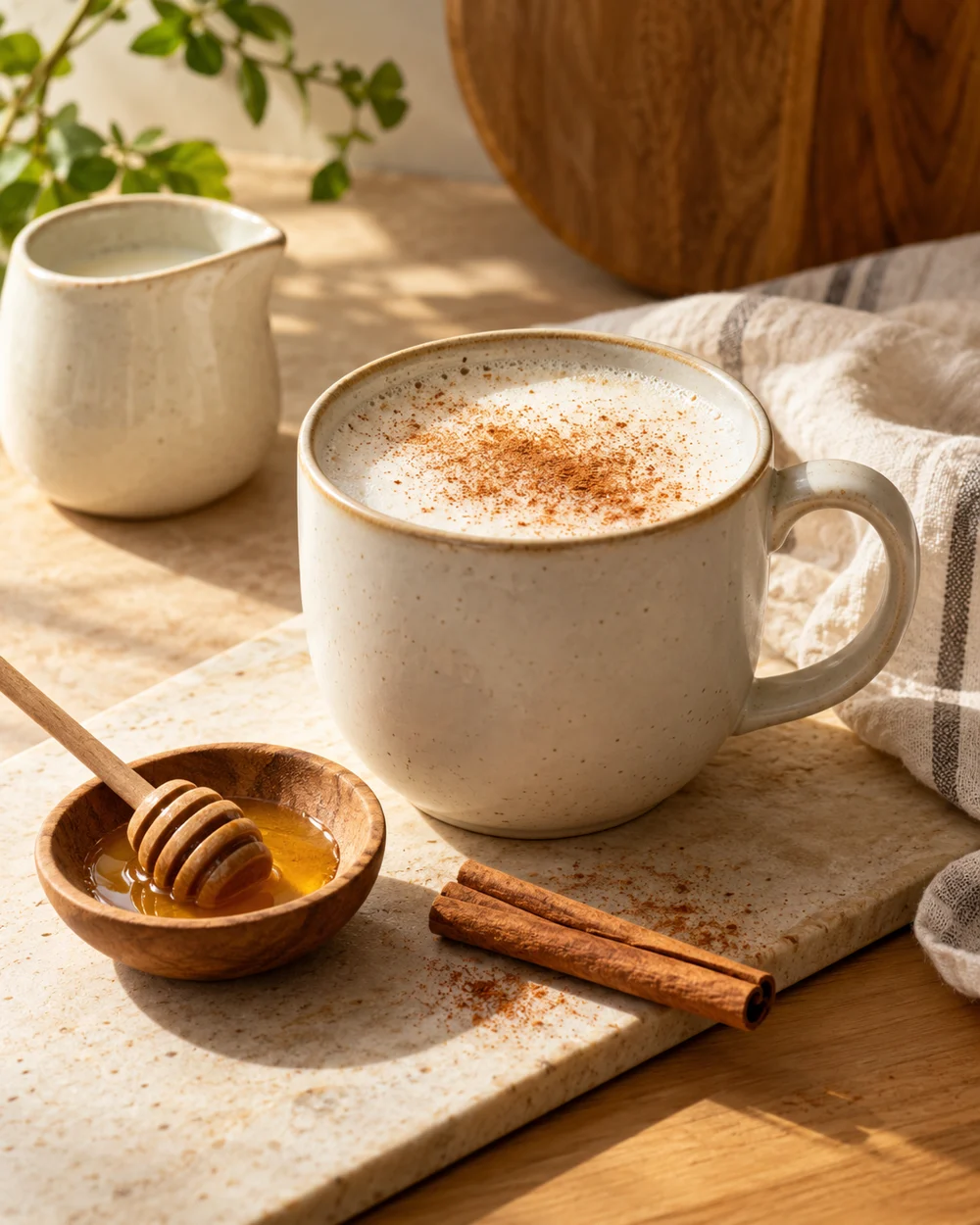
Warm Hojicha and Condensed Milk Cup on the Stovetop
Hojicha, the roasted Japanese green tea with its earthy, lightly smoky character, pairs naturally with the creamy sweetness of condensed milk. The challenge most home brewers face is simple: hojicha brewed too hot turns sharp and bitter, and condensed milk stirred into a boiling liquid can scorch against the pan or clump unevenly. This guide walks through a stovetop approach that keeps temperatures gentle, builds a small concentrate first, and introduces condensed milk only after the heat is off, giving you a smooth, balanced warm cup without the common pitfalls.
Read the note ↓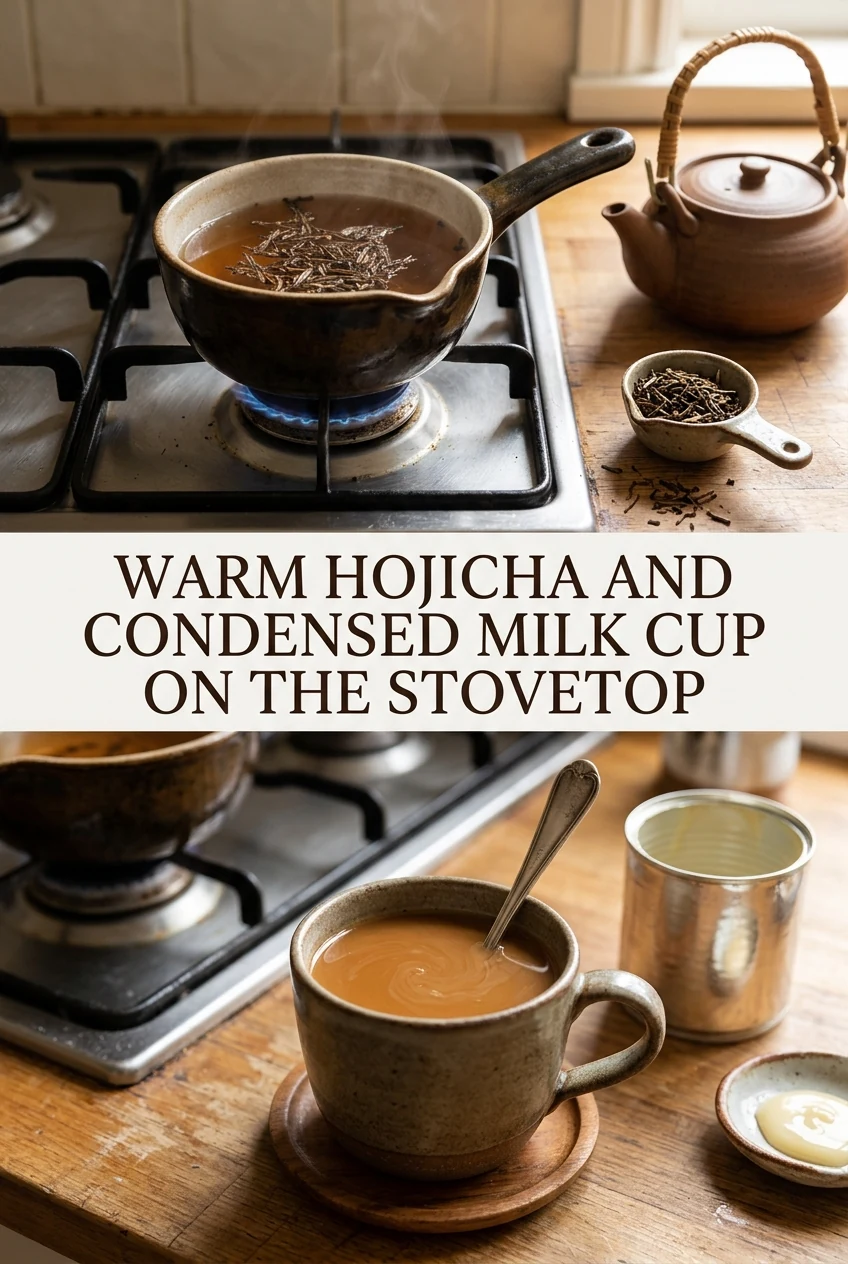
AI-generated editorial concept created for this article. The image is not a technical diagram or a tested result.
Understanding Why Temperature Matters for Hojicha
Although the roasting process reduces hojicha's astringency compared to unroasted green teas, boiling the leaves vigorously on the stovetop can still pull out unwanted bitterness and dull the tea's toasty aroma. A controlled approach—using hot water that has rested briefly after boiling—extracts the leaf's nutty, caramel notes while keeping the brew smooth. For this stovetop drink, temperature management happens at two points: steeping the concentrate gently off direct heat, and warming the combined liquid without letting it boil before adding the milk.
Building a Small Hojicha Concentrate
Start by measuring roughly two teaspoons of loose hojicha leaves, or two hojicha tea bags, into a small heatproof pitcher or bowl. Bring about 150 millilitres of water to a boil in a small saucepan, then remove it from the heat and allow it to sit for one to two minutes so the temperature drops to somewhere in the range of 85 to 90 degrees Celsius. Pour this water over the leaves and steep for approximately two to three minutes. Steeping longer than three minutes can introduce unwanted bitterness even at lower temperatures, so set a timer. Strain the leaves out completely and set the concentrate aside. This small, strong brew is your flavour base. It is an illustrative plan based on general hojicha guidance, and your preferred strength may lead you to adjust the leaf quantity or steep time slightly.
Warming the Concentrate Gently on the Stovetop
Return the strained concentrate to the small saucepan along with an additional 100 millilitres of water to bring the total liquid to roughly 250 millilitres, a standard single-serve cup volume. Place the saucepan over low heat. The goal here is to warm the liquid until it is steaming and comfortable to drink, not to bring it back to a boil. Watch for small wisps of steam rising from the surface. If you see vigorous bubbling beginning, reduce the heat immediately or lift the pan off the burner for a moment. Keeping the heat low throughout this stage protects the flavour you built in the concentrate and prevents any scorching on the pan surface.
Stirring in Condensed Milk Off the Heat
Once the hojicha is steaming and warmed through, remove the saucepan completely from the heat source. Add one to two tablespoons of sweetened condensed milk directly into the warm liquid. Stir steadily with a small whisk or spoon for about thirty seconds until the condensed milk is fully dissolved and the colour of the liquid becomes an even, pale caramel-brown. Adding condensed milk while the pan is still on an active burner risks the milk solids catching on the hot metal and producing a scorched flavour that cannot be corrected. Removing the pan first is the single most practical step for a smooth result. Taste and adjust the condensed milk quantity to your preference before pouring.
Pouring and Serving the Finished Cup
Pour the finished drink into a pre-warmed mug. To pre-warm the mug, simply fill it with hot water for about thirty seconds and then discard that water before pouring in your hojicha. This small step helps the drink stay at a comfortable temperature longer once it is served. The finished cup, in this illustrative example, totals approximately 250 millilitres and carries the roasted depth of hojicha softened by the milky sweetness of condensed milk. Serve it immediately while it is at its warmest. If you prefer a slightly thicker texture, you can reduce the added water in the warming stage to 70 millilitres instead of 100, keeping the concentrate ratio higher.
A little more
to know.
Can I use hojicha powder instead of loose leaves or tea bags?
Yes. Hojicha powder disperses directly into warm water without steeping, which simplifies the concentrate step. Whisk about half a teaspoon of hojicha powder into the 150 millilitres of warm water until evenly suspended, then proceed with the warming and condensed milk stages as described. The flavour profile will be slightly different from steeped leaf hojicha, often a little more intense, so you may want to start with a smaller amount of powder and adjust to your taste.
Is there a dairy-free condensed milk option that works in this drink?
Sweetened condensed coconut milk is widely available and behaves similarly to dairy condensed milk when stirred into a warm liquid off the heat. Look for a product labeled halal if that is a consideration for your household. The coconut version adds a mild coconut note alongside the roasted hojicha, which many people find pleasant. Stir it in using the same off-heat method to avoid any risk of the sugars scorching against the pan.
Original editorial guidance and recipe formulations, not independently kitchen-tested. Times are estimates and depend on equipment and product directions. Cooked bases need additional cooling and refrigeration before cold serving. Images are AI-generated illustrations; appearance and yield may vary. Check actual ingredient labels, allergens, and any certification you require. We do not certify products. Read our approach.
Save to Pinterest ↗ANOTHER IDEA FOR THE COUNTER