Warm Dragonfruit and Coconut Milk Cup on the Stovetop
A warm dragonfruit and coconut milk cup is visually striking when the colour holds, but both main ingredients are sensitive to heat in different ways. Dragonfruit puree shifts from vivid pink toward a dull brownish-grey above moderate temperatures, and full-fat coconut milk separates into oily pools if it reaches a rolling boil. Knowing the correct heat range and stirring approach makes the difference between a cup worth serving and one that looks and tastes flat.
Read the note ↓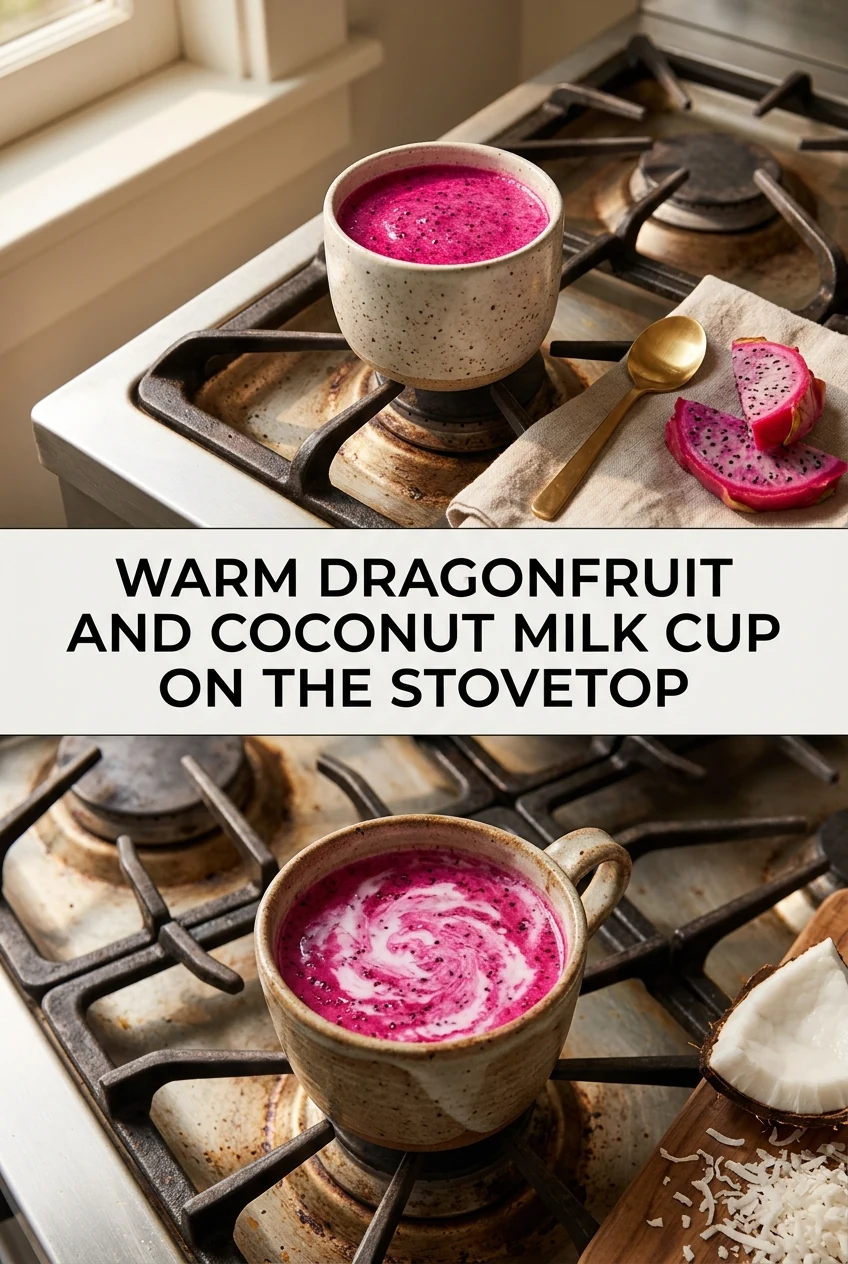
AI-generated editorial concept created for this article. The image is not a technical diagram or a tested result.
Choose the right dragonfruit and prepare the puree
Use red-fleshed dragonfruit for colour; white-fleshed varieties produce a pale, nearly colourless cup. For one serving, blend 80 g of peeled red dragonfruit flesh until smooth. If using frozen dragonfruit, thaw it in the refrigerator overnight and drain any excess liquid before blending. Strain the puree through a fine-mesh strainer if you want a completely smooth texture, though some people prefer the slight body from the tiny seeds.
Measure and prepare the coconut milk
Use 180 ml of full-fat canned coconut milk, shaken or stirred well before measuring. Coconut milk separates in the can, and using only the liquid from the top or only the cream from the bottom will give uneven results. For a slightly lighter cup, 160 ml of full-fat coconut milk combined with 20 ml of water is a practical adjustment. Avoid coconut milk drinks sold in cartons for this application, as they are too dilute to hold the puree evenly.
Heat on low and stir constantly
Pour the coconut milk into a small saucepan and set the heat to low. Warm it gently, stirring with a silicone spatula, until it reaches approximately 70 degrees Celsius. If you do not have a thermometer, the surface should show small, lazy bubbles at the edge but no vigorous movement. Add the dragonfruit puree at this point and stir it in immediately. Do not add cold puree to already-boiling coconut milk, as the temperature shock accelerates colour loss.
Sweeten carefully and finish
Add one teaspoon of white sugar or a small amount of honey and stir until dissolved. Taste before adding more, since dragonfruit has its own mild sweetness. A small pinch of salt rounds the flavour without being detectable as salty. Continue stirring over low heat for no more than two additional minutes. The cup is ready when the mixture is uniformly coloured and steaming gently. Remove from heat and pour immediately into a warmed cup.
Serve promptly and understand the colour window
Pour into a pre-warmed ceramic cup and serve within three minutes of leaving the heat. The colour is most vivid immediately after preparation and will gradually dull as the cup sits, which is a natural characteristic of dragonfruit pigment rather than a preparation error. This cup does not hold well in a flask or thermos for extended periods. Prepare it to order rather than in advance for the best visual result.
A little more
to know.
Can I use coconut cream instead of full-fat coconut milk?
Coconut cream produces a richer, thicker cup but separates even more readily at heat. If you use it, dilute with an equal part of water before heating and keep the flame lower than you would for standard coconut milk.
Why does my cup taste slightly bitter even with sugar added?
Overripe dragonfruit can develop a faint bitter note in the skin near the flesh. Trim away any pink or red skin that contacted the flesh during peeling, and taste the raw puree before heating to catch this before it affects the finished cup.
Original editorial guidance and recipe formulations, not independently kitchen-tested. Times are estimates and depend on equipment and product directions. Cooked bases need additional cooling and refrigeration before cold serving. Images are AI-generated illustrations; appearance and yield may vary. Check actual ingredient labels, allergens, and any certification you require. We do not certify products. Read our approach.
Save to Pinterest ↗ANOTHER IDEA FOR THE COUNTER