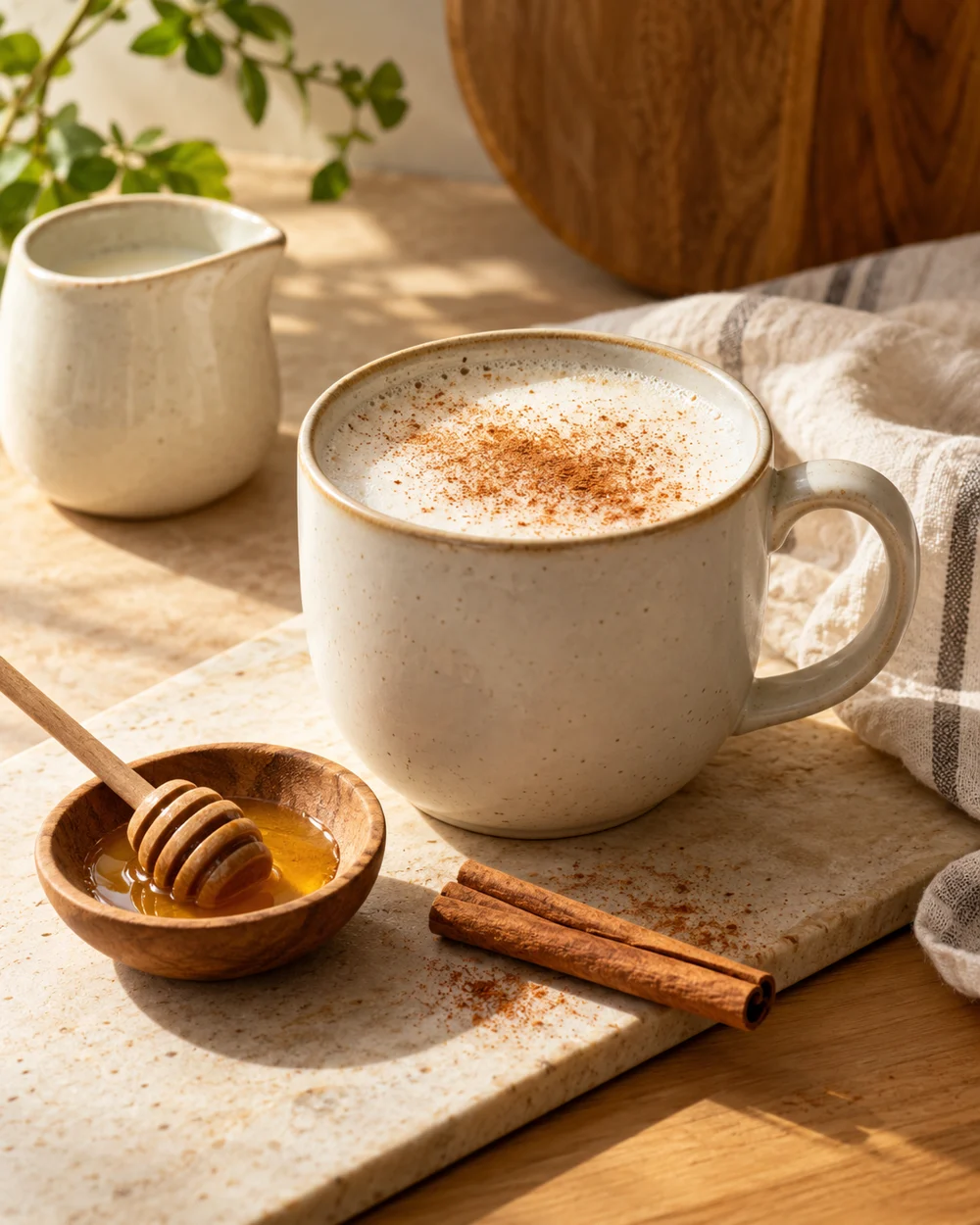
Warm Cocoa and Tahini Drink
Tahini brings a toasty, nutty depth to warm cocoa, but it has a tendency to seize into stubborn clumps the moment it meets hot liquid directly. The fix is straightforward: whisk the tahini with a small measure of room-temperature milk first, building a smooth paste before the cocoa ever enters the picture. Once that paste is ready, stirring it gradually into warm cocoa produces a cup that is creamy, evenly blended, and rich without feeling heavy. This article walks through the full method as an illustrative plan rather than a claim of tested results, giving you a clear worked example to follow at home.
Read the note ↓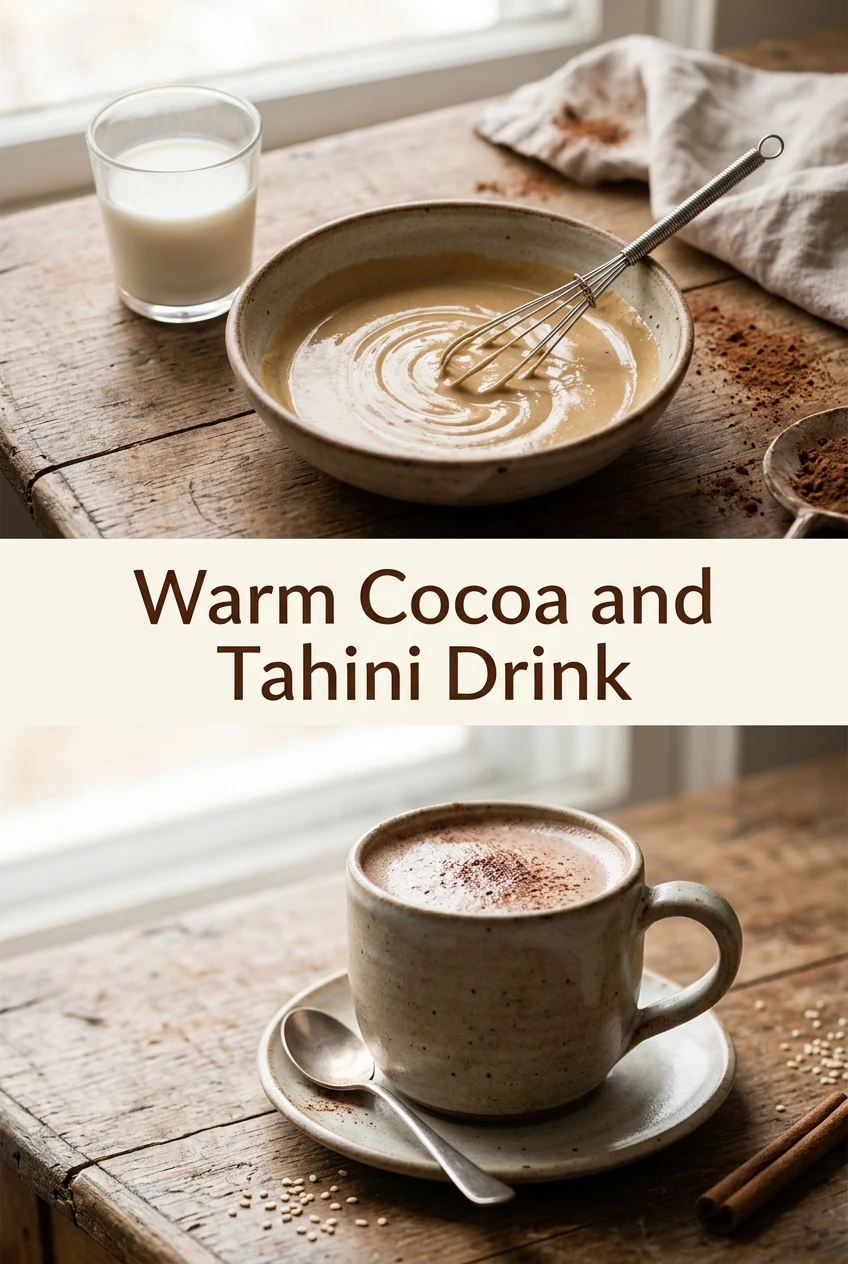
AI-generated editorial concept created for this article. The image is not a technical diagram or a tested result.
Why Tahini Needs a Pre-Blend Step
Tahini is made of finely ground sesame seeds suspended in oil. When poured directly into hot liquid, tahini can seize and separate into dense clumps that are difficult to disperse. Mixing the tahini first with a small portion of room-temperature milk allows the paste to loosen evenly without breaking. Whisking the two together creates a smooth, cohesive base before any heat is introduced. Once this base is fully blended, the warm cocoa can be stirred in gradually without clumping.
Ingredients for One Serving
To make one 250 ml cup, gather the following: one tablespoon of tahini (approximately 15 ml), two teaspoons of unsweetened cocoa powder, one teaspoon of sugar or honey adjusted to your preference, a pinch of fine salt, 30 ml of whole milk at room temperature for the pre-blend, and 220 ml of whole milk warmed to a comfortable drinking temperature. You may also add a small pinch of ground cinnamon if you enjoy a lightly spiced note. All flavorings used should be explicitly alcohol-free. Check that your cocoa powder contains no added dairy if you plan to substitute a plant-based milk throughout.
Building the Tahini Paste
Measure the tahini into a small bowl or the cup you intend to drink from. Pour the 30 ml of room-temperature milk directly onto the tahini. Using a small whisk or a fork, work the two together using short, circular strokes. Within about thirty seconds of steady whisking, the mixture should shift from a separated, oily look to a pale, cohesive paste with no visible streaks of oil sitting on the surface. If the paste still looks broken after a full minute of whisking, add another five millilitres of room-temperature milk and continue. The goal is a smooth, thick cream before any warm liquid is added.
Combining the Cocoa and Finishing the Cup
In a small saucepan, combine the cocoa powder, sugar, salt, and roughly two tablespoons of the measured warm milk. Stir over low heat until the cocoa powder is fully dissolved and no dry pockets remain, then add the remaining warm milk and stir to combine. Remove the pan from the heat. Now pour the warm cocoa mixture into the tahini paste in a slow, steady stream, stirring constantly as you go. Adding the cocoa gradually rather than all at once gives the paste time to absorb the liquid without clumping. Once all the cocoa is incorporated, taste and adjust sweetness. Pour into your cup and serve immediately while warm.
Worked Example with Approximate Figures
As an illustrative plan: starting with 15 ml of tahini and 30 ml of room-temperature milk, whisking produces roughly 45 ml of smooth paste. Adding 220 ml of warm cocoa in four slow pours of about 55 ml each, stirring between each addition, gives the paste time to loosen incrementally. The finished drink sits at approximately 265 ml total, accounting for minor evaporation during warming. This is one coherent example of proportions that may work well together; your own results will depend on the specific tahini brand, milk fat content, and the temperature you maintain during warming. Adjust the ratio of tahini to milk in the pre-blend step if your tahini is particularly thick or thin.
A little more
to know.
Can I use a plant-based milk instead of whole milk?
Yes, a plant-based milk such as oat milk or soy milk can be used in both the pre-blend step and the warm cocoa. Oat milk tends to produce a slightly sweeter result, while soy milk offers a creamier body closer to whole milk. Use the same quantities described in the recipe and whisk the tahini with room-temperature plant-based milk just as you would with dairy milk. Results may vary slightly depending on the fat and protein content of the specific product you choose.
What should I do if small lumps still appear after stirring in the cocoa?
If you notice small lumps forming as you add the warm cocoa, stop pouring and whisk the mixture vigorously for a few seconds before continuing. Pouring more slowly and in smaller increments usually helps. If lumps persist after the full amount of cocoa has been added, you can pass the finished drink through a fine mesh strainer into your cup, which will catch any remaining solids and leave the liquid smooth.
Original editorial guidance and recipe formulations, not independently kitchen-tested. Times are estimates and depend on equipment and product directions. Cooked bases need additional cooling and refrigeration before cold serving. Images are AI-generated illustrations; appearance and yield may vary. Check actual ingredient labels, allergens, and any certification you require. We do not certify products. Read our approach.
Save to Pinterest ↗ANOTHER IDEA FOR THE COUNTER