Use a Small Bowl to Check One Egg Before Adding It to Batter
Cracking an egg directly into a bowl of carefully measured batter is a gamble. A stray shell fragment or an egg that has turned can ruin the whole batch before you notice. The fix is straightforward: crack each egg into a small, clean bowl first, inspect it, remove any shell pieces with a spoon, and only then tip it into the main mixing bowl. This single extra step keeps your batter clean and gives you a clear look at each egg before it disappears into the mix.
Read the note ↓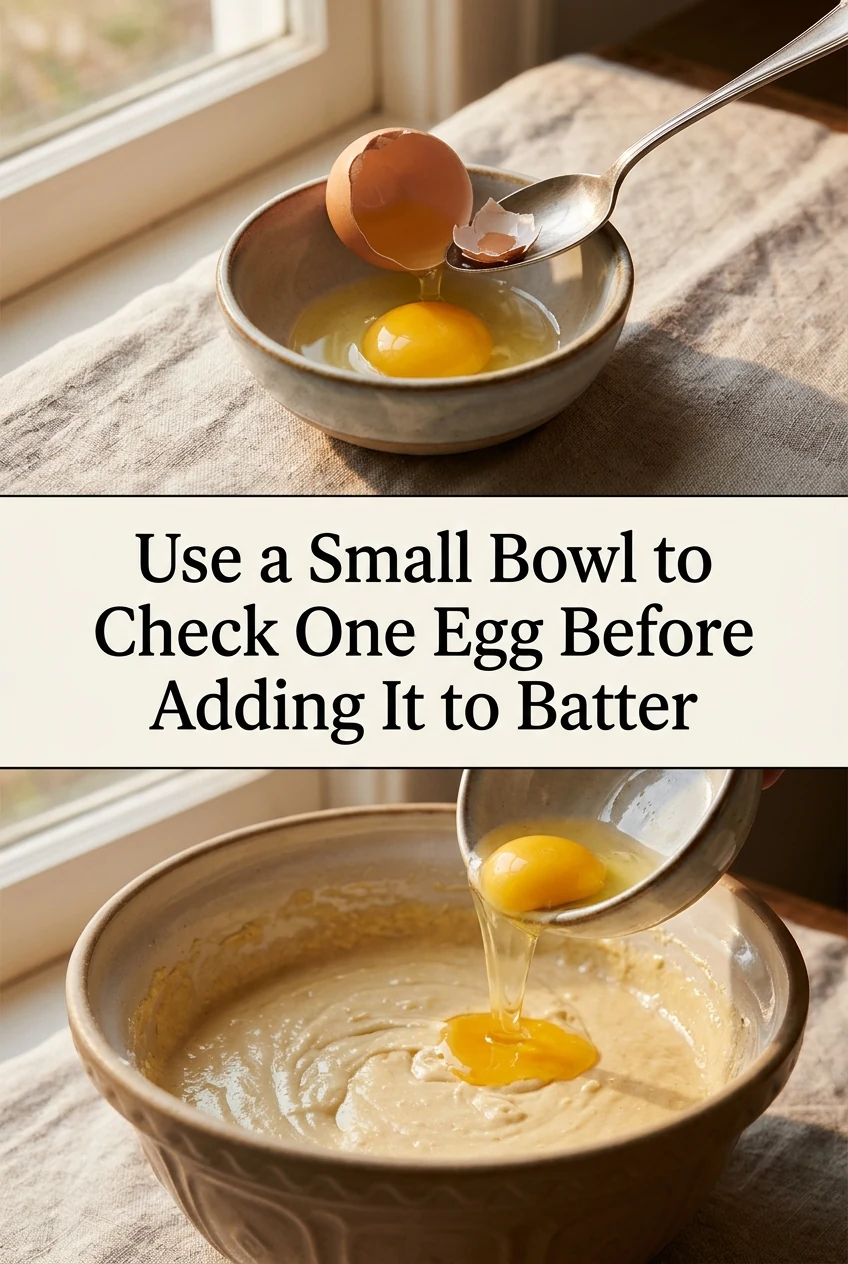
AI-generated editorial concept created for this article. The image is not a technical diagram or a tested result.
Why a Separate Bowl Makes a Difference
When you crack an egg straight into batter, a shell chip sinks immediately and becomes nearly impossible to find among flour, sugar, and liquid. Fishing for it means stirring the batter more than intended and still possibly missing the fragment. A small bowl — a ramekin, a cereal bowl, or any clean vessel that holds roughly half a cup — gives you a plain white or neutral background where a shell piece is easy to spot and lift out with a spoon before any damage is done. It also lets you see the yolk and white clearly. If the yolk breaks during cracking, you can decide whether that matters for your particular recipe before the egg is already mixed in.
How to Crack and Inspect Each Egg
Tap the egg firmly on the flat rim of the small bowl rather than on a sharp edge, which tends to push shell inward. Pull the two halves apart over the bowl and let the egg drop in. Look at the surface. Shell fragments catch the light and sit on top of the white; lift them out with a clean dry spoon rather than chasing them with a wet finger, which makes them slippery. Check that the yolk is intact and that the white looks clear. If you see anything that concerns you — an off smell, an unusual color — discard that egg, rinse the small bowl, dry it, and start fresh with a new egg. Do not taste the raw mixture at any point.
A Worked Example: Sparkling Fruit Sponge Batter
Imagine you are making a simple sponge to layer with fresh fruit. The illustrative plan calls for three eggs, 150 g caster sugar, 150 g plain flour, and one teaspoon of alcohol-free vanilla flavoring. You have your main mixing bowl on the scale with the sugar already creamed into softened butter. Set a ramekin beside the bowl. Crack the first egg into the ramekin, inspect it, confirm no shell is present, and pour it into the main bowl. Beat briefly. Repeat with the second egg in the same ramekin — rinse and dry the ramekin between eggs if you prefer a completely clean surface each time. Repeat for the third. Only after all three eggs are confirmed clean and added do you fold in the flour and vanilla. This sequence keeps each addition controlled and the batter free of debris. Note that this is an illustrative plan, not a kitchen-tested recipe result.
Keeping the Workflow Tidy
Place the small bowl on the same side as your dominant hand so the motion from egg to bowl to main bowl is a short, natural arc. Keep a small spoon dedicated to shell removal within reach. If you are working with cold eggs straight from the refrigerator, the whites will be slightly thicker and easier to inspect because they spread more slowly. Eggs should be refrigerated promptly after purchase and used before the date on the carton; do not leave them at room temperature for extended periods during preparation. Once your batter contains eggs, treat it as a perishable and refrigerate it promptly if you are not baking immediately, following your specific recipe's guidance.
Adapting the Technique to Different Recipes
The small-bowl check works the same way whether you are making a fruit loaf, a chiffon base for a layered dessert, or a simple pancake batter. For recipes that call for separated eggs, the small bowl is especially useful: crack the egg, let the white fall into the bowl, and transfer the yolk to a separate container. Any trace of yolk in whites intended for whipping is immediately visible in the small bowl and can be addressed before it affects the batch. For recipes using halal-certified gelatin in a mousse or set cream alongside the sponge, prepare those components separately and refrigerate them as directed by the product's own instructions. The egg-checking step fits into any sequence without changing the rest of the method.
A little more
to know.
Does cracking into a separate bowl change the texture of the batter?
No. The egg itself is unchanged by the extra bowl. You are simply giving yourself a moment to look at it and remove any shell before it joins the other ingredients. The batter texture depends on your mixing method and ingredient ratios, not on which vessel the egg passes through first.
What should I do if I find a shell fragment in the small bowl?
Use a clean dry spoon to scoop it out. A spoon gives you more control than a finger, and keeping the spoon dry helps it grip the fragment rather than sliding past it. Once the shell is removed and the egg looks clean, tip it into the main bowl as usual.
Original editorial guidance and recipe formulations, not independently kitchen-tested. Times are estimates and depend on equipment and product directions. Cooked bases need additional cooling and refrigeration before cold serving. Images are AI-generated illustrations; appearance and yield may vary. Check actual ingredient labels, allergens, and any certification you require. We do not certify products. Read our approach.
Save to Pinterest ↗ANOTHER IDEA FOR THE COUNTER