Tea Bags or Loose Leaf at Home: Choosing for a Mug Versus a Pot
A household that makes one quick mug on weekday mornings and a shared pot at weekend breakfast is actually dealing with two different preparation problems. Tea bags and loose leaf tea are not simply interchangeable formats; they differ in how you measure them, what equipment they require and how easy they are to clean up. Understanding those differences helps you decide whether to stock one format, the other, or both, rather than defaulting to whatever is most familiar.
Read the note ↓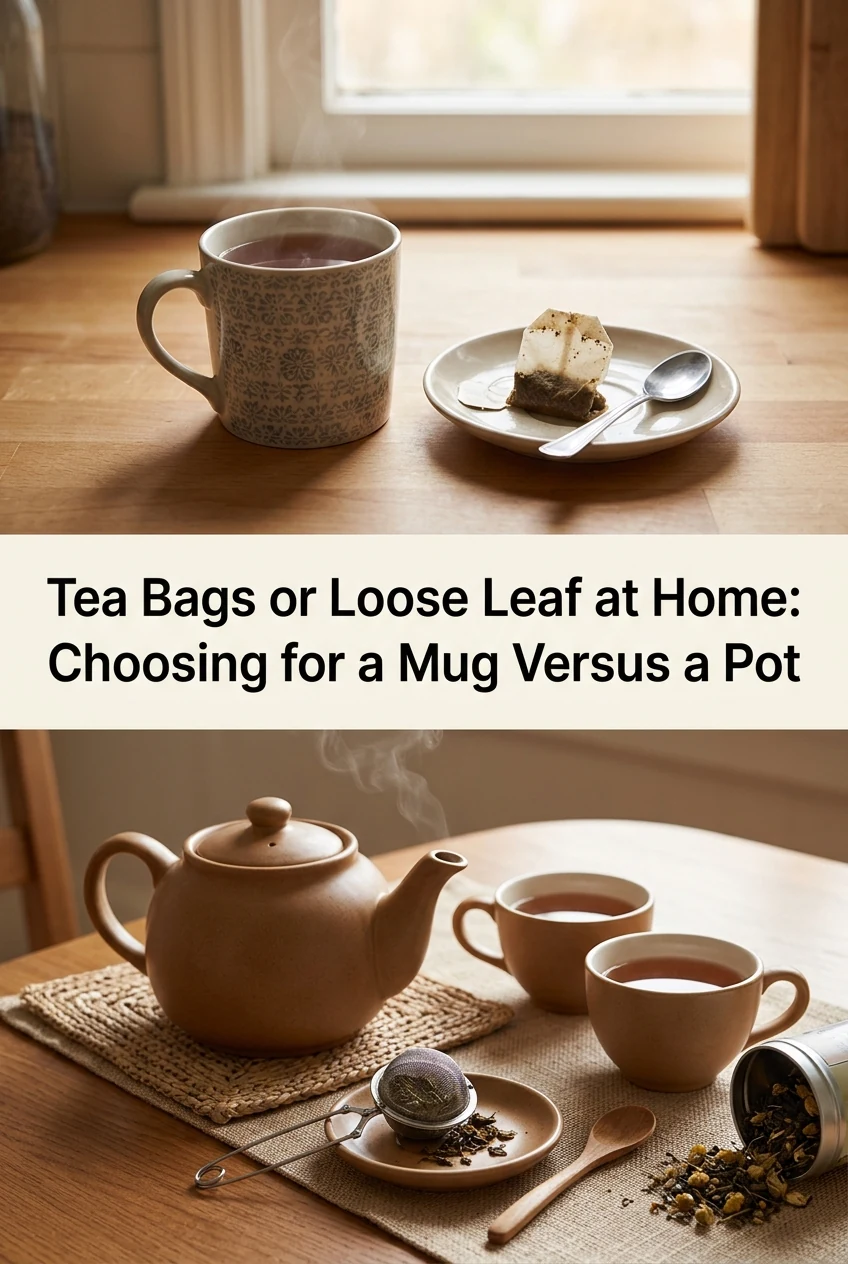
AI-generated editorial concept created for this article. The image is not a technical diagram or a tested result.
How Each Format Is Measured
A tea bag is a pre-measured single unit, typically sized for one standard mug of 200 to 250 millilitres. You do not need to weigh or count anything beyond the number of bags. Loose leaf tea is measured by volume or weight depending on the tea and the maker's instructions; a common starting point printed on many packs is one rounded teaspoon per cup, but this varies by leaf size and density. Always follow the specific directions on your pack rather than applying a single rule across all teas.
Equipment Each Format Requires
Tea bags need only a mug and a spoon for pressing; no additional equipment is required for a single cup. Loose leaf tea for a mug requires an infuser basket, a tea ball or a small strainer placed over the cup. For a pot, loose leaf tea works well with a teapot that has a built-in strainer or with a separate infuser that fits the pot opening. A bag-based pot is simpler: use one bag per cup of water the pot holds, following the pack's guidance, and remove all bags at the same time to avoid over-steeping.
Steeping Time and the Pack's Own Instructions
The steeping time printed on the original packaging is the most reliable guide for that specific tea, and it overrides any generic rule you may have read elsewhere. Black teas, green teas and herbal teas all have different optimal steeping windows, and even within one category the times differ by brand and processing. Over-steeping produces bitterness in many teas. Set a small timer when you steep, particularly with loose leaf in a pot, where it is easy to forget the tea is still in contact with the water.
Handling Spent Leaves and Bags
A used tea bag is easy to remove and discard with one hand. Loose leaf tea requires emptying the infuser or strainer, which takes a few extra seconds and produces wet leaves that need somewhere to go. A small compost bin near the kettle makes this straightforward. For a pot, removing a loose leaf infuser is simple if it has a handle or chain; fishing out leaves from a pot without one is inconvenient. This practical difference is worth weighing honestly if your weekday mornings are rushed.
A Worked Example for One Household
A household making one weekday mug and a four-cup weekend pot might keep both formats: bags for the quick morning mug, and loose leaf for the weekend pot where the slightly longer setup is acceptable and the shared experience makes it worthwhile. This is an illustrative arrangement rather than a universal recommendation. The deciding factors are how much time you have, whether you already own a suitable infuser, and whether the teas you enjoy are available in both formats where you shop.
A little more
to know.
Is loose leaf tea always better quality than tea bags?
Not automatically. Quality depends on the specific tea and brand, not the format. Some producers offer the same tea in both formats. Taste and compare within a brand you trust rather than assuming one format is superior across the board.
Can I reuse a tea bag or loose leaf for a second steep?
Some loose leaf teas, particularly certain green and oolong teas, are designed for multiple steeps with adjusted timing, as noted on their packaging. Most standard tea bags are intended for a single use. Follow the maker's guidance rather than assuming reuse is appropriate.
Original editorial guidance and recipe formulations, not independently kitchen-tested. Times are estimates and depend on equipment and product directions. Cooked bases need additional cooling and refrigeration before cold serving. Images are AI-generated illustrations; appearance and yield may vary. Check actual ingredient labels, allergens, and any certification you require. We do not certify products. Read our approach.
Save to Pinterest ↗ANOTHER IDEA FOR THE COUNTER