Sparkling Pomegranate and Mint Cooler With a Measured Base
Pouring pomegranate juice directly onto sparkling water tends to trigger a rapid foam surge that pushes liquid over the rim and leaves the drink unevenly mixed. A simple change in the assembly order resolves this: measure the chilled juice into the glass first, add bruised mint, and then introduce cold sparkling water in a controlled side-pour down the glass wall. This sequence yields a layered, lightly effervescent cooler that retains carbonation well and helps prevent foam overflow during pouring.
Read the note ↓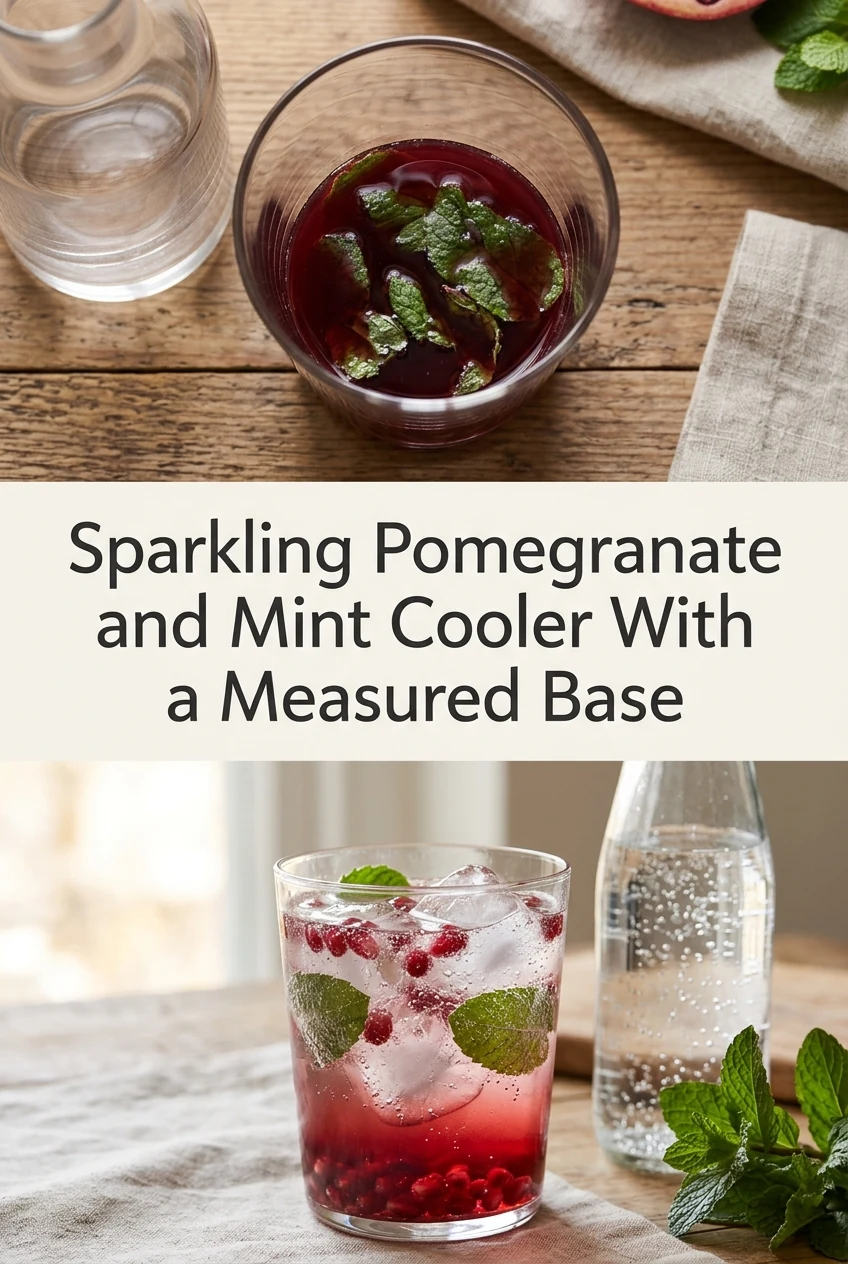
AI-generated editorial concept created for this article. The image is not a technical diagram or a tested result.
Why Pour Order Matters in a Sparkling Drink
Carbonated water rapidly releases dissolved gas when subjected to sudden turbulence or introduced to rough nucleation sites. When dense juice is poured directly onto sparkling water, the heavier liquid sinks rapidly through the glass, churning the carbonated water and triggering a sudden foam overflow. Reversing the order by pouring the still pomegranate juice first and introducing the cold sparkling water gently down the tilted glass wall minimizes agitation. The sparkling water flows smoothly over the dense base layer, preserving carbonation and preventing rapid foam buildup.
Choosing and Chilling Your Ingredients
Select a 100-percent pomegranate juice with no added sweeteners if you prefer a tart profile, or a lightly sweetened blend if you want a milder drink. Both work in this format. Chill the juice in the refrigerator before you begin; cold juice releases less gas on contact with sparkling water than room-temperature juice would. Choose a plain sparkling water or a lightly flavored variety — unflavored works well because it lets the pomegranate and mint carry the taste. Chill the sparkling water as well. For mint, fresh spearmint or peppermint leaves are both suitable; pick leaves that look bright and unbruised before you bruise them yourself just before assembly. A tall 350-milliliter glass works well for the proportions described in the worked example below.
A Worked Example: One 350-Milliliter Glass
For a single serving in a 350-milliliter glass, measure 100 milliliters of chilled pomegranate juice into the base. Take four or five fresh mint leaves and press them gently between your fingers or against the back of a spoon to bruise them lightly without tearing, then drop them into the juice. If serving without ice, tilt the glass at a low angle and slowly pour approximately 230 milliliters of cold sparkling water down the inside wall, stopping about one centimeter below the rim to leave headspace. This produces a juice-to-water ratio of roughly 1-to-2.3. If you prefer to add two or three ice cubes, add them to the juice first and reduce the sparkling water to approximately 160 to 180 milliliters to accommodate the ice displacement and avoid overflowing the glass. Serve immediately without stirring to keep the effervescence intact.
Serving Without Stirring
Skipping the stir is intentional here. Stirring after the sparkling water is added releases carbonation quickly and flattens the drink faster. Because the juice sits at the base and the sparkling water above it, the first sip from the top will taste lighter and more effervescent, while sips toward the bottom will carry more pomegranate flavor. Some people enjoy this natural gradient; others prefer to give the glass a single slow swirl — not a vigorous stir — just before drinking. Either approach is reasonable. If you do swirl, do it gently and only once to avoid triggering overflow. The mint leaves will drift and release a little more aroma as the drink is consumed.
Scaling Up for a Small Batch
To prepare multiple glasses at once, multiply the per-glass measurements by the number of servings. For four glasses using the same proportions, measure 400 milliliters of chilled pomegranate juice total and divide it evenly — 100 milliliters per glass — before adding mint to each. Keep the sparkling water sealed and refrigerated until the moment of pouring so it retains as much carbonation as possible. Pour each glass individually rather than premixing in a pitcher, because combining sparkling water with juice in a large vessel and then pouring into glasses loses a significant amount of carbonation during the transfer. Prepare each glass close to the time it will be served rather than assembling them all far in advance.
A little more
to know.
Can I use pomegranate juice from a freshly squeezed source rather than a bottled product?
Yes. Freshly extracted pomegranate juice works in this recipe in the same way as bottled juice. Strain it through a fine mesh strainer to remove any pulp or seed fragments before measuring, as pulp can create additional nucleation points that encourage faster foam when the sparkling water is added. Chill the strained juice thoroughly before use.
What if my sparkling water still foams when I pour it along the glass wall?
A few adjustments may help. Make sure both liquids are as cold as possible before you start. Pour more slowly and keep the bottle or can opening very close to the inside wall of the glass so the water travels a shorter distance before reaching the juice. Stopping the pour briefly if foam begins to rise and then continuing once it settles is also a reasonable approach. Results will vary depending on the carbonation level of the specific sparkling water you use.
Original editorial guidance and recipe formulations, not independently kitchen-tested. Times are estimates and depend on equipment and product directions. Cooked bases need additional cooling and refrigeration before cold serving. Images are AI-generated illustrations; appearance and yield may vary. Check actual ingredient labels, allergens, and any certification you require. We do not certify products. Read our approach.
Save to Pinterest ↗ANOTHER IDEA FOR THE COUNTER