Sparkling Peach and Cardamom Iced Tea
A sparkling peach and cardamom iced tea works best when each component is prepared and cooled separately before the glass is assembled. Combining warm tea with cold soda water flattens the carbonation immediately, and adding peach puree after the soda causes overflow. The sequence matters more than any single ingredient here. This guide covers brewing the tea and cardamom together, cooling the mixture correctly, layering the glass in the right order, and keeping the finished drink fizzy from the first sip to the last.
Read the note ↓
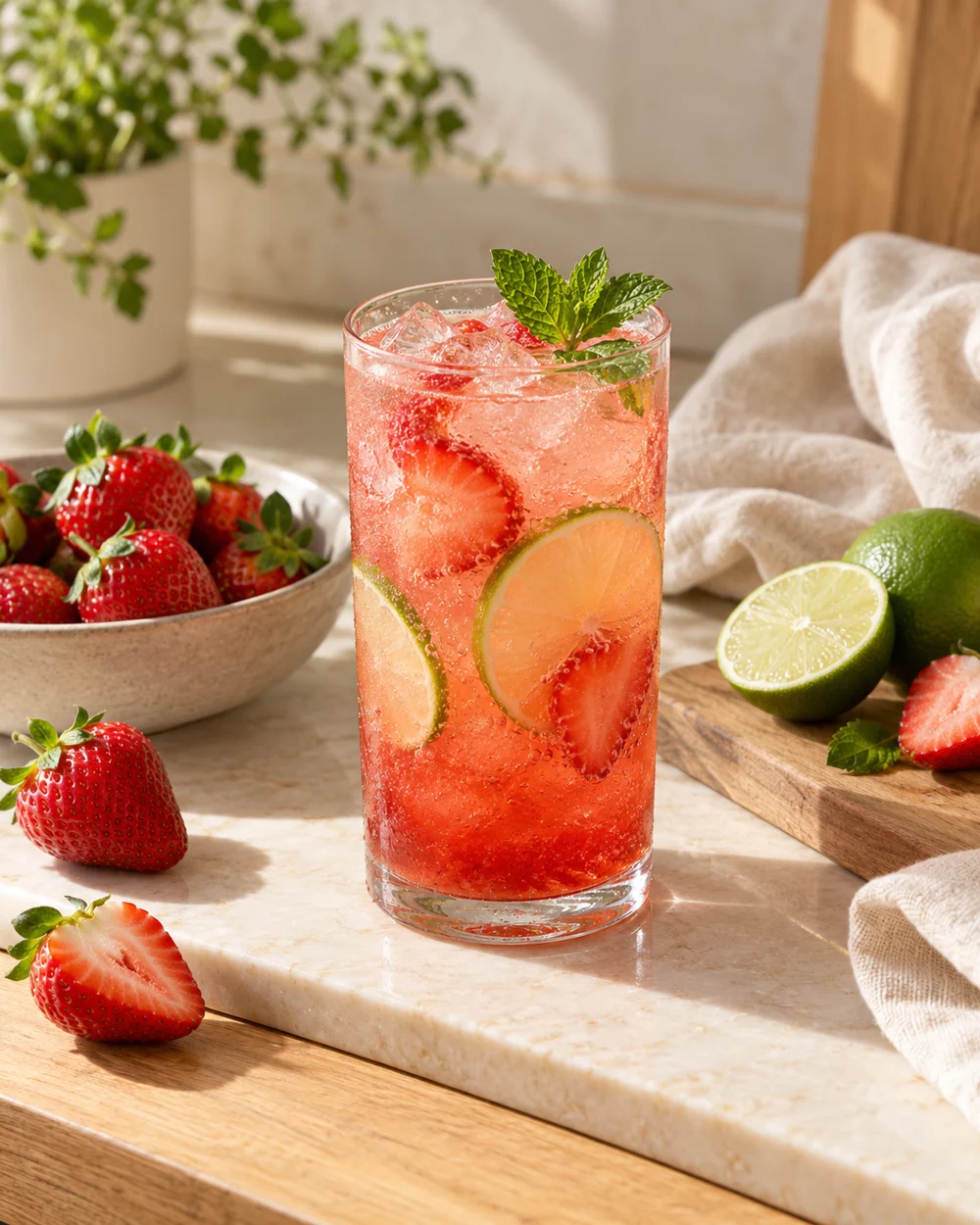
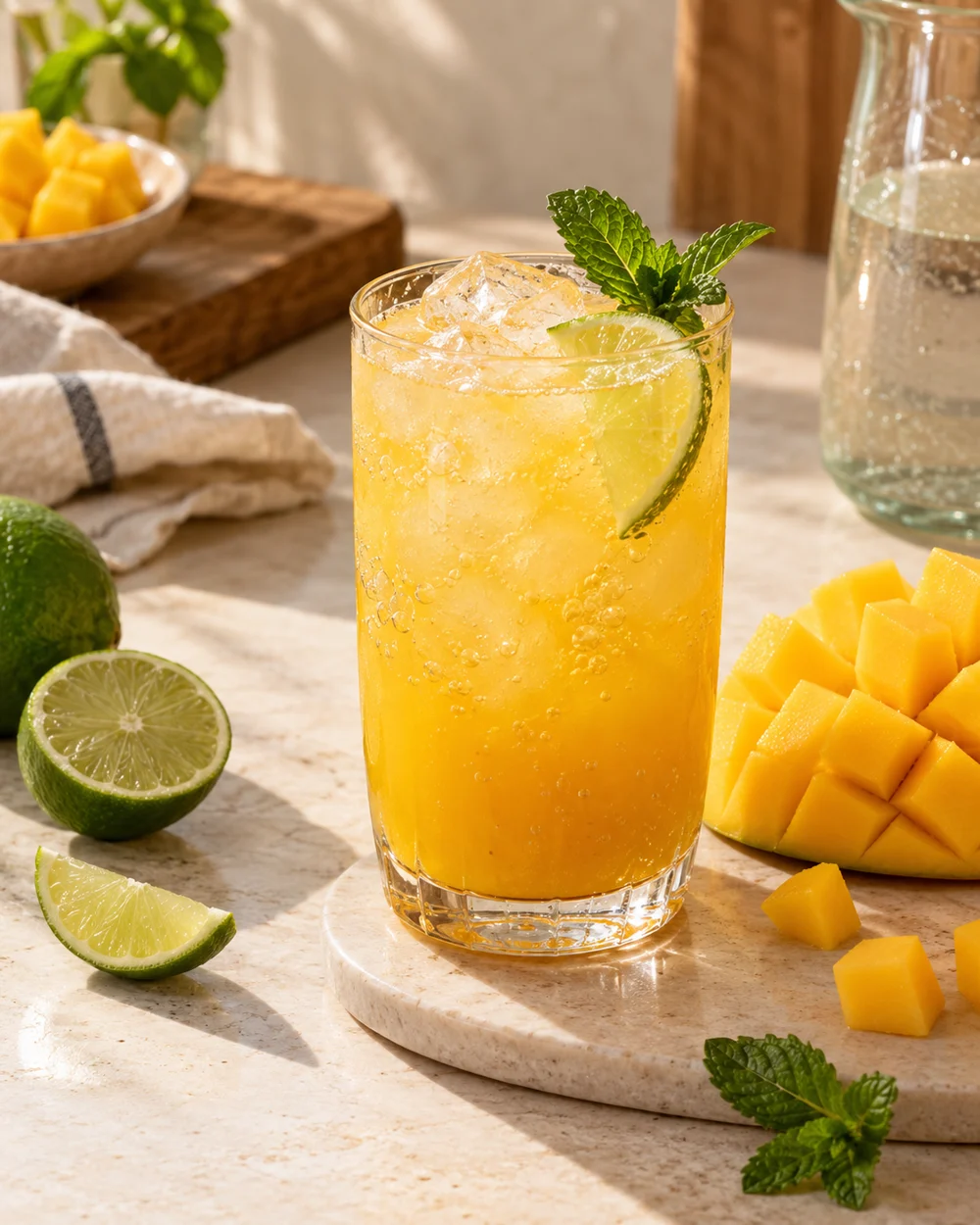
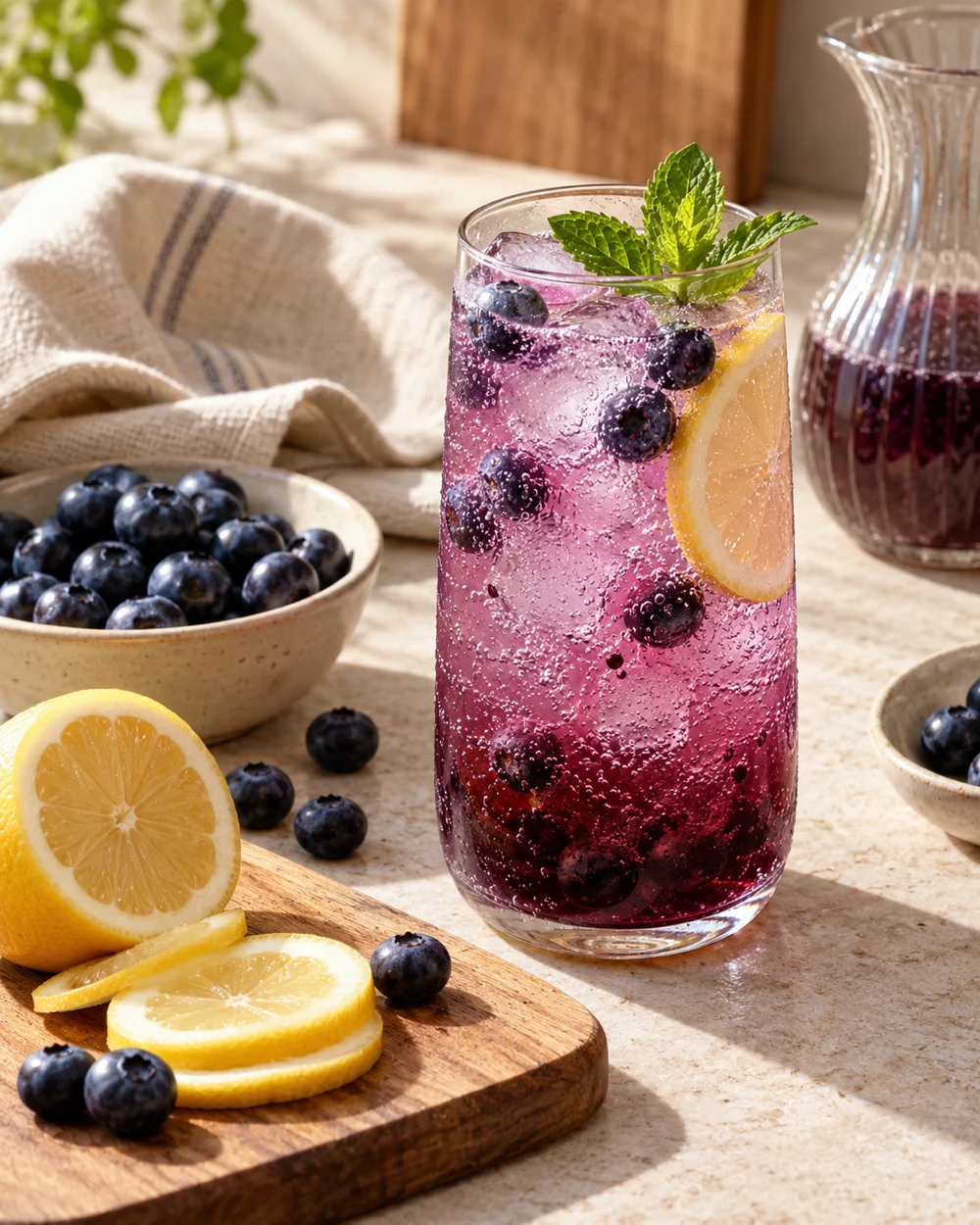
AI-generated editorial concept created for this article. The image is not a technical diagram or a tested result.
Brew the Tea and Cardamom Together
Bring 300 millilitres of filtered water to approximately 90 to 95 degrees Celsius. Add 2 black tea bags and 4 lightly crushed green cardamom pods to a heatproof jug. Pour the hot water over them and steep for 4 minutes. Remove the tea bags at 4 minutes to avoid bitterness; leave the cardamom pods in for an additional 2 minutes if you want a stronger spice note, then remove them. Do not squeeze the tea bags, as that releases harsh tannins into the brew.
Cool the Tea Completely Before Assembling
Pour the strained tea into a clean heatproof container and allow it to cool to room temperature, then refrigerate it until it reaches 4 degrees Celsius or below. This typically takes 1 to 2 hours depending on your refrigerator and container size. Do not add ice directly to the hot tea to speed cooling if you are using the tea as a measured component, because the melting ice dilutes the concentration unpredictably. Prepare the tea the evening before if you want a faster morning assembly.
Prepare the Peach Component Separately
Blend 100 grams of ripe peeled peach flesh until smooth, then pass it through a fine-mesh strainer to remove fibrous threads. Stir in 15 millilitres of a simple syrup made from equal weights of sugar and water, adjusting to taste based on the peach's natural sweetness. Refrigerate the strained peach puree in a small sealed container until cold. Using warm or room-temperature puree in the glass will raise the overall temperature of the drink and reduce how well the carbonation holds.
Layer the Glass in the Correct Order
Fill a tall 350 to 400 millilitre glass with ice cubes first. Spoon or pour the cold peach puree over the ice, then pour the cold cardamom tea slowly over the back of a spoon held just above the puree surface. This slows the pour and reduces agitation. Finally, add 80 to 100 millilitres of chilled plain soda water by tilting the glass slightly and pouring down the inside wall. Stir once gently with a long spoon just before serving to distribute the layers without collapsing the carbonation.
Serve Immediately and Handle Leftovers Safely
Sparkling drinks lose carbonation quickly once assembled, so serve the glass within a few minutes of building it. If you are making multiple glasses, assemble them one at a time rather than building all glasses and then adding soda to each. Any unused cold tea or peach puree should be stored separately in sealed containers at 4 degrees Celsius or below and used within 24 hours. Do not store the assembled drink, as the ice dilutes it and the carbonation dissipates completely.
A little more
to know.
Can I use canned peach instead of fresh for the puree?
Yes. Use canned peach in juice rather than syrup to avoid excess sweetness, and drain it well before blending. Taste before adding any simple syrup, as canned peach is often already sweet enough. Strain the blended puree the same way you would fresh peach.
Why does my drink overflow when I add the soda water?
Overflow usually happens when the puree or tea is not fully cold, or when the soda is poured too quickly from directly above. Tilt the glass and pour the soda slowly down the inside wall. Ensuring all components are well chilled before assembly also reduces the fizzing reaction significantly.
Original editorial guidance and recipe formulations, not independently kitchen-tested. Times are estimates and depend on equipment and product directions. Cooked bases need additional cooling and refrigeration before cold serving. Images are AI-generated illustrations; appearance and yield may vary. Check actual ingredient labels, allergens, and any certification you require. We do not certify products. Read our approach.
Save to Pinterest ↗ANOTHER IDEA FOR THE COUNTER