Sparkling Lychee and Lime Soda With a Measured Base
Lychee pulp is naturally dense and fibrous, which means it tends to sink unevenly and cloud a glass when sparkling water is poured over it without preparation. This article describes a straightforward method for blending and straining the fruit into a smooth base, measuring lime juice as a separate component, and assembling the drink in a deliberate order so that carbonation is preserved and the layers settle cleanly. The steps below represent one illustrative plan, not a claim of tested or guaranteed results.
Read the note ↓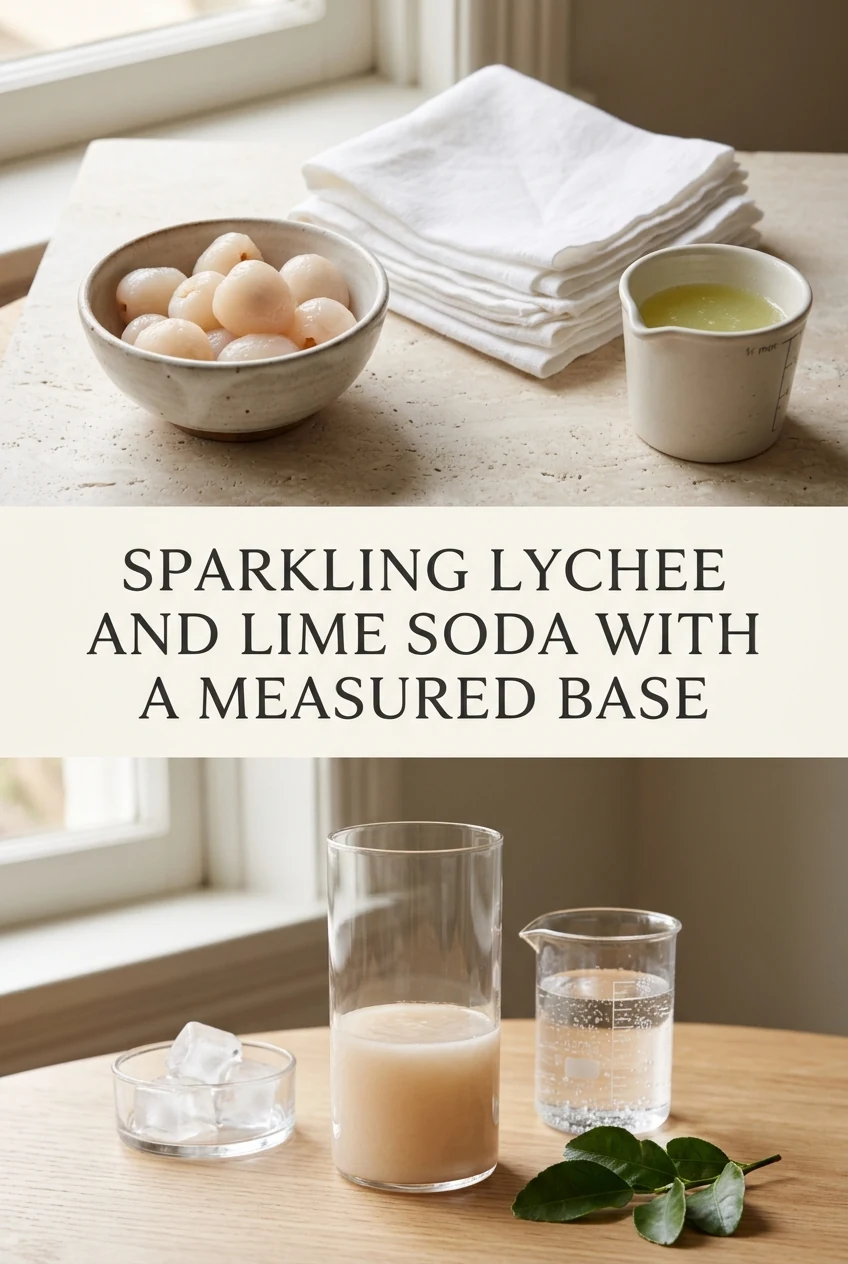
AI-generated editorial concept created for this article. The image is not a technical diagram or a tested result.
Understanding Why Order and Texture Matter
Canned lychees in syrup are the most consistent starting point because the fruit is already soft and the syrup provides a mild sweetness that blends evenly. Fresh lychees work as well once peeled and pitted, though their texture varies by ripeness. The core problem with adding lychee pulp directly to a sparkling drink is density: unblended fruit pieces are heavier than carbonated water and settle at the bottom in irregular clumps, disrupting the visual layering and making the first sips fruit-heavy while the last sips are mostly plain water. Blending the fruit and then straining it through a fine-mesh sieve removes fibrous strands and produces a pourable liquid base that distributes more evenly when the sparkling water is added carefully.
Preparing the Lychee Base and Measuring Lime Juice
Drain roughly 200 grams of canned lychees, reserving two tablespoons of the syrup if you want a slightly sweeter base. Place the lychees and reserved syrup into a blender and process until completely smooth, which typically takes around thirty to forty-five seconds depending on the blender. Pour the blended mixture through a fine-mesh sieve set over a bowl, pressing gently with a spoon to push the liquid through while leaving the fibrous solids behind. You should expect to yield approximately 120 to 140 millilitres of strained lychee liquid from 200 grams of drained fruit, though this varies by brand and ripeness. Separately, squeeze and measure 20 millilitres of fresh lime juice using a small measuring jug or a graduated squeeze bottle. Keeping the lime juice separate at this stage lets you adjust the balance before assembly rather than guessing after the drink is built.
Chilling Components Before Assembly
Temperature affects how well carbonation is retained during pouring. Place the strained lychee base and the measured lime juice in the refrigerator for at least twenty minutes before building the drink. Use a tall glass that has also been chilled, either by storing it briefly in the refrigerator or by filling it with ice water and emptying it just before use. Cold sparkling water poured into a cold glass loses less carbonation than the same water poured into a warm vessel. For this illustrative plan, use 200 millilitres of plain cold sparkling water with no added flavoring. If you prefer a lightly sweetened drink and did not use the reserved syrup in the base, a small measured amount of simple syrup can be stirred into the lychee base before chilling.
Assembling the Drink in the Correct Order
Add ice to the chilled glass first, filling it roughly halfway. Pour the strained lychee base over the ice, followed immediately by the 20 millilitres of lime juice. These two components are denser than sparkling water and will settle together at the base of the glass. To add the sparkling water without disrupting the layers or losing carbonation, tilt the glass slightly and pour the cold sparkling water slowly down the inner side of the glass rather than directly onto the surface of the fruit base. This side-pour technique reduces the force of the liquid hitting the denser base and helps the carbonation remain intact. Once all 200 millilitres of sparkling water have been added, place a straw into the glass and give one or two gentle stirs from the bottom upward if you prefer the flavors integrated, or leave it layered and let the drinker stir at the table.
Scaling the Recipe for Multiple Glasses
For two glasses using this illustrative plan, double each component: approximately 400 grams of drained lychees to yield roughly 240 to 280 millilitres of strained base, 40 millilitres of lime juice, and 400 millilitres of cold sparkling water. Blend and strain the full batch of lychee base at once, then divide it equally between two chilled glasses using a measuring jug to keep portions consistent. Measure and add the lime juice to each glass separately so the balance is the same in both. Open the sparkling water just before pouring to retain as much carbonation as possible, and pour into each glass using the same side-pour method. Preparing more than two glasses at a time using this approach is possible, though the sparkling water should be portioned and poured glass by glass rather than mixed in a pitcher, where carbonation dissipates quickly.
A little more
to know.
Can frozen lychees be used instead of canned or fresh?
Frozen lychees can be used once fully thawed. Thaw them in the refrigerator rather than at room temperature, then drain the liquid that collects during thawing before blending. The yield of strained base liquid may differ slightly from canned lychees because the texture after freezing and thawing varies, so measure the finished base before assembling the drink to confirm you have the intended volume.
What can be used instead of plain sparkling water to vary the flavor?
Unflavored sparkling mineral water is the most neutral option and lets the lychee and lime flavors come through clearly. A lightly flavored sparkling water, such as one with a plain citrus note and no added sweetener, can complement the lime juice without overpowering the lychee base. Avoid sparkling waters with strong artificial flavors or added sweeteners unless you have already tasted the combination and adjusted the lime and syrup quantities accordingly.
Original editorial guidance and recipe formulations, not independently kitchen-tested. Times are estimates and depend on equipment and product directions. Cooked bases need additional cooling and refrigeration before cold serving. Images are AI-generated illustrations; appearance and yield may vary. Check actual ingredient labels, allergens, and any certification you require. We do not certify products. Read our approach.
Save to Pinterest ↗ANOTHER IDEA FOR THE COUNTER