Sparkling Kiwi and Ginger Iced Tea Built From a Brewed Concentrate
Kiwi juice stirred directly into sparkling water releases carbonation almost immediately because the fruit acids and pulp create nucleation sites for bubbles to escape. Building the drink in stages solves this: brew a strong ginger tea concentrate ahead of time, strain kiwi separately to remove pulp, and combine everything over ice at the moment of serving. This approach preserves carbonation and gives each glass a clean, bright flavour without a flat or cloudy result.
Read the note ↓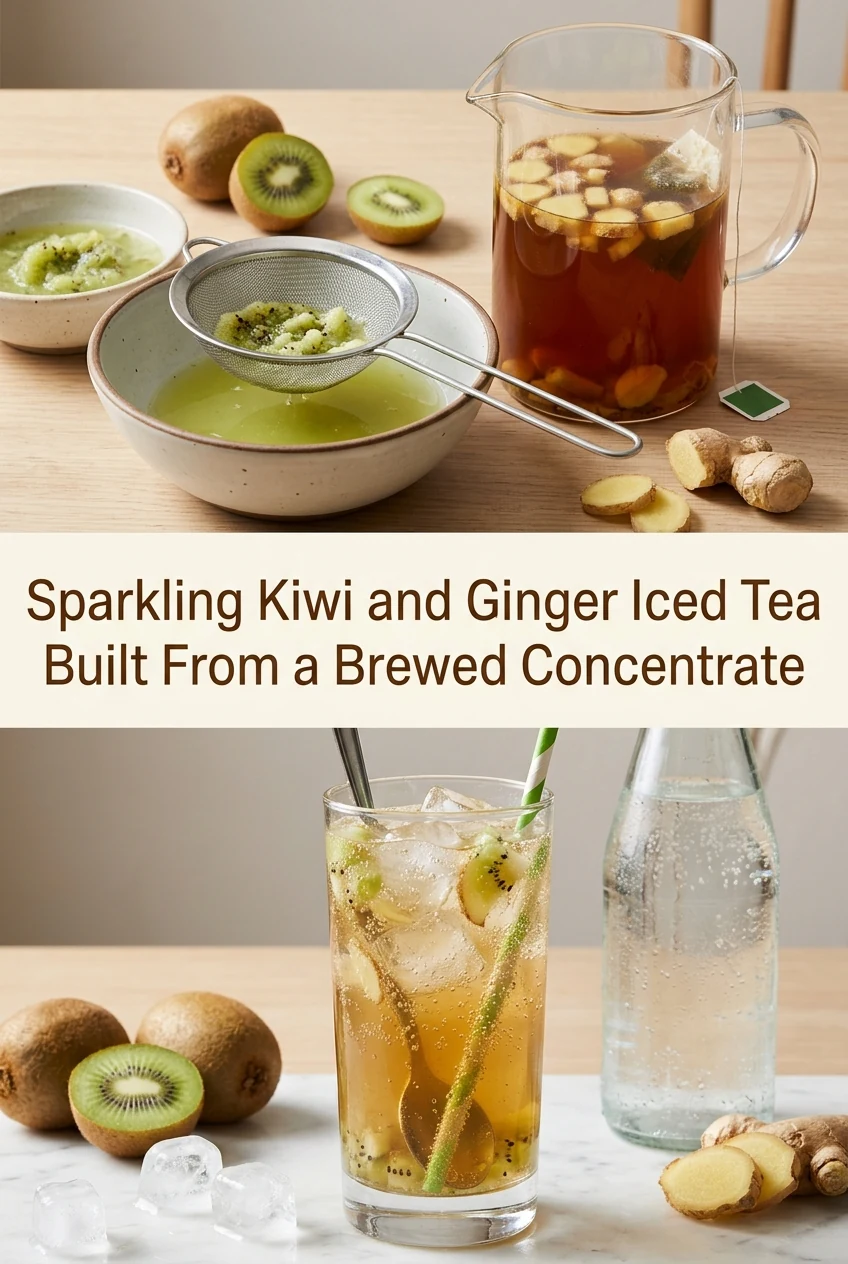
AI-generated editorial concept created for this article. The image is not a technical diagram or a tested result.
Brew the Ginger Tea Concentrate
Peel and thinly slice 30 g of fresh ginger root. Combine with 300 ml of boiling water and two plain green tea bags in a heatproof jug. Steep for seven minutes, then remove the tea bags and allow the ginger slices to continue steeping as the liquid cools. Once at room temperature, strain through a fine mesh strainer into a clean container. Stir in one tablespoon of caster sugar while the liquid is still slightly warm so it dissolves fully. Refrigerate until cold.
Prepare the Kiwi Juice Separately
Peel two ripe kiwi fruits and blend or mash them thoroughly. Press the pulp through a fine mesh strainer using the back of a spoon, collecting the juice in a small bowl. Discard the pulp and seeds. You should yield approximately 60 to 70 ml of juice from two medium kiwi fruits, though this varies with ripeness. Keep the strained juice refrigerated until assembly. Straining removes the pulp that would otherwise accelerate bubble loss when the juice meets sparkling water.
Assemble the Drink at the Moment of Serving
Fill a tall glass with ice. Pour 80 ml of the cold ginger tea concentrate over the ice first, then add 30 ml of the strained kiwi juice. Finally, pour 120 ml of chilled sparkling water down the inside edge of the glass slowly. Pouring the sparkling water last and along the glass wall rather than directly onto the other liquids reduces agitation and preserves more carbonation. Stir once gently with a long spoon and serve immediately.
Adjust Sweetness and Strength Before Serving
Taste the concentrate before assembly. If the ginger flavour is too sharp, dilute the concentrate with a small amount of cold water before portioning. If the drink tastes flat in sweetness, add a few drops of simple syrup to the glass rather than to the concentrate batch, so you can adjust per serving. The kiwi juice contributes natural tartness, so the overall balance shifts depending on the ripeness of the fruit used. Riper kiwi produces a sweeter, less acidic juice.
Storage and Batch Limits for the Concentrate
Store the ginger tea concentrate in a sealed container in the refrigerator at 4 degrees Celsius or below. The strained kiwi juice should also be refrigerated separately in a sealed container. Use both within two days for best flavour. Do not combine the concentrate and kiwi juice in advance, as the acid in the kiwi will begin to alter the tea flavour over time. Prepare sparkling water portions fresh for each serving; pre-mixing with sparkling water is not practical.
A little more
to know.
Can I use bottled kiwi juice instead of fresh?
Bottled kiwi juice works if it is unsweetened and pulp-free. Check that no added preservatives are present that might affect the tea flavour. Adjust sweetness in the concentrate accordingly since bottled juice sweetness levels vary between products.
Why does my drink taste bitter even after reducing steep time?
Bitterness in this drink usually comes from over-steeping the green tea rather than the ginger. Remove the tea bags at seven minutes precisely and do not squeeze them. Squeezing releases additional tannins that create a persistent bitter aftertaste.
Original editorial guidance and recipe formulations, not independently kitchen-tested. Times are estimates and depend on equipment and product directions. Cooked bases need additional cooling and refrigeration before cold serving. Images are AI-generated illustrations; appearance and yield may vary. Check actual ingredient labels, allergens, and any certification you require. We do not certify products. Read our approach.
Save to Pinterest ↗ANOTHER IDEA FOR THE COUNTER