Set a Kettle to the Right Temperature Range for White Tea Before Brewing
White tea is made from young leaves and buds that have undergone minimal processing, which leaves them sensitive to heat. Pouring boiling water over them extracts bitter compounds quickly and flattens the subtle flavor the leaf is known for. Most producers print a recommended temperature range on the tin or packet, and that guidance reflects how the specific tea was processed. Checking that range and setting your variable-temperature kettle accordingly before you pour is the single most effective step you can take.
Read the note ↓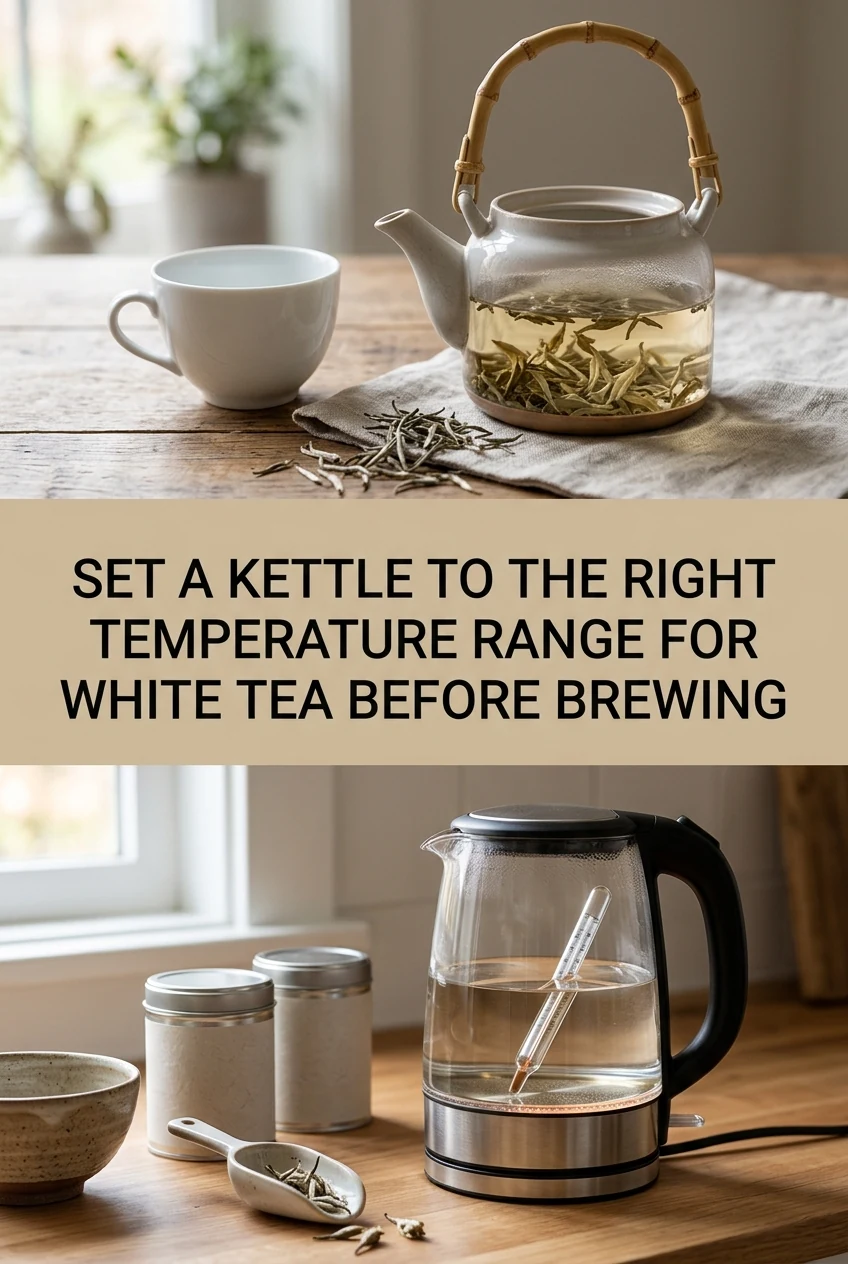
AI-generated editorial concept created for this article. The image is not a technical diagram or a tested result.
Why Temperature Matters More for White Tea Than for Black
Black tea is fully oxidized during processing, allowing it to brew well with freshly boiled water during a standard steep. White tea leaves and buds are minimally processed and only lightly oxidized, making their delicate aromatic compounds vulnerable to scalding while quickly releasing astringent tannins if the water is too hot. Water that is too hot produces a flat, bitter cup that overwhelms the tea's subtle character, regardless of leaf quality.
Reading the Tin Before You Set the Kettle
Producers who specialize in white tea typically print a temperature range on the packaging, often somewhere between 70 and 85 degrees Celsius, though this varies by tea and producer. Treat that range as your primary reference rather than a general rule you have read elsewhere. If the tin gives no temperature guidance, contact the seller or check their website. Using the maker's own recommendation is more reliable than applying a generic figure to every white tea.
Using a Variable-Temperature Kettle Correctly
Set the kettle to the lower end of the range printed on your tin as a starting point, particularly if you are brewing this tea for the first time. Allow the kettle to reach that temperature fully before pouring rather than lifting it partway through the heating cycle. Some kettles hold temperature for a set period after reaching the target; check your kettle's manual for how long it maintains heat, as this affects whether you need to pour immediately or have a short window.
What to Do Without a Variable-Temperature Kettle
If your kettle only boils, bring the water to a full boil and then let it rest in the kettle, uncovered, for several minutes before pouring. This is an approximate method and does not give you a precise temperature. A kitchen thermometer placed in the kettle spout or in a small amount of water poured into a cup first gives you a more accurate reading. This approach requires more attention than a variable kettle but is workable for occasional brewing.
Steeping Time After Temperature Is Set
Once water is at the right temperature, steep according to the time range on the tin, typically one to three minutes for most white teas, though again the producer's guidance takes precedence. Remove the leaves or lift the infuser at the end of that window rather than leaving them in, as extended contact continues extraction even at lower temperatures. Taste the cup before deciding whether to adjust time in future brews, not before.
A little more
to know.
Can I re-steep white tea leaves a second time?
Many white teas tolerate a second steep well. Use water at the same temperature as the first brew and extend the steeping time slightly, often by thirty seconds to one minute. The second cup will differ in character from the first. Follow any re-steeping guidance your producer provides.
Does the amount of leaf I use change the ideal water temperature?
Leaf quantity affects strength and steeping time but not the water temperature needed to protect the leaf's character. Temperature is determined by the tea's processing level. Adjust leaf quantity and steep time to control strength, and keep temperature within the producer's recommended range regardless of how much leaf you use.
Original editorial guidance and recipe formulations, not independently kitchen-tested. Times are estimates and depend on equipment and product directions. Cooked bases need additional cooling and refrigeration before cold serving. Images are AI-generated illustrations; appearance and yield may vary. Check actual ingredient labels, allergens, and any certification you require. We do not certify products. Read our approach.
Save to Pinterest ↗ANOTHER IDEA FOR THE COUNTER