Separate Decaffeinated Coffee from Coffee-Free Menu Options
A home café menu can quietly mislead guests when decaffeinated coffee and genuinely coffee-free drinks share the same section without clear labels. Decaffeinated coffee still contains a small amount of caffeine, as noted on most commercial packaging, so treating it as equivalent to a herbal tisane or a warm milk drink is inaccurate. This article explains how to build a clearly divided warm-drinks menu at home, offers one illustrative decaf latte technique to anchor the decaf section, and shows how to populate a separate coffee-free section with drinks that contain no coffee at all.
Read the note ↓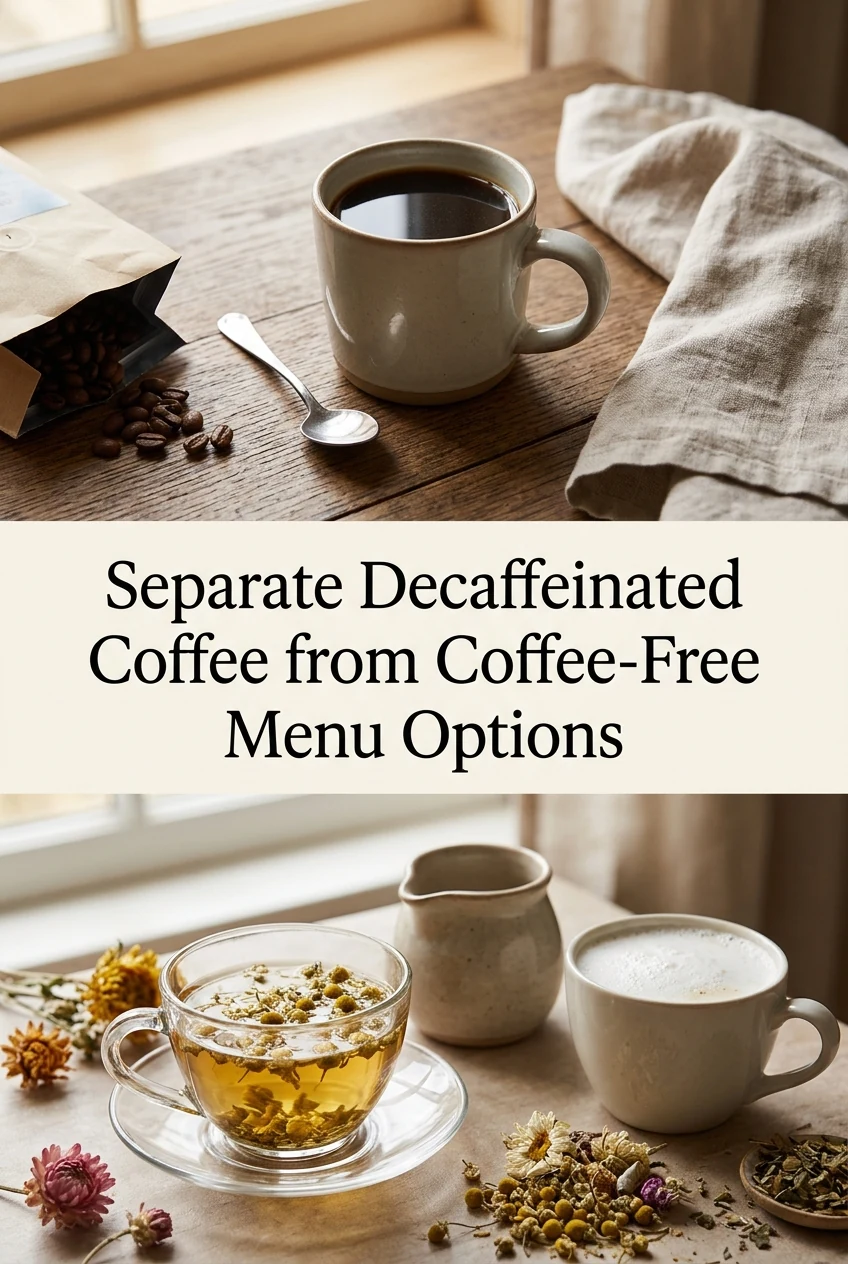
AI-generated editorial concept created for this article. The image is not a technical diagram or a tested result.
Why the Distinction Matters on Your Menu
Decaffeinated coffee is produced by removing most, but not all, caffeine from green coffee beans before roasting. The label on a typical retail bag of decaf ground coffee will state something such as 'naturally decaffeinated' and may note residual caffeine levels. Because some caffeine remains, decaf is not suitable for guests who must avoid caffeine entirely for personal or dietary reasons. Coffee-free drinks, by contrast, contain no coffee whatsoever. Grouping both under a vague heading like 'low-stimulant options' creates confusion. A clearly divided menu with two distinct headings, one for decaffeinated coffee drinks and one for coffee-free warm drinks, lets every guest make an informed choice before ordering.
Reading the Decaf Label Before You Brew
Before writing your decaf menu entry, read the actual ingredient label on the bag you plan to use. Note the decaffeination method the producer lists, such as Swiss Water Process or CO2 process, and use that exact wording in your menu description rather than inventing a claim. Do not state that the drink contains zero caffeine; instead, describe it honestly as a reduced-caffeine option. Check whether the bag lists any added flavourings and confirm those flavourings are alcohol-free if you intend to serve a flavoured decaf. Some commercial decaf blends include natural flavouring agents, and the label will tell you what is present. This label-reading step is the foundation of an accurate menu entry.
An Illustrative Decaf Latte Technique for the Home Café
The following is one illustrative home-café approach, not a kitchen-tested result, and outcomes will vary with your equipment and ingredients. For a single serving, measure two tablespoons of ground decaf coffee, following the grind size recommended on your specific bag, into a stovetop moka pot sized for one or two cups. Fill the lower chamber with cold water to just below the safety valve, assemble the pot according to the manufacturer's directions, and place it on a burner set to medium-low heat. Remove the pot from the heat as soon as you hear the brew begin to sputter, following the maker's guidance on timing. While the coffee brews, warm approximately 150 millilitres of full-fat dairy milk in a small saucepan over low heat until it steams gently; do not boil. If you own a handheld milk frother, use it according to its own instructions to create foam. Pour the brewed decaf into a pre-warmed mug, add a small amount of alcohol-free vanilla flavouring if desired, checking that the product label confirms it is alcohol-free, then spoon the warm frothed milk over the top. Refrigerate any unused milk promptly; do not leave it at room temperature.
Building the Coffee-Free Section of Your Menu
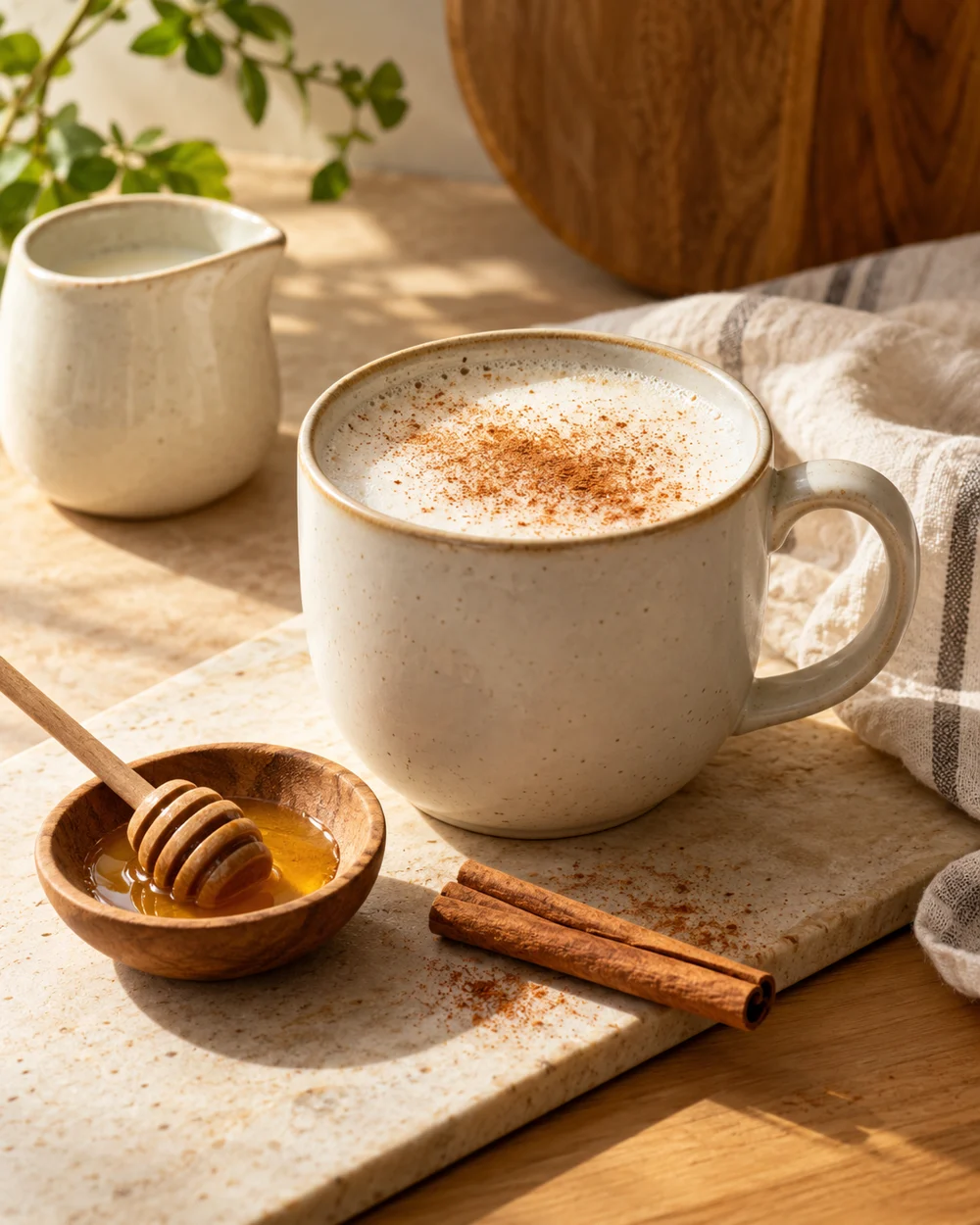
The coffee-free section should contain drinks with no coffee ingredient at all. Suitable candidates include warm oat milk with a pinch of ground cinnamon, loose-leaf herbal tisanes such as chamomile or peppermint prepared according to the packet directions, warm apple juice heated gently on the stove, and halal-certified hot chocolate made with cocoa powder and dairy or plant milk. For each item, list the actual main ingredients you will use so guests can identify anything relevant to their own needs. Avoid describing any of these drinks as 'decaf' because that term belongs specifically to coffee from which caffeine has been partially removed. Keep the two sections visually separated on your written or printed menu with clear headings.
Labelling and Presenting Your Divided Menu
A simple two-column card or a handwritten chalkboard works well for a home café setting. Use the heading 'Decaffeinated Coffee Drinks' for the first column and 'Coffee-Free Warm Drinks' for the second. Under the decaf heading, note the decaffeination method exactly as it appears on your bag's label and include the phrase 'contains reduced caffeine' so no guest assumes it is caffeine-free. Under the coffee-free heading, list each drink with its primary ingredients. If you are serving guests with specific dietary requirements, invite them to ask about ingredients rather than making blanket assurance claims your menu cannot guarantee. Update the menu whenever you change your coffee brand, because a different bag may use a different decaffeination process or carry different label information.
A little more
to know.
Can I call my decaf drink caffeine-free on the menu?
No. Commercial decaffeinated coffee retains a small amount of caffeine, as stated on most product labels. Describing it as caffeine-free would be inaccurate. Use the phrase 'reduced caffeine' or reference the wording on your specific bag's label instead.
What makes a drink qualify for the coffee-free section?
A drink belongs in the coffee-free section only if it contains no coffee ingredient at all, whether regular or decaffeinated. Herbal tisanes, warm spiced milk, halal-certified hot chocolate, and warm fruit juices are examples, provided none of their ingredients include any form of coffee.
Original editorial guidance and recipe formulations, not independently kitchen-tested. Times are estimates and depend on equipment and product directions. Cooked bases need additional cooling and refrigeration before cold serving. Images are AI-generated illustrations; appearance and yield may vary. Check actual ingredient labels, allergens, and any certification you require. We do not certify products. Read our approach.
Save to Pinterest ↗ANOTHER IDEA FOR THE COUNTER