Record Which Oven Shelf a Reliable Baking Recipe Specifies
A home-cafe baker following a trusted recipe for a fruit loaf or a tray of date-and-oat bars will often notice that the written instructions name a specific shelf position. That detail is easy to overlook when the oven is warming up and the batter is ready, yet it is one of the few placement decisions the recipe author actually tested in their own oven. The technique described here is a simple organisational habit: read the recipe and your oven manual side by side before you preheat, identify the shelf the recipe names, match it to the numbered or named positions in your specific oven, and write that position down in your baking notebook before you do anything else. This is an illustrative planning approach, not a result verified across multiple ovens or kitchens.
Read the note ↓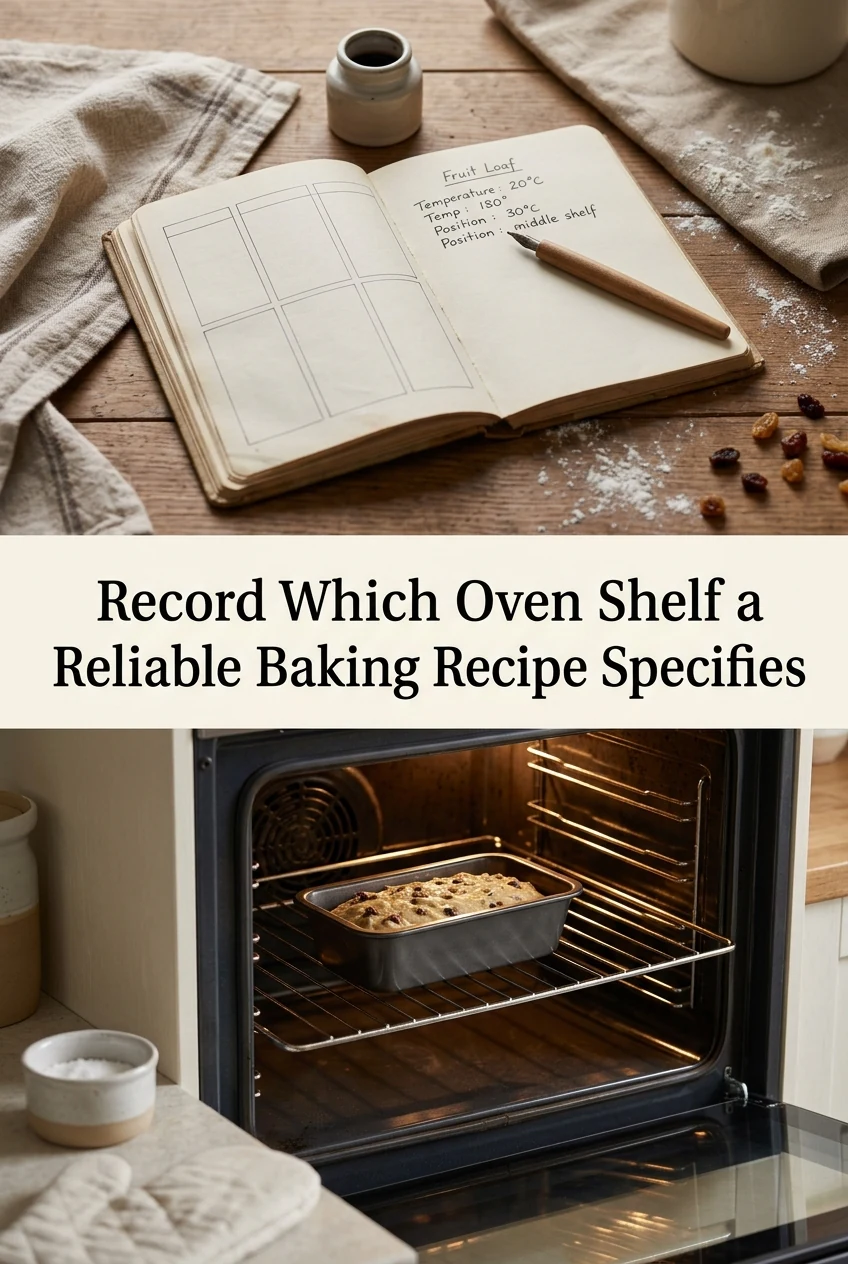
AI-generated editorial concept created for this article. The image is not a technical diagram or a tested result.
Why the Recipe's Shelf Note Matters
Recipe developers choose a shelf position deliberately. A fruit loaf placed on the shelf the recipe specifies is more likely to behave as the recipe describes because that is where the author balanced top browning against base cooking in their oven. Applying a general rule such as always use the middle or always use the lower third ignores the fact that different oven models distribute heat differently. Your oven manual describes how your appliance is designed to circulate heat, and that description is the only reliable reference you have for your specific machine. Reading both documents together lets you translate the recipe's instruction into a position that makes sense on your oven's actual shelf rack.
Reading the Two Documents Together
Before preheating, place the printed or open recipe and your oven manual on the counter at the same time. Find the shelf instruction in the recipe; it may say lower third, second shelf from the bottom, or centre position. Then open the oven manual to the section that describes shelf positions or baking guidance. Count the available shelf slots in your oven from the bottom upward and note how your manual labels them. If the recipe says lower third and your oven has five slots, the manual may confirm that slot two from the bottom fits that description for your model. Write the slot number or label in your notebook next to the recipe name. This written note becomes your personal reference for every future bake of that recipe.
A Worked Example: Mango and Oat Snack Bars
Consider an illustrative plan for a batch of mango and oat snack bars using a recipe that calls for the lower-middle shelf, a 180 degree Celsius conventional setting, and a 25-minute bake. The recipe uses rolled oats, dried mango pieces, a small amount of honey, coconut oil, and alcohol-free vanilla flavoring. The oven in this example has four shelf positions. The manual describes position two from the bottom as the recommended zone for dense baked goods in conventional mode. The baker reads both documents, decides position two matches the recipe's lower-middle instruction for this oven, and writes in their notebook: mango oat bars, position two from bottom, conventional 180 C, 25 minutes. The bars contain no eggs or dairy, so prompt refrigeration after cooling is still advisable given the honey content and the home-kitchen environment. This plan is illustrative; outcomes will vary by oven, ingredient brand, and pan type.
Recording the Information Usefully
A baking notebook entry for shelf position is most useful when it includes four pieces of information: the recipe name, the shelf label or number as counted in your oven, the oven mode the recipe specifies, and the date you made the note. If you bake the recipe and find that the result differs noticeably from what the recipe describes, note that observation too, then consult the recipe author's guidance or your oven manual's troubleshooting section before changing the position. Changing the shelf without understanding why the original instruction was given can introduce a new variable that makes the result harder to repeat. The goal of the notebook is to make your process repeatable, not to override the recipe.
Applying the Habit Across Different Bakes
Once the habit is established for one recipe, it transfers easily to others. A thin fruit crumble, a denser chickpea flour flatbread, and a tray of baked fruit slices each arrive with their own shelf notes when the recipe is well written. Each time, the same two-document check applies: recipe instruction first, oven manual second, written note third. Over several bakes you build a small reference library that is specific to your oven rather than to a generalised baking rule. This is the practical value of the technique: it anchors abstract recipe language to the numbered slots of the actual appliance sitting in your kitchen.
A little more
to know.
What should I do if my recipe does not mention a shelf position at all?
Check your oven manual's general baking guidance section, which often recommends a default position for the type of item you are making, such as a loaf tin or a flat tray. Use that manual recommendation as your starting point and record it in your notebook alongside the recipe name so you have a consistent reference for future bakes.
Does this technique work the same way for fan-assisted and conventional oven modes?
The habit of reading the recipe and manual together applies to both modes, but the shelf position that suits a conventional setting may differ from the one that suits a fan-assisted setting in the same oven. Your manual will usually address this distinction. Always check which mode the recipe specifies and match that to the relevant section of your manual before recording your shelf choice.
Original editorial guidance and recipe formulations, not independently kitchen-tested. Times are estimates and depend on equipment and product directions. Cooked bases need additional cooling and refrigeration before cold serving. Images are AI-generated illustrations; appearance and yield may vary. Check actual ingredient labels, allergens, and any certification you require. We do not certify products. Read our approach.
Save to Pinterest ↗ANOTHER IDEA FOR THE COUNTER