Read a Coconut Cream Can Versus a Coconut Milk Can Before Adding Either to a Sparkling Drink
Coconut cream and coconut milk sit side by side on store shelves and share nearly identical packaging, but their fat content differs significantly and that difference changes how each product behaves the moment it meets carbonation. Reading the nutrition label before you open the can saves you from a curdled-looking drink or a flat one. This guide explains what to look for on the label and how to adjust your pour accordingly.
Read the note ↓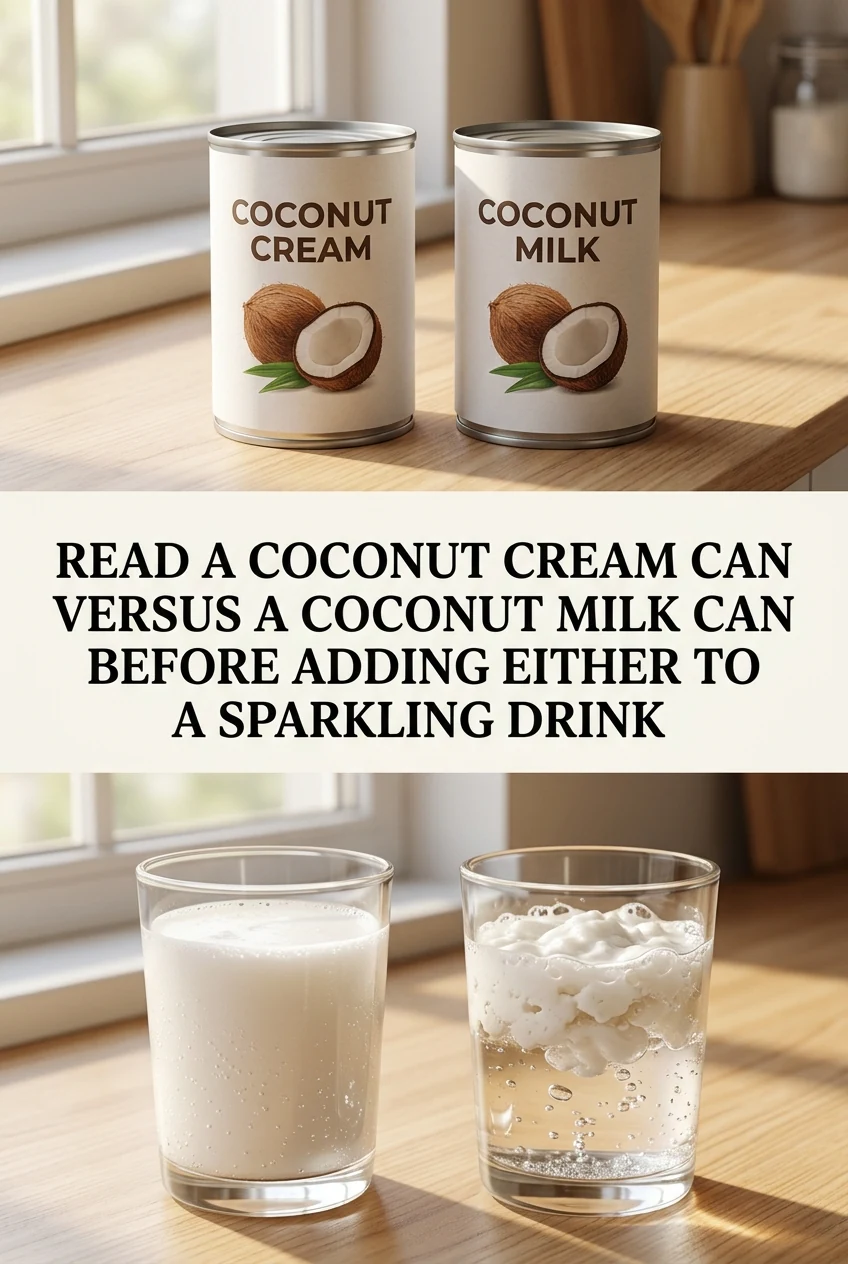
AI-generated editorial concept created for this article. The image is not a technical diagram or a tested result.
What the Fat Percentage on the Label Actually Tells You
Coconut cream typically lists around 20 to 24 grams of fat per 60-milliliter serving, while coconut milk usually falls between 7 and 13 grams for the same serving size. That higher fat concentration in cream means it is thicker, more viscous, and slower to disperse in liquid. Before you open anything, flip the can and read the fat-per-serving line. That single number tells you how much dilution or stirring the product will need once it meets a sparkling base.
How Carbonation Reacts Differently to Each Product
When you pour a thick coconut cream directly into sparkling water or a carbonated fruit juice, the dense fat globules can cause a brief surge of foam and then settle into visible white clumps if the liquid is cold. Coconut milk, being thinner, disperses more evenly with a gentle stir. Neither product is wrong for a sparkling drink, but coconut cream benefits from being stirred into a small amount of still liquid first before the sparkling component is added.
A Worked Example Using a 250-Milliliter Glass
As an illustrative example, consider a 250-milliliter glass filled with 180 milliliters of chilled sparkling passion fruit juice. If you add 30 milliliters of coconut milk, a single slow stir typically blends it smoothly. If you substitute 30 milliliters of coconut cream, pre-stirring that cream with 15 milliliters of still water first before adding it to the glass reduces visible separation. This is a practical starting point, not a guaranteed result for every brand.
Checking for Added Stabilizers Before You Decide
Some canned coconut milks contain guar gum or other stabilizers that help them stay emulsified longer in cold drinks. Coconut creams may or may not include the same additives. The ingredients list on the label shows this clearly. A stabilized coconut milk will hold together in a sparkling drink for longer before separating, which matters if you are preparing drinks a few minutes ahead of serving rather than immediately to order.
Storing the Remainder of an Opened Can Safely
Both coconut cream and coconut milk are perishable once opened. Transfer any unused portion into a clean, covered container and refrigerate it at 4 degrees Celsius or below within two hours of opening. Do not store the remainder in the original can. Use refrigerated leftovers within the timeframe stated on the product label, as this varies by brand. Separation in the container after refrigeration is normal; stir before using again.
A little more
to know.
Can I use the thick layer that forms at the top of a refrigerated coconut milk can the same way I would use canned coconut cream?
That solidified layer is high in fat and behaves similarly to coconut cream in texture, but its exact fat content varies by brand and chilling time. Treat it as you would coconut cream and pre-mix it with a small amount of still liquid before adding it to a sparkling drink.
Does the temperature of the sparkling juice affect how well coconut milk blends into it?
Yes. Very cold sparkling juice causes coconut fat to firm up faster, making blending harder. Using juice chilled to refrigerator temperature rather than ice-cold from a freezer-chilled bottle gives coconut milk slightly more time to disperse before the fat sets.
Original editorial guidance and recipe formulations, not independently kitchen-tested. Times are estimates and depend on equipment and product directions. Cooked bases need additional cooling and refrigeration before cold serving. Images are AI-generated illustrations; appearance and yield may vary. Check actual ingredient labels, allergens, and any certification you require. We do not certify products. Read our approach.
Save to Pinterest ↗ANOTHER IDEA FOR THE COUNTER