Prepare a Small Chocolate Bark Plate with Plain Nuts
A small plate of chocolate bark with plain nuts is a tidy, low-fuss accompaniment that sits well beside an iced coffee. This guide walks through one illustrative home-cafe plan using halal-compatible chocolate and unseasoned nuts, following product-appropriate melting directions rather than claiming a validated tempering result. The finished pieces are meant to be prepared, chilled promptly, and served the same day.
Read the note ↓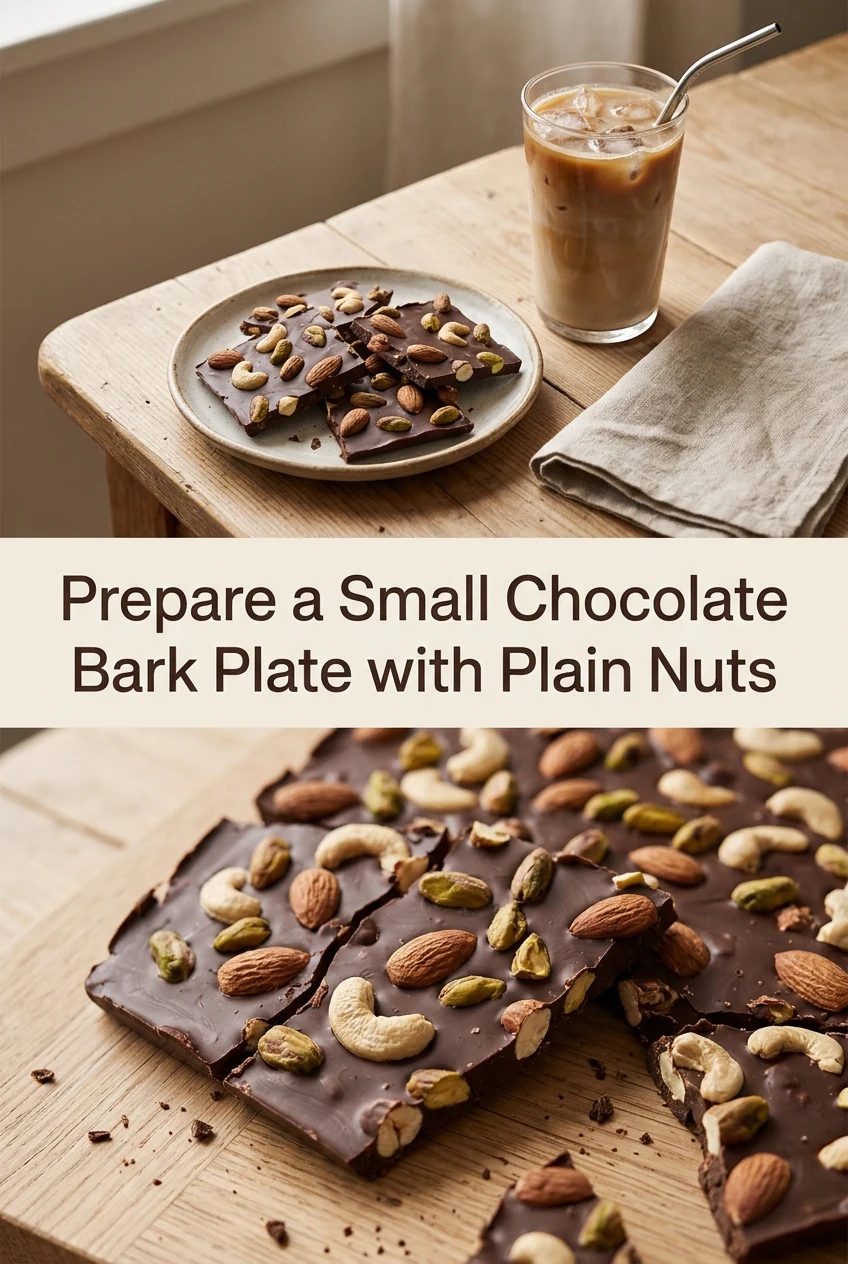
AI-generated editorial concept created for this article. The image is not a technical diagram or a tested result.
Choose Your Ingredients
Select a halal-certified dark or milk chocolate bar or baking chips — check the label to confirm the product carries a recognized halal mark and contains no alcohol-based flavorings. If vanilla is listed among the ingredients, verify it is explicitly alcohol-free. For nuts, plain unsalted roasted almonds, cashews, or a small mix of both work well because they add texture without competing flavors. Aim for roughly 100 g of chocolate and 30 g of nuts for a plate that yields around eight to ten small bark pieces — a practical quantity for two to three servings alongside iced coffee. Gather a heatproof bowl, a silicone spatula, a sheet of baking parchment cut to fit a small tray or plate (approximately 20 cm × 15 cm), and a refrigerator with clear shelf space.
Melt the Chocolate Correctly
Follow the melting directions printed on your specific chocolate product. Many baking chocolate labels recommend a double-boiler approach: set a heatproof bowl over a saucepan containing a small amount of simmering water, making sure the bowl does not touch the water surface, and stir gently until the chocolate is fully melted and smooth. Some chip products instead suggest short microwave intervals — typically 20 to 30 seconds at a reduced power level — with stirring between each interval; follow the time and power guidance on your packet rather than a generic setting. Stop heating as soon as the chocolate is fluid and lump-free. Overheating can cause the chocolate to seize or scorch, so patience and frequent stirring matter more than speed. This plan does not claim to produce tempered chocolate; the result will be a matte-finish bark rather than a glossy snap, which is perfectly acceptable for a home-cafe plate.
Spread and Top the Bark
Pour the melted chocolate onto the parchment-lined tray and use the spatula to spread it into an even layer roughly 4 mm to 5 mm thick. Working quickly before the chocolate begins to set, scatter the plain nuts across the surface. For the illustrative 100 g chocolate and 30 g nut plan, distributing the nuts in a single loose layer keeps each piece balanced — approximately one to three nut pieces per bark shard once broken. Press the nuts very gently into the surface with the back of the spatula so they make contact with the chocolate without sinking completely. Keep the layer boundaries tidy so the finished slab breaks into recognizable pieces rather than crumbling.
Chill and Break the Bark
Transfer the tray to the refrigerator immediately. Allow the bark to set until it is fully firm throughout; the time this takes will depend on your refrigerator's actual temperature and the thickness of the layer, so check it rather than relying on a fixed duration. Once firm, lift the parchment and break the slab by hand into irregular pieces. A rough break along natural stress lines produces the characteristic bark shape. Arrange the pieces on a small serving plate. Because this is a perishable preparation made with melted and re-solidified chocolate, keep it refrigerated until the moment you serve it and plan to consume it the same day it is made.
Serve Alongside Iced Coffee
Place four to five bark pieces on a small side plate next to an iced coffee drink. The cool, firm texture of the chocolate and the mild crunch of plain nuts provide a contrast to a cold, liquid beverage without overwhelming it. This pairing works as a home-cafe presentation detail rather than a formally tested flavor combination. If you are preparing bark for more than one person, scale the quantities proportionally — for example, 200 g chocolate and 60 g nuts for a larger group — and use a correspondingly larger parchment sheet, keeping the layer thickness consistent at around 4 mm to 5 mm so the setting behavior remains similar.
A little more
to know.
Can I use white chocolate instead of dark or milk chocolate?
Yes, provided the white chocolate product carries a halal certification and any vanilla flavoring it contains is explicitly alcohol-free. White chocolate melts at a lower threshold than dark chocolate, so follow the specific melting guidance on your product's label carefully and use gentle, brief heat intervals to avoid scorching.
How should I store leftover bark pieces?
Place any remaining pieces in a covered container and return them to the refrigerator promptly. Because this is a home preparation without controlled preservation conditions, plan to consume the bark the same day it is made rather than storing it for an extended period. Do not leave the pieces at room temperature for long stretches, particularly in a warm environment.
Original editorial guidance and recipe formulations, not independently kitchen-tested. Times are estimates and depend on equipment and product directions. Cooked bases need additional cooling and refrigeration before cold serving. Images are AI-generated illustrations; appearance and yield may vary. Check actual ingredient labels, allergens, and any certification you require. We do not certify products. Read our approach.
Save to Pinterest ↗ANOTHER IDEA FOR THE COUNTER