Prepare a Small Batch of Oat and Dried Cherry Biscuits for a Tea Tray
Baking a small batch of oat biscuits for a tea tray means working with quantities that fit one standard baking sheet without crowding, and getting consistent results requires weighing the dough rather than eyeballing portions. Dried cherries add texture and a mild tartness, but they break apart if you mix them too aggressively. This guide covers dough preparation, cherry folding, portioning by weight, and spacing decisions that help each biscuit bake evenly from edge to center.
Read the note ↓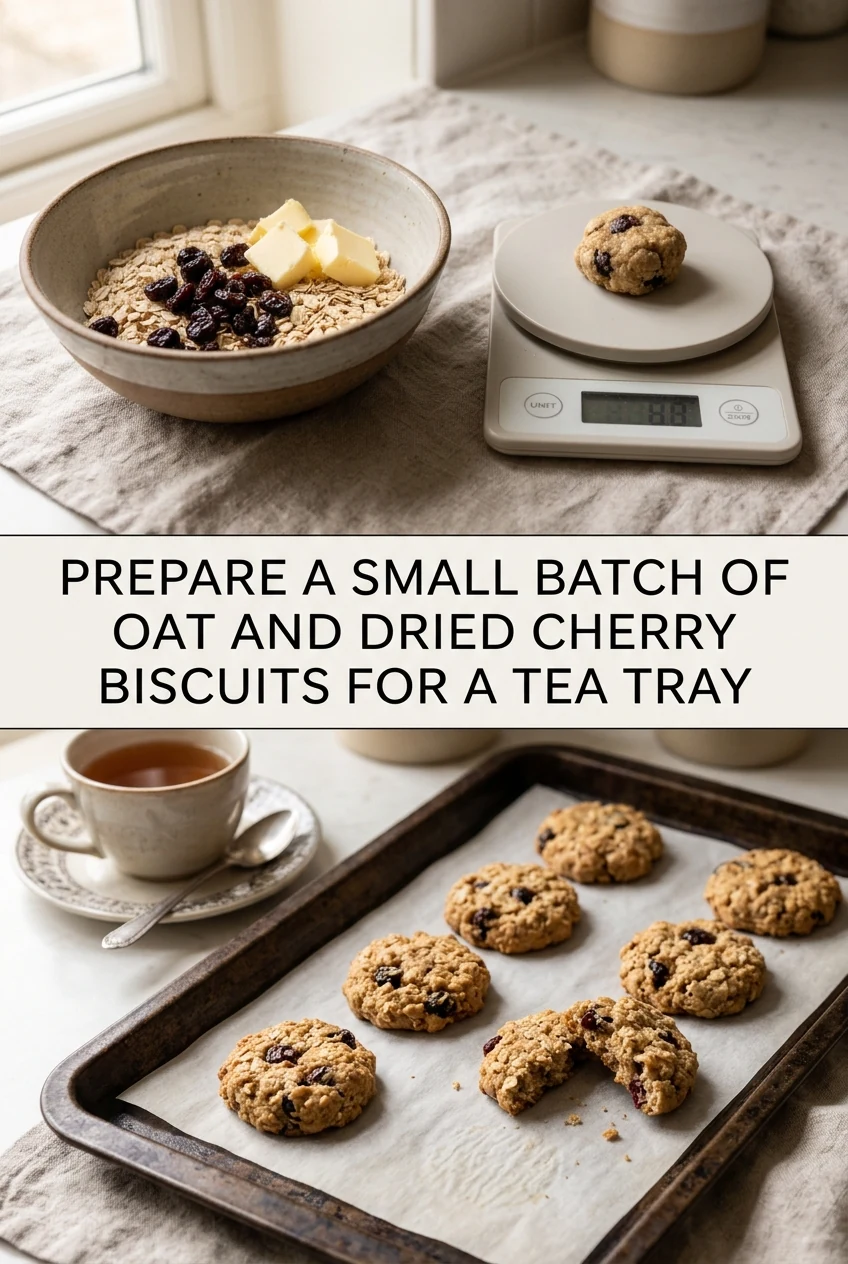
AI-generated editorial concept created for this article. The image is not a technical diagram or a tested result.
Building the Dough to the Right Consistency
Combine 120 g of plain flour, 80 g of rolled oats, 50 g of light brown sugar, and a quarter teaspoon of baking powder in a bowl. Add 60 g of cold unsalted butter cut into small cubes and work it into the dry ingredients with your fingertips until the mixture resembles coarse crumbs. Add one egg and bring the dough together until it holds its shape when pressed without feeling sticky. If it crumbles, add cold water one teaspoon at a time.
Folding in Dried Cherries Without Breaking Them
Add 50 g of dried cherries after the dough has come together, not during the initial mixing. Flatten the dough gently on a lightly floured surface, scatter the cherries across the top, then fold the dough over itself two or three times using a bench scraper or your hands. This distributes the cherries without kneading them into pieces. Overworking at this stage also develops gluten and toughens the biscuit, so stop folding as soon as the cherries appear evenly distributed.
Portioning by Weight for Consistent Size
Divide the finished dough into portions of 30 g each using a kitchen scale. With the total dough weight around 360 g, this batch yields twelve biscuits. Roll each portion briefly between your palms to form a ball, then press it gently to about one centimetre thickness on the lined baking sheet. Consistent thickness matters more than a perfect round shape because uneven thickness causes thinner edges to overbake before the centre is set.
Spacing and Oven Temperature
Place the portions at least four centimetres apart on a parchment-lined standard baking sheet, roughly 30 by 40 centimetres. Oat biscuits spread less than butter cookies but still need room for even air circulation. Bake at 170 degrees Celsius in a conventional oven, or 160 degrees Celsius with a fan, for fourteen to sixteen minutes. Check at fourteen minutes; the edges should be lightly golden and the centre should look just set. They firm up further as they cool on the tray.
Cooling and Serving on a Tea Tray
Leave the biscuits on the baking sheet for five minutes before transferring them to a wire rack. Moving them too soon risks breaking them while they are still soft. Once fully cooled to room temperature, arrange them on a small plate or tray liner. For a tea tray, three or four biscuits per person is a practical serving. Store any remaining biscuits in an airtight container at room temperature to maintain their crisp texture.
A little more
to know.
Can I use quick oats instead of rolled oats in this dough?
Quick oats absorb moisture faster and produce a softer, less textured biscuit than rolled oats, which provide a chewier bite. If substituting quick oats in equal weight, the dough may feel slightly stiffer as the smaller flakes hydrate quickly, but it can be baked without altering the ingredient quantities.
Why did my biscuits spread more than expected despite weighing the portions?
Spreading usually comes from butter that was too soft before mixing, or from a warm baking sheet used for a second batch. Let the sheet cool completely between batches and ensure butter is cold and firm when you begin rubbing it into the flour.
Original editorial guidance and recipe formulations, not independently kitchen-tested. Times are estimates and depend on equipment and product directions. Cooked bases need additional cooling and refrigeration before cold serving. Images are AI-generated illustrations; appearance and yield may vary. Check actual ingredient labels, allergens, and any certification you require. We do not certify products. Read our approach.
Save to Pinterest ↗ANOTHER IDEA FOR THE COUNTER