Prepare a Small Batch of Almond Shortbread for a Tea Tray
Almond shortbread cut cleanly for a tea tray depends less on the recipe and more on dough temperature at the moment of slicing. A dough that is too warm compresses under the knife and loses its edge; one that is properly chilled cuts with almost no resistance and holds its shape through baking. This guide covers the specific steps from mixing a small batch through the refrigerator rest and the slicing decision that determines whether your shortbread arrives on the tray looking precise or ragged.
Read the note ↓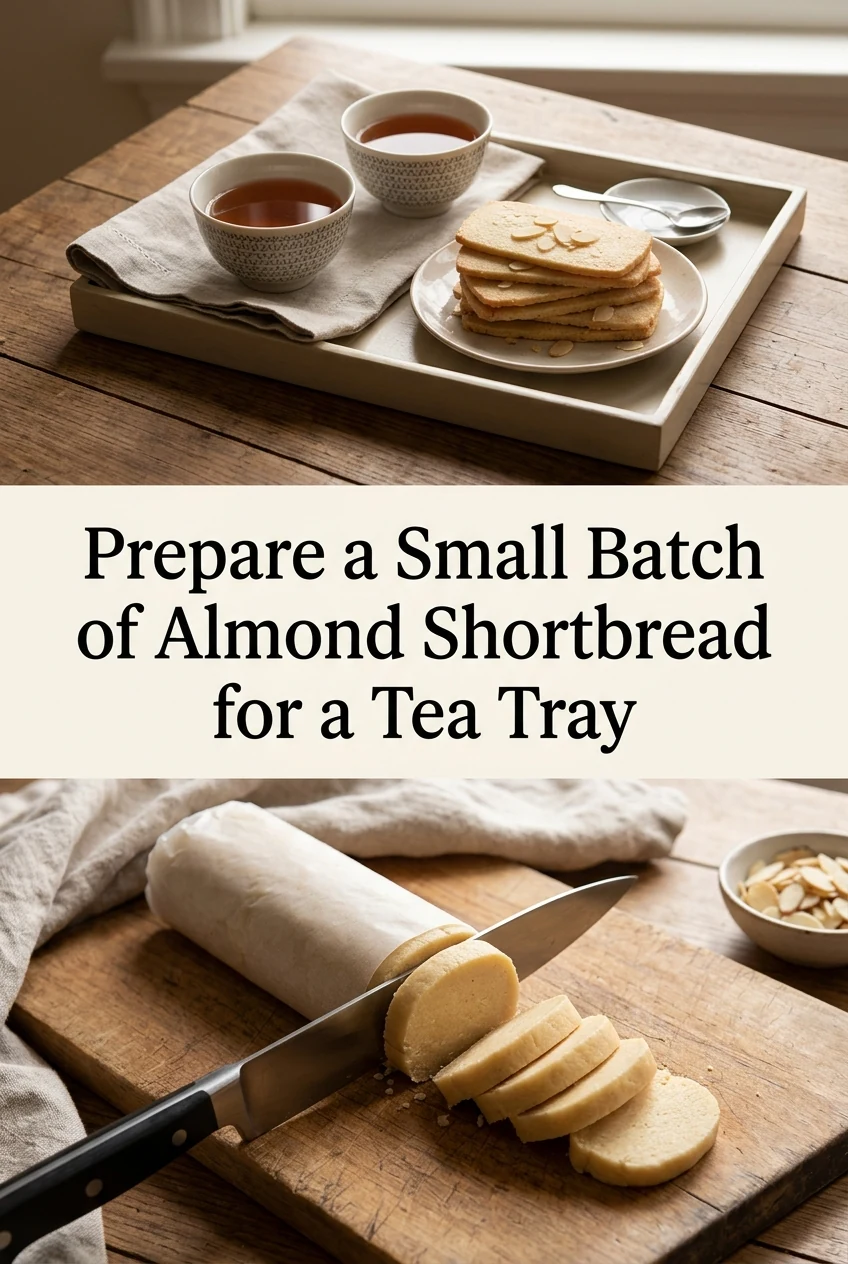
AI-generated editorial concept created for this article. The image is not a technical diagram or a tested result.
Mix a Small Batch That Suits a Tea Tray Portion
A workable small batch uses 115 g unsalted butter, 55 g icing sugar, 130 g plain flour and 30 g finely ground blanched almonds, with a small pinch of fine salt. This produces approximately 16 to 20 biscuits depending on thickness, which is a reasonable quantity for a tea tray serving four to six people. Cream the cold butter and icing sugar until just combined rather than fluffy; overworking the butter at this stage introduces air that causes the shortbread to spread unevenly during baking.
Roll the Dough to a Consistent Thickness
Turn the mixed dough onto a lightly floured surface and bring it together gently without kneading. Roll it to a consistent 8 mm thickness using a rolling pin. Placing two wooden dowels or rulers of equal height on either side of the dough gives you a physical guide that prevents uneven rolling. Uneven thickness means thinner biscuits overbake before thicker ones are done. Once rolled, transfer the dough sheet on its parchment paper to a flat baking tray and refrigerate it as a single flat piece.
Rest the Dough in the Refrigerator Before Cutting
Refrigerate the rolled dough for a minimum of 45 minutes. The butter needs to firm back up after the warmth of handling before the dough will cut cleanly. A rest shorter than 30 minutes typically leaves the dough soft enough to drag under the knife. After 45 minutes, press one finger lightly onto the dough surface; it should feel firm and cold with no give. If it still yields noticeably, return it for another 15 minutes. Do not attempt to speed this step by placing the dough in a freezer, as uneven freezing can affect texture.
Cut with a Sharp Knife Using a Single Downward Motion
Remove the chilled dough from the refrigerator and cut immediately. Use a sharp chef's knife or a bench scraper and press straight down in one motion rather than dragging the blade. For a tea tray, rectangular fingers measuring approximately 3 cm by 6 cm are practical because they stack neatly and are easy to pick up. Cut all pieces before moving any of them, then transfer the cut pieces to a lined baking tray with a small gap between each. Work quickly; if the dough warms during cutting, refrigerate it again for 10 minutes before continuing.
Bake at a Moderate Temperature and Cool Before Serving
Bake the shortbread at 160 degrees Celsius in a conventional oven, checking at 18 minutes. Shortbread is done when the edges are just beginning to turn a pale golden colour and the surface looks dry and set. It will still feel slightly soft in the centre when hot; it firms as it cools. Leave the biscuits on the tray for 10 minutes before moving them to a wire rack. Serve at room temperature on the tea tray. Store any remainder in an airtight container at room temperature and serve within three days.
A little more
to know.
Can I prepare the dough the day before and refrigerate it overnight?
Yes. Wrap the rolled dough sheet tightly in cling film on its tray and refrigerate for up to 24 hours. Remove it from the refrigerator and cut immediately while it is still cold, then bake as directed. Overnight rest often improves the texture.
Why did my shortbread spread and lose its rectangular shape during baking?
Spreading usually means the butter was too warm when the dough entered the oven. Ensure cut pieces are cold when they go onto the tray. If your kitchen is warm, refrigerate the cut pieces on their baking tray for 10 minutes before baking.
Original editorial guidance and recipe formulations, not independently kitchen-tested. Times are estimates and depend on equipment and product directions. Cooked bases need additional cooling and refrigeration before cold serving. Images are AI-generated illustrations; appearance and yield may vary. Check actual ingredient labels, allergens, and any certification you require. We do not certify products. Read our approach.
Save to Pinterest ↗ANOTHER IDEA FOR THE COUNTER