Prepare a Pear and Ginger Warm Cup by Juicing the Pear and Steeping the Ginger Separately
Combining fresh pear juice and ginger in the same pot from the start muddies both flavours and makes it hard to control the heat applied to each. Pear juice turns dull and slightly bitter when simmered too long, while ginger needs sustained heat to release its warmth. Keeping the two steps separate and combining them only in the cup gives you clearer fruit flavour alongside a properly steeped ginger base.
Read the note ↓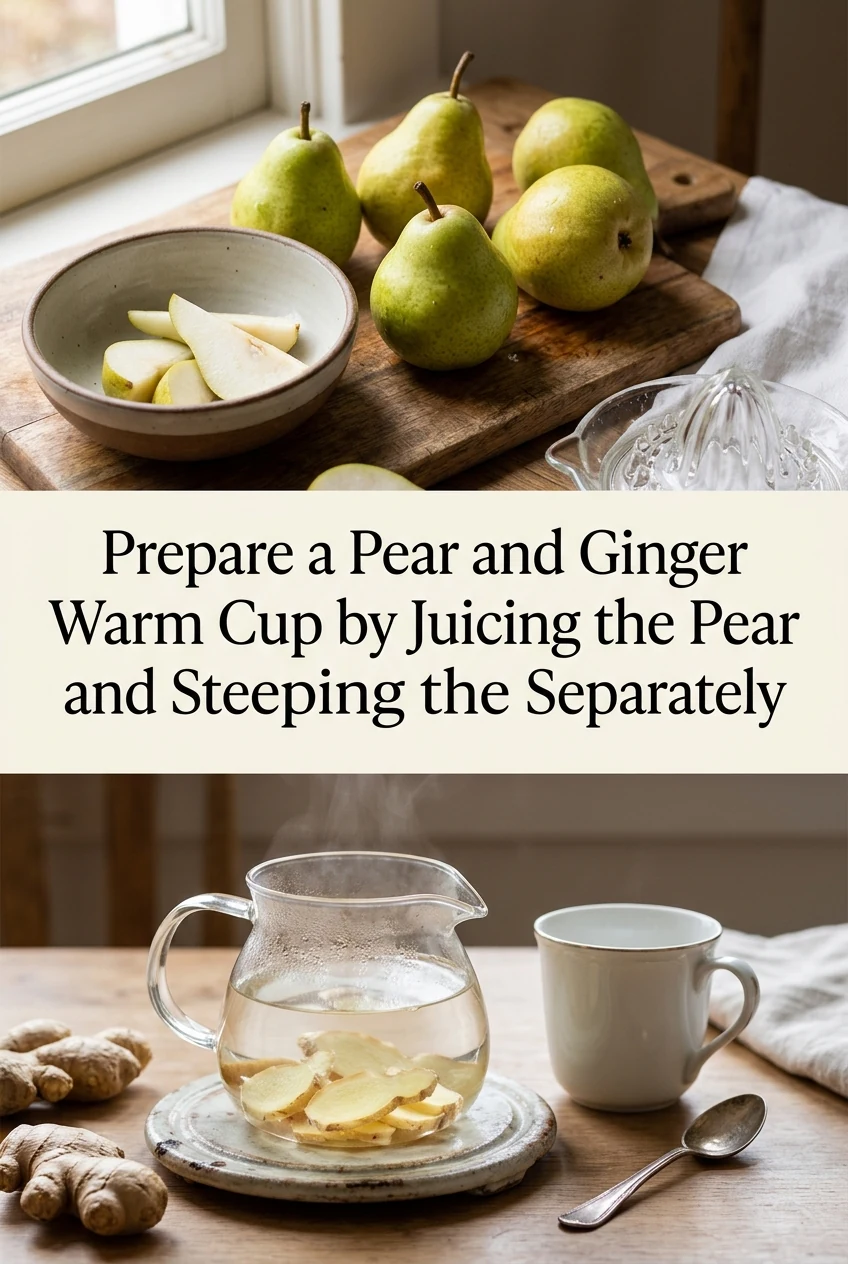
AI-generated editorial concept created for this article. The image is not a technical diagram or a tested result.
Juice the Pear Without Cooking It
Use a ripe pear, approximately 180 to 200 grams, peeled and cored. Grate it finely over a bowl using a box grater, then press the pulp through a fine-mesh sieve using the back of a spoon. A ripe pear of this size yields roughly 80 to 100 millilitres of juice. Do not heat the juice at this stage. Set it aside in a small bowl at room temperature while you prepare the ginger steep. You will warm it gently just before combining.
Steep the Ginger in Hot Water
Peel and slice five to six thin rounds of fresh ginger, each roughly three millimetres thick, from a piece about the width of a thumb. Place them in a small heatproof cup or jug and pour 150 millilitres of water that has just come off the boil over them. Cover the cup with a small saucer and steep for six to eight minutes. A longer steep produces sharper heat; a shorter steep gives a milder background warmth. Remove the ginger slices before combining.
Warm the Pear Juice Gently Before Combining
Pour the strained pear juice into a small saucepan and warm it over low heat, stirring occasionally, until it is gently warmed through. Do not bring it to a simmer or boil, as boiling the juice cooks it and flattens its fresh, bright flavour. Remove the saucepan from the heat as soon as it feels warm to the touch.
Combine in the Cup and Adjust
Pour the warm pear juice into a preheated cup first, then add the strained ginger infusion. Starting with the juice means you can taste the ratio before committing to the full volume of ginger water. As an illustrative starting point, 80 millilitres of pear juice to 120 millilitres of ginger infusion produces a drink where the fruit is present but the ginger leads. Reverse the ratio if you want the pear flavour to dominate. Add a small amount of honey to taste if desired.
Serve Promptly and Handle Leftovers Safely
This drink is best served immediately after combining, as fresh pear juice begins to oxidise and discolour within minutes at warm temperatures. If you have leftover strained pear juice, refrigerate it in a sealed container at 4 degrees Celsius or 40 degrees Fahrenheit or below and use it within 24 hours. Do not store the combined drink; make only what you will serve. Leftover ginger infusion can be refrigerated separately for up to 48 hours and rewarmed gently before use.
A little more
to know.
Can I use bottled pear juice instead of fresh?
Pasteurised bottled pear juice works and removes the juicing step. Warm it gently using the same low-heat method. Check the label for added sugar, as some bottled juices are sweetened, which may make additional honey unnecessary.
Why cover the ginger while it steeps?
Covering traps volatile aromatic compounds that would otherwise escape with the steam. An uncovered steep produces a slightly flatter, less fragrant infusion. A small saucer placed on top of the cup is sufficient and requires no special equipment.
Original editorial guidance and recipe formulations, not independently kitchen-tested. Times are estimates and depend on equipment and product directions. Cooked bases need additional cooling and refrigeration before cold serving. Images are AI-generated illustrations; appearance and yield may vary. Check actual ingredient labels, allergens, and any certification you require. We do not certify products. Read our approach.
Save to Pinterest ↗ANOTHER IDEA FOR THE COUNTER