Pour a Cold Brew Concentrate Over Ice Without Diluting the Ratio
Cold brew concentrate is brewed stronger than a ready-to-drink coffee so that dilution with water brings it to a drinkable strength. When you pour concentrate directly over ice without measuring, the melting ice adds an unpredictable amount of water, making the final drink weaker than intended. Measuring the concentrate and dilution water separately before combining them over ice keeps the ratio consistent every time you pour a glass.
Read the note ↓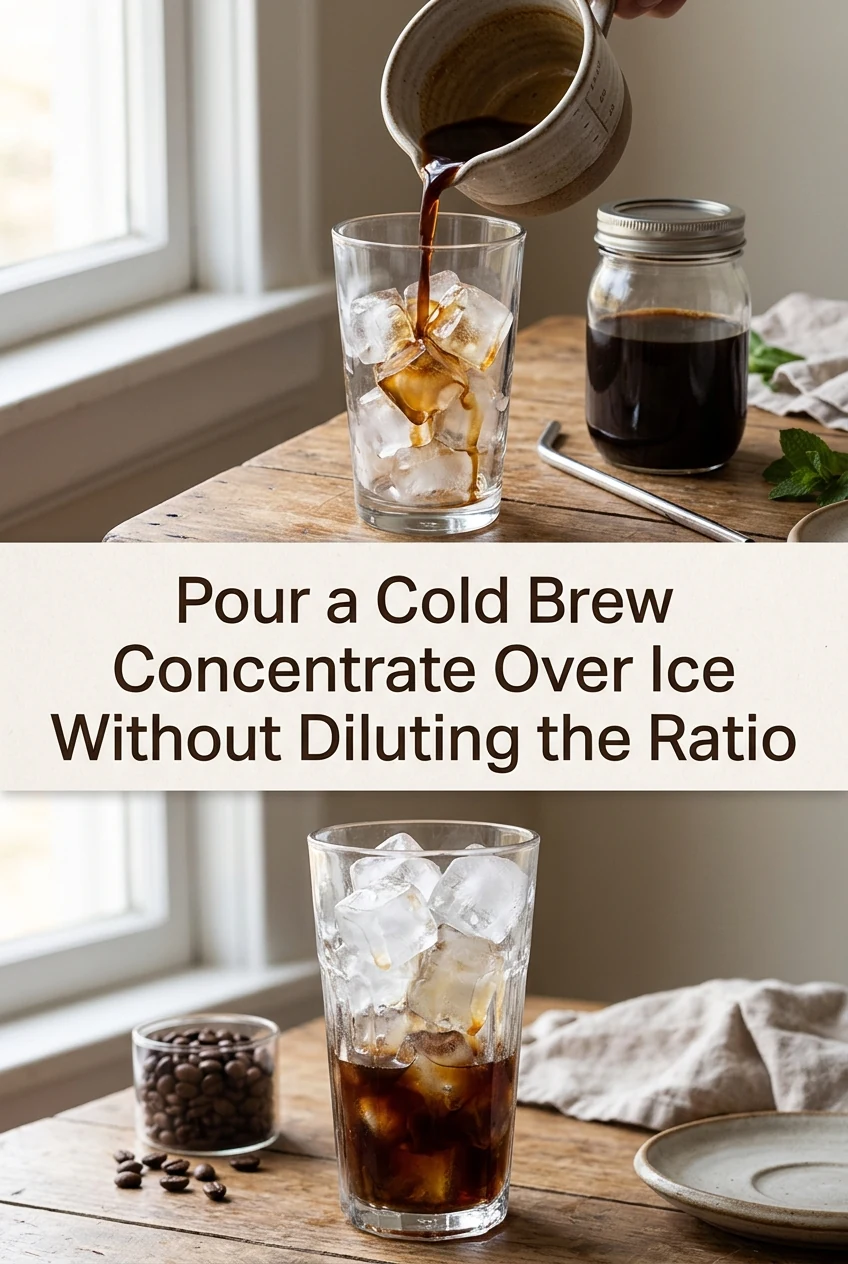
AI-generated editorial concept created for this article. The image is not a technical diagram or a tested result.
Understand What Concentrate Ratio Means in Practice
Most cold brew concentrates are intended to be mixed with water at a ratio such as one part concentrate to one part water, though the exact ratio depends on how your specific batch was brewed. Check the ratio you used when brewing, or the label if you purchased it. A 1:1 ratio means a 120 ml serving of finished drink requires 60 ml of concentrate and 60 ml of water, measured before any ice is added.
Measure Both Components Before Touching the Ice
Use a small measuring jug or a kitchen scale to portion your concentrate and your dilution water into separate vessels before you fill the glass. For the illustrative example above, that is 60 ml concentrate in one cup and 60 ml cold water in another. Doing this first establishes your intended dilution ratio deliberately upfront rather than relying on unmeasured ice melt to dilute the brew. This removes the primary source of inconsistency in home cold brew service.
Fill the Glass With Ice and Pour in the Correct Order
Fill your glass with ice cubes to the level you prefer, then pour the measured water over the ice first. Adding the water first chills the liquid quickly across the cubes. Follow immediately with the measured concentrate. Because both volumes are already fixed, minor ice melt during prompt service will not skew your intended ratio the way unmeasured pouring does.
Account for Ice Displacement When Choosing Glass Size
A standard 350 ml glass filled with ice cubes typically holds roughly 150 to 180 ml of liquid before overflowing, though this varies with cube size and fill level. If your finished drink volume is 240 ml, choose a 400 ml or larger glass and fill it with ice only to about halfway. Pouring your pre-measured 240 ml into an underfilled glass prevents overflow without forcing you to reduce the serving size.
Adjust for Milk or Other Additions Without Losing the Ratio
If you add milk or a non-dairy alternative, treat it as a measured component rather than adding an unmeasured splash. Decide in advance how much milk you want, reduce the water volume by that same amount, and keep the concentrate volume fixed. For example, if you want 30 ml of milk in the 1:1 example, use 30 ml water plus 30 ml milk alongside the original 60 ml concentrate.
A little more
to know.
Does using larger ice cubes change how much the ratio drifts?
Larger cubes melt more slowly than crushed ice, so they contribute less meltwater during the short time it takes to drink a glass. Using large cubes gives you a small practical advantage, but pre-measuring remains the reliable fix regardless of cube size.
Can I pre-mix a full batch of diluted cold brew and refrigerate it?
Yes. Combine concentrate and water at your chosen ratio in a sealed container and refrigerate at 4 degrees Celsius or below. Use it within the timeframe your original brew guideline recommends, typically two to three days for diluted cold brew, and pour over ice as needed.
Original editorial guidance and recipe formulations, not independently kitchen-tested. Times are estimates and depend on equipment and product directions. Cooked bases need additional cooling and refrigeration before cold serving. Images are AI-generated illustrations; appearance and yield may vary. Check actual ingredient labels, allergens, and any certification you require. We do not certify products. Read our approach.
Save to Pinterest ↗ANOTHER IDEA FOR THE COUNTER