Portion Loose Leaf Tea Into Single-Serve Bags for a Busy Morning
Measuring loose leaf tea at brew time when you are already managing hot water, cups, and a timer adds friction to a simple task. Pre-portioning into small paper filter bags the evening before removes that step entirely and keeps each cup consistent without reaching for a scale every morning. This guide covers how to choose the right filter size, how much leaf to use as a starting point, and how to store the filled bags so they stay fresh overnight.
Read the note ↓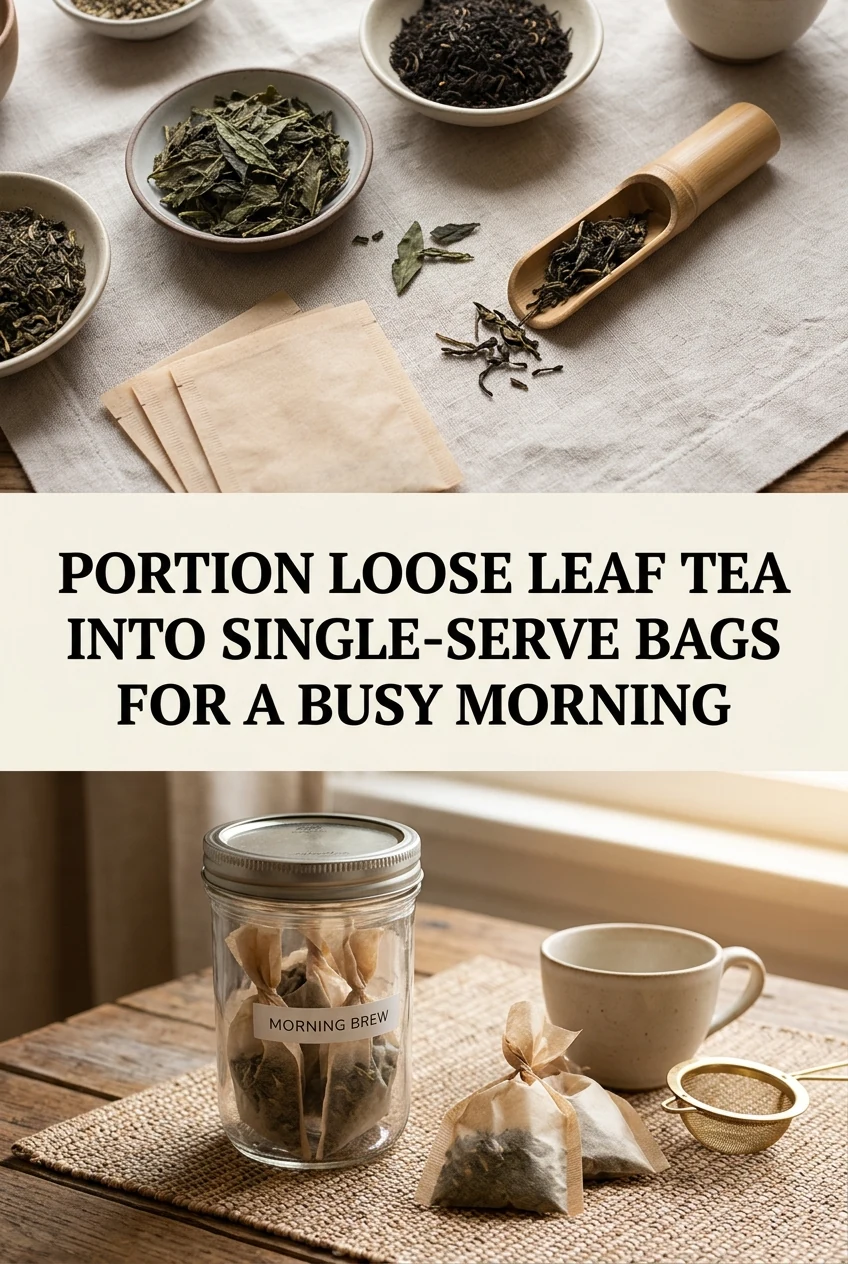
AI-generated editorial concept created for this article. The image is not a technical diagram or a tested result.
Choosing the Right Paper Filter for the Job
Single-serve paper tea filters come in heat-seal and fold-close styles. Fold-close filters, which tuck the top down like an envelope, are easier to work with at home because they need no tool. Look for filters sized for one cup, typically labeled for 200 to 250 milliliters. Filters that are too large crowd standard mugs and can drape awkwardly over the rim. Filters that are too small restrict leaf expansion and produce a weak, grassy cup.
How Much Leaf to Start With
A useful starting point for most whole-leaf teas is 2 to 3 grams per 200 milliliters of water. For illustration, a level teaspoon of a medium-density leaf like a Darjeeling first flush weighs roughly 2 grams, while a denser rolled oolong pellet may weigh closer to 3 grams per teaspoon. These figures are examples to orient your first batch, not universal targets. Adjust based on your own taste after the first brew.
Filling and Closing the Bags Without Spilling
Set each empty filter upright in a small cup or mug to hold it open. Use a small measuring spoon to transfer the leaves directly into the filter rather than pouring from the tin, which scatters fine particles. Once filled, fold the top of the filter down twice and press the fold flat. Tuck the flap securely if the filter has an envelope closure, or use a food-safe clip during dry storage to keep the fold shut until brew time.
Storing Filled Bags Overnight Without Staling
Loose leaf tea is sensitive to air, moisture, and strong odors. Place the filled bags into a small airtight tin or a sealed zip bag and store at room temperature away from the stove. Do not refrigerate them, as condensation when they return to room temperature can dampen the leaf before brewing. Pre-portioned bags kept this way overnight are fine for morning use; prepare only as many as you need for the next day.
Using the Pre-Portioned Bag at Brew Time
Lower the filled bag into your cup before adding water so the leaf wets evenly from the start rather than floating on top, removing any storage clip beforehand. Pour water at the temperature appropriate for your specific tea type, which varies by leaf. Set a timer based on your preferred strength. When the steep is done, lift the bag by the dry paper top fold or with a spoon, press it gently against the side of the cup once to drain without squeezing, and discard. The cup is ready without any measuring step.
A little more
to know.
Can I reuse paper tea filters for a second portion?
Paper filters are designed for single use. Residual tannins and oils from the first batch of leaves will affect the flavor of any tea portioned into a used filter. Reusing also risks tearing the wet paper. Fresh filters are inexpensive enough to use once per portion.
Does pre-portioning work for very fine-cut teas like rooibos or chamomile?
Fine-cut or broken-leaf teas can sift through some paper filters. Check that your filter is rated for fine particles before filling. A double-layered or finer-mesh paper filter handles these teas better and prevents sediment from passing into the cup.
Original editorial guidance and recipe formulations, not independently kitchen-tested. Times are estimates and depend on equipment and product directions. Cooked bases need additional cooling and refrigeration before cold serving. Images are AI-generated illustrations; appearance and yield may vary. Check actual ingredient labels, allergens, and any certification you require. We do not certify products. Read our approach.
Save to Pinterest ↗ANOTHER IDEA FOR THE COUNTER