Portion Fresh Mango Into a Smoothie Without Watering Down the Blend
Fresh mango releases juice as soon as it is cut, and that juice adds unplanned liquid to your blender before you pour in a single drop of anything else. If you measure mango by cups loosely filled with dripping pieces, your smoothie ends up thinner than intended. Weighing the fruit after peeling and cubing, then accounting for its natural moisture, gives you consistent texture every time you blend.
Read the note ↓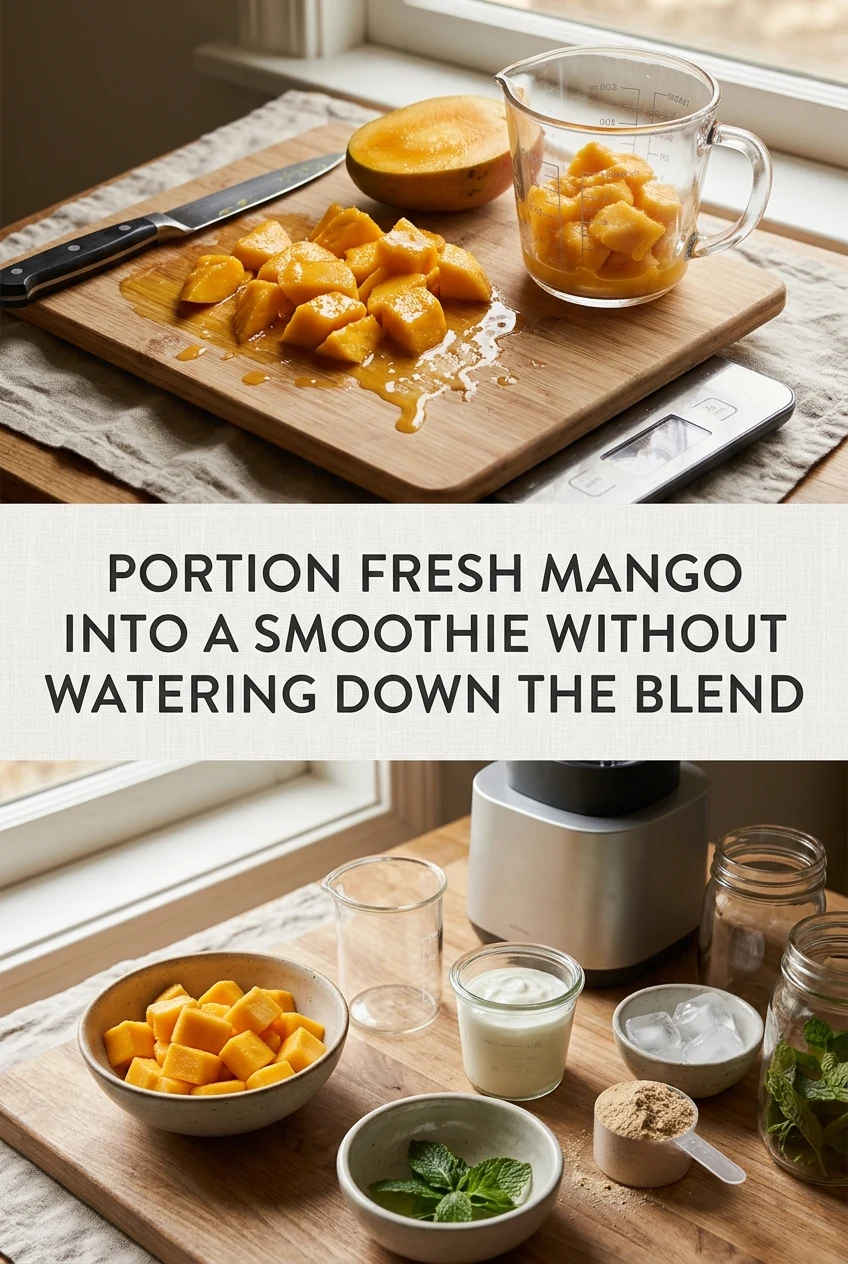
AI-generated editorial concept created for this article. The image is not a technical diagram or a tested result.
Why Fresh Mango Adds More Liquid Than It Appears To
Ripe mango flesh is naturally high in moisture, typically consisting of more than eighty percent water by weight. When you cube ripe fruit and let it rest, cell walls rupture and free juice pools rapidly on the cutting surface. Measuring mango by volume in a measuring cup introduces substantial variability because uneven cubes leave empty air gaps while trapping pooled juice. That unmeasured liquid can easily thin a smoothie beyond your intended consistency. Weighing the fruit cubes on a kitchen scale gives you an accurate baseline and removes volume-based guessing.
How to Weigh and Prepare Mango Pieces for Blending
Peel and cube the mango over a bowl to catch dripping juice. Transfer the cubes to a kitchen scale and weigh them. For a single-serve smoothie in a 350 ml to 400 ml glass, 120 grams to 150 grams of mango cubes is a practical starting point. This is an illustrative range, not a universal formula. Pat the cubes lightly with a clean paper towel if they are very wet before adding them to the blender. Discard or set aside the collected juice rather than adding it automatically.
Balancing Added Liquid Against the Fruit's Own Moisture
Once your mango is weighed, reduce your planned liquid addition accordingly. If your usual smoothie uses 120 ml of milk or juice with frozen fruit, consider starting with 80 ml when using fresh mango and blending first. Check the consistency before adding more liquid in small 20 ml increments. Fresh mango blends into a much wetter puree than frozen mango, so the gap between too thick and too thin is narrower and easier to cross accidentally.
Using Frozen Mango Alongside Fresh to Control Texture
Combining 80 grams of fresh mango with 60 grams of frozen mango cubes gives you flavor from the ripe fresh fruit and thickness from the frozen pieces without relying on ice, which dilutes as it melts. The frozen portion also chills the blend quickly. This split approach is useful when your fresh mango is very ripe and juicy. Weigh both portions separately before adding them so you maintain the same total fruit weight across batches.
Checking Texture Before Serving and Correcting It
Blend for thirty to forty-five seconds, then stop and tilt the blender jar. A well-portioned mango smoothie should coat the inside of the jar slowly rather than running off immediately. If it runs thin, add 30 grams of frozen mango or a small amount of plain yogurt made from pasteurized milk and blend again briefly. Avoid adding banana unless that is part of your intended recipe, as it changes the flavor profile significantly. Serve immediately and refrigerate any remainder promptly at 4 degrees Celsius or below.
A little more
to know.
Should I use the juice that collects on the cutting board in the smoothie?
You can add it deliberately if you want a thinner result, but measure it first so you know exactly how much extra liquid you are introducing. Adding it without measuring is the main reason smoothies end up unexpectedly thin when using very ripe fruit.
Does mango variety affect how much liquid it releases?
Yes noticeably. Varieties with fibrous flesh tend to hold together better when cubed and release less free juice than very soft, low-fiber varieties at peak ripeness. If you switch mango varieties, expect to re-check your liquid balance rather than carry over previous measurements directly.
Original editorial guidance and recipe formulations, not independently kitchen-tested. Times are estimates and depend on equipment and product directions. Cooked bases need additional cooling and refrigeration before cold serving. Images are AI-generated illustrations; appearance and yield may vary. Check actual ingredient labels, allergens, and any certification you require. We do not certify products. Read our approach.
Save to Pinterest ↗ANOTHER IDEA FOR THE COUNTER