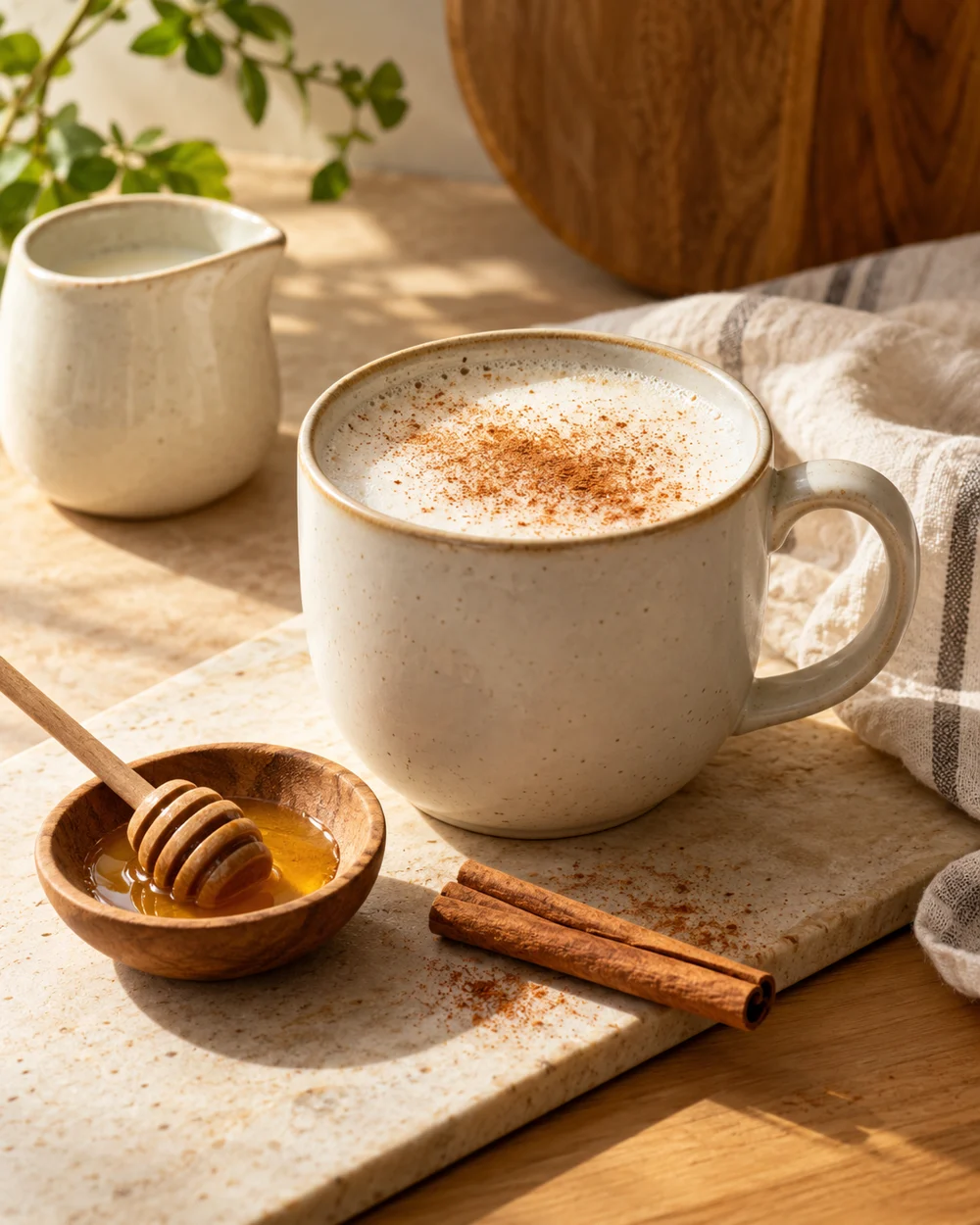
Portion Cocoa Powder for One Warm Drink Without a Scale
Kitchen scales are not always within reach when you want a single warm cocoa drink. A level tablespoon measure gives a practical, repeatable starting point without guessing. The challenge is that cocoa powder compacts easily, so how you fill the spoon changes the amount you actually get. Understanding that difference helps you dose consistently and adjust to your own taste without wasting powder or producing a bitter or thin result.
Read the note ↓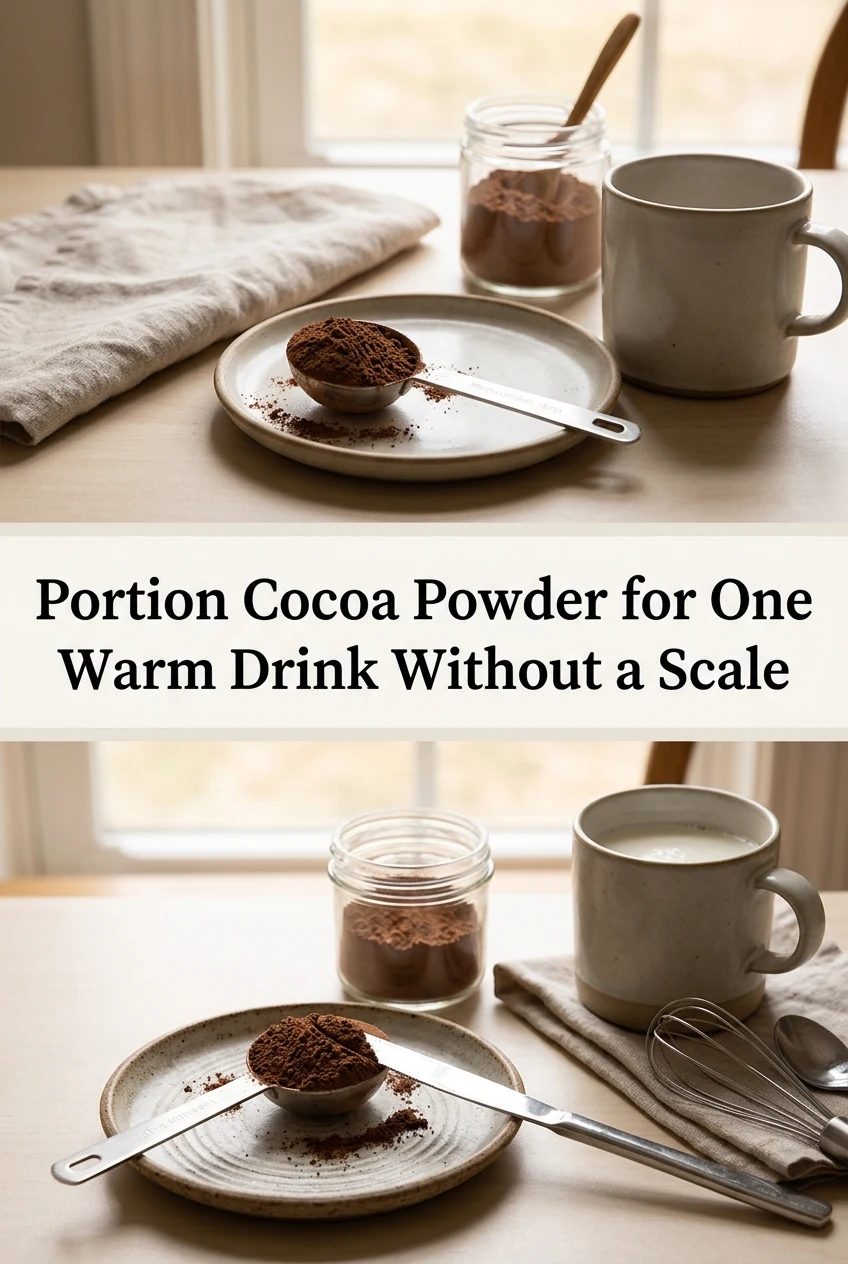
AI-generated editorial concept created for this article. The image is not a technical diagram or a tested result.
Why Volume Measurement Varies With Cocoa Powder
Cocoa powder is fine and prone to clumping, meaning a scooped spoonful can hold noticeably more powder than a spooned-and-leveled one. A heaped tablespoon may contain roughly one and a half times the powder of a level one, though the exact difference depends on the brand and how long the tin has been open. For a single serving, always spoon the powder lightly into the measure and sweep a straight edge across the top to get a consistent level fill each time.
A Practical Starting Point for One Cup
One level tablespoon of unsweetened cocoa powder stirred into roughly 200 to 240 millilitres of warm milk or water is a workable starting point for a single drink. This is an illustrative range, not a guaranteed result, because cocoa brands differ in intensity. Natural cocoa tends to taste sharper than Dutch-process cocoa at the same volume. Start with one level tablespoon, taste after mixing, and note whether you want more depth or a lighter result before adjusting next time.
Mixing the Powder Before Adding Liquid
Cocoa powder resists dissolving directly in cold or even warm liquid and tends to float in dry clumps. A reliable method is to combine the measured powder with one to two teaspoons of hot water or warm milk in the cup first, stirring it into a smooth paste before adding the rest of the liquid. This short paste step breaks up dry pockets and gives you an evenly coloured drink rather than streaks of unmixed powder floating at the surface.
Sweetening in Proportion to Your Powder Measure
Once you settle on a cocoa amount, tie your sweetener to the same measure so the ratio stays consistent. As an example, if one level tablespoon of cocoa suits your taste, one level teaspoon of granulated sugar or half a teaspoon of a finer sweetener is a starting proportion to test. Adjust in small increments rather than large additions, because sweetness is easier to increase than to correct once the drink is made and the liquid is hot.
Storing Cocoa Powder to Keep Measurement Reliable
Cocoa powder absorbs moisture from the air, which causes it to compact over time and makes volume measures less predictable. Keep the tin sealed between uses and store it away from steam sources such as a kettle or stove. If the powder has formed hard lumps, break them up with a dry spoon before measuring rather than scooping through them. A consistent texture in the tin means your level tablespoon will behave the same way each time you use it.
A little more
to know.
Can I use a dessert spoon instead of a tablespoon if that is all I have?
A dessert spoon holds roughly two thirds of a tablespoon by volume, so you would need approximately one and a half level dessert spoons to approximate one level tablespoon. Treat it as a starting point and adjust based on taste, since spoon sizes vary between sets.
Does sifting cocoa powder before measuring change the amount I get?
Sifting aerates the powder, so a level spoon after sifting may hold slightly less by weight than one measured from a compacted tin. The drink will taste lighter. If you sift regularly, do so before every measure to keep your results consistent rather than sifting only occasionally.
Original editorial guidance and recipe formulations, not independently kitchen-tested. Times are estimates and depend on equipment and product directions. Cooked bases need additional cooling and refrigeration before cold serving. Images are AI-generated illustrations; appearance and yield may vary. Check actual ingredient labels, allergens, and any certification you require. We do not certify products. Read our approach.
Save to Pinterest ↗ANOTHER IDEA FOR THE COUNTER