Plain, Greek-Style or Drinking Yogurt in a Fruit Smoothie
Swapping one yogurt style for another in a smoothie can turn a drinkable blend into a spoonable pudding or a watery pour. The difference comes down to how much whey each style retains. Plain yogurt sits between the two extremes, strained Greek-style is dense and protein-rich, and pourable drinking yogurt is already thinned. Checking the label for added sugar before you start also prevents an unexpectedly sweet result. This guide walks through one banana-and-berry blend built three times with only the yogurt changed.
Read the note ↓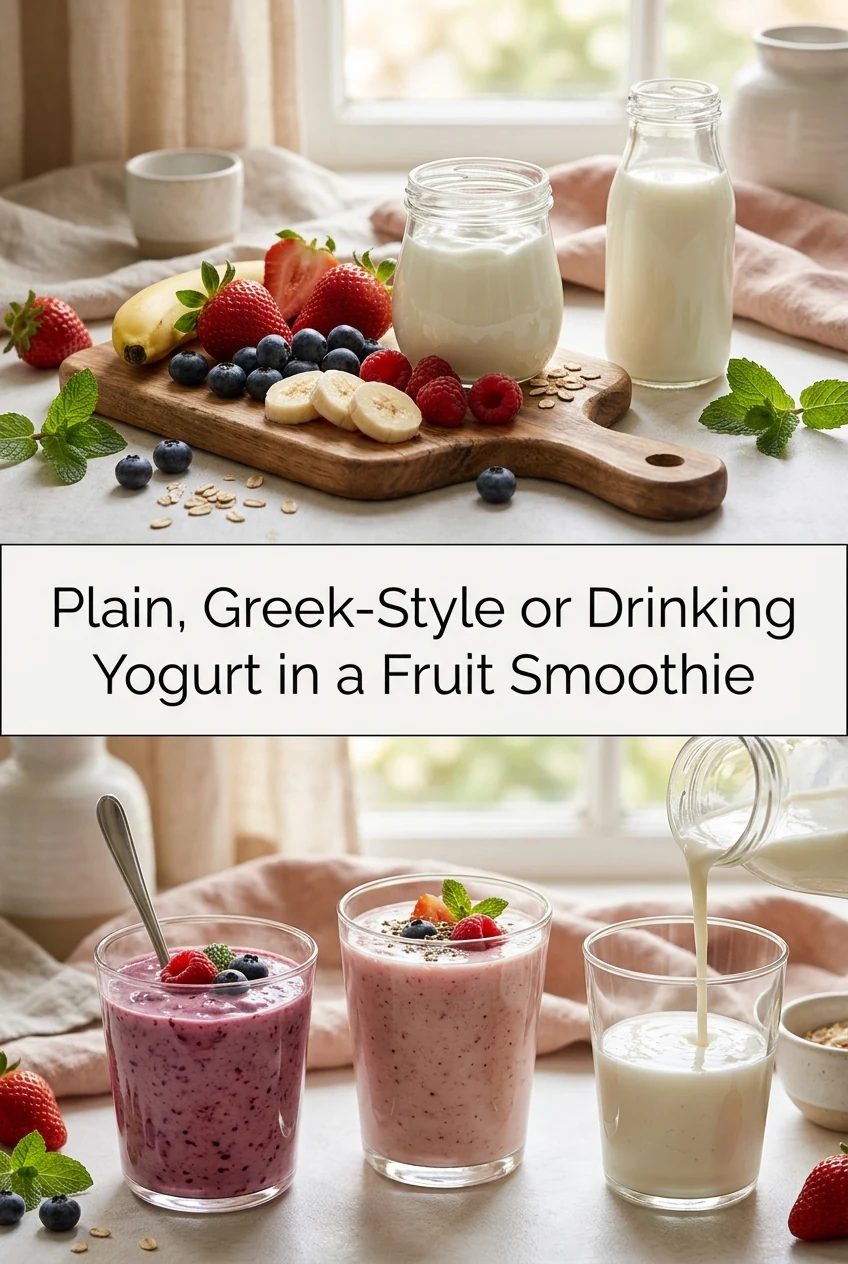
AI-generated editorial concept created for this article. The image is not a technical diagram or a tested result.
Why the Three Styles Behave Differently
Drinking yogurt has had liquid stirred back in or was never strained, so it contributes roughly the same volume of liquid as it does solids. Plain yogurt holds moderate whey and blends smoothly without extra liquid in most fruit recipes. Greek-style yogurt has been strained until thick, so 120 g of it adds noticeably less free moisture than 120 g of either alternative. That density is why the same recipe can go from pourable to paste when you make the swap without adjusting anything else.
The Banana-and-Berry Test: Setup
For each of the three trial blends, use one medium ripe banana sliced and frozen, 80 g of mixed frozen berries, and 120 g of the yogurt being tested. Keep every other variable identical: the same blender, the same blending time of about 45 seconds on high, and no added liquid at the start. Weigh the yogurt on a kitchen scale rather than estimating by volume, because a heaped cup of Greek-style and a level cup of drinking yogurt are not the same mass. Label each glass before pouring.
Adjusting Thickness in Measured Steps
After the first blend, pour a small amount into a glass and tilt it. If it barely moves, add liquid in 30 ml increments, blend briefly, and test again. Suitable liquids include pasteurized whole milk, pasteurized reduced-fat milk, or a plain plant drink. In this illustrative example, the Greek-style batch needed roughly 60 to 90 ml of milk to reach a consistency that moved through a wide straw, while the drinking-yogurt batch needed none and was already quite thin. Results will vary with your specific brands and fruit ripeness.
Reading Labels Before You Blend
Some drinking yogurts contain added sugar or fruit flavoring that will change the sweetness of the finished smoothie without any visible sign. Check the ingredients list and the sugar line on the nutrition panel before choosing. If the yogurt already contains added sugar and your fruit is ripe, the blend may need no sweetener at all. Greek-style yogurt is more often sold plain and unsweetened, but flavored versions exist. Choosing an unflavored base gives you the most control over the final taste.
Storing Leftover Smoothie Safely
Blended dairy smoothies are perishable. Pour any leftover portion into a sealed container and refrigerate it at 4 degrees Celsius or 40 degrees Fahrenheit or below within two hours of blending, or within one hour if your kitchen is above 32 degrees Celsius or 90 degrees Fahrenheit. The blended texture will separate on standing; stir or shake before drinking. Do not store a smoothie made with pasteurized dairy at room temperature and then refrigerate it later. Discard anything left out beyond the time limits above.
A little more
to know.
Can I use frozen yogurt instead of refrigerated yogurt in this smoothie?
Frozen yogurt is a sweetened dessert product with a different composition than cultured yogurt. It will melt unevenly in a blender and adds significant sugar. It is not a straightforward substitute and will change both texture and sweetness considerably.
Does straining plain yogurt at home produce the same result as purchased Greek-style yogurt?
Home straining removes whey and thickens yogurt, but the final protein concentration and texture depend on straining time and the starting yogurt. It will behave more like Greek-style than plain, but results vary and it is not identical to a commercially strained product.
Original editorial guidance and recipe formulations, not independently kitchen-tested. Times are estimates and depend on equipment and product directions. Cooked bases need additional cooling and refrigeration before cold serving. Images are AI-generated illustrations; appearance and yield may vary. Check actual ingredient labels, allergens, and any certification you require. We do not certify products. Read our approach.
Save to Pinterest ↗ANOTHER IDEA FOR THE COUNTER