Papaya and Lime Smoothie With Plain Yogurt
Papaya has a high natural water content, which means blending it without adjustment often produces a thin, watery drink rather than the thick, pourable smoothie most people want. A straightforward approach — removing the seeds carefully, weighing the flesh, and loading the blender jar in the right order — gives you much more control over the final texture. This article walks through one illustrative plan for a papaya and lime smoothie made with plain yogurt, explaining the reasoning behind each step rather than presenting it as a tested or guaranteed result.
Read the note ↓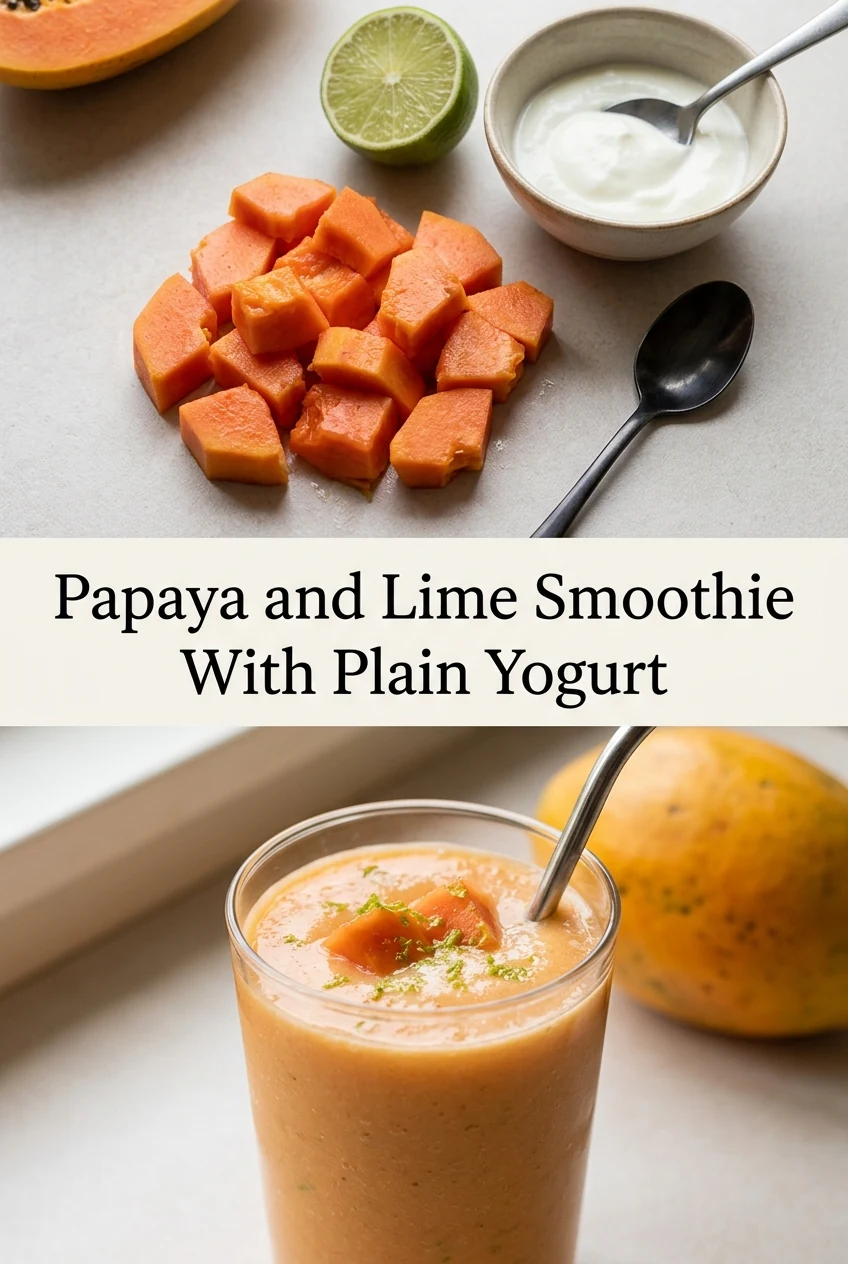
AI-generated editorial concept created for this article. The image is not a technical diagram or a tested result.
Why Papaya Needs a Texture Strategy
A ripe papaya can be composed of roughly 88 percent water by weight, which is noticeably higher than fruits like banana or mango. When you blend papaya flesh on its own, that moisture releases quickly and the result can resemble a thin juice rather than a smoothie. Plain yogurt acts as a thickening base because its protein and fat content resist thinning when combined with high-moisture fruit. Using a measured amount of yogurt relative to the papaya flesh gives you a starting ratio you can adjust, rather than guessing after the fact. Lime juice adds brightness and a mild acidity that balances the papaya's sweetness, but it contributes very little additional liquid when used in small quantities, so it does not significantly affect thickness.
Preparing the Papaya: Seeds and Flesh
Cut the papaya in half lengthwise. The seed cavity will be clearly visible as a hollow channel filled with round, dark seeds surrounded by a slippery gel-like coating. Use a large spoon to scoop out all the seeds and discard them — the seeds have a sharp, peppery flavor that is unpleasant in a smoothie. Once the seeds are removed, use the same spoon to scoop the flesh away from the skin, working in long strokes from one end to the other. Place the scooped flesh into a kitchen scale bowl and weigh it. For this illustrative plan, the target is 200 grams of prepared papaya flesh. If your papaya yields more, set the excess aside rather than adding it all to the blender, since increasing the papaya beyond the planned ratio will thin the smoothie.
Loading the Blender in the Right Order
The order in which ingredients enter the blender jar affects how evenly they combine and how easily the motor draws the mixture downward. For this plan, add the plain yogurt first — 150 grams of full-fat plain yogurt works as a reasonable starting amount for 200 grams of papaya flesh. Placing the yogurt at the bottom allows the blades to engage with softer base ingredients immediately, creating a vortex and helping prevent cavitation. Next, add the 200 grams of papaya flesh in rough chunks. Finally, squeeze the juice of half a medium lime directly into the jar, removing any seeds before they fall in. This gives you approximately 15 milliliters of lime juice, which is enough to add flavor without noticeably thinning the mixture. Do not add water or ice at this stage; those can always be added after the first blend if the consistency is too thick to pour.
Blending in Short Pulses for Thickness
Continuous high-speed blending warms the mixture from blade friction and shears the yogurt base, which quickly reduces thickness. Short pulses — typically two to three seconds on, then a pause — give you the opportunity to check the consistency between bursts rather than committing to an over-thinned result. Secure the lid firmly before starting. Begin with three short pulses, then remove the lid and use a spatula to push any unblended chunks down from the sides. Replace the lid and pulse again in two-second intervals until the mixture looks uniform and moves as a single mass when you tilt the jar slightly. The finished smoothie in this illustrative plan should be thick enough to pour slowly rather than splash, and it should coat the inside of a glass rather than run straight to the bottom. If it is thicker than you prefer, stir in five to ten milliliters of cold water and give one final short pulse.
Serving and Adjusting the Plan
Pour the blended smoothie into a chilled glass immediately after blending. This plan yields approximately one generous serving of around 350 to 370 milliliters, based on the combined weight of the ingredients with some air incorporated during blending. If you want a second serving, the simplest approach is to prepare a fresh batch rather than storing blended smoothie, since the texture and color of papaya can change once it has been cut and processed. To adjust sweetness without adding sugar, a small amount of ripe banana — around 50 grams — can replace part of the yogurt, though this will alter the thickness and flavor profile. To make the lime flavor more prominent, increase the lime juice by five milliliters at a time and pulse briefly after each addition.
A little more
to know.
Can I use low-fat plain yogurt instead of full-fat?
You can, but low-fat plain yogurt contains less fat and slightly more water than full-fat, so the smoothie may come out a little thinner using the same quantities. As an adjustment within this illustrative plan, you could reduce the papaya by 20 grams or add an extra tablespoon of yogurt to compensate, then check the consistency after the first round of pulses before deciding whether further changes are needed.
What if the smoothie is still too thin after blending?
If the consistency is thinner than you want after following the steps above, the most practical option is to add a small amount of additional plain yogurt — around 30 grams — replace the lid, and pulse two or three more times. Avoid adding starches or powdered thickeners directly to the blender, as they require specific heating or hydration steps and will not disperse smoothly into a cold mixture.
Original editorial guidance and recipe formulations, not independently kitchen-tested. Times are estimates and depend on equipment and product directions. Cooked bases need additional cooling and refrigeration before cold serving. Images are AI-generated illustrations; appearance and yield may vary. Check actual ingredient labels, allergens, and any certification you require. We do not certify products. Read our approach.
Save to Pinterest ↗ANOTHER IDEA FOR THE COUNTER