Mark a Recipe's Optional Ingredients Before Shopping
A sparkling fruit drink recipe often lists a core formula alongside optional garnishes, flavoring swaps, and decorative toppings. Without sorting those layers before you shop, you can easily buy ingredients for every possible version of the drink rather than the one you actually plan to make. This home-cafe technique is about reading the ingredient list critically, marking what is truly required for the base drink, and separating that from what is optional, so your shopping list reflects one clear, chosen version.
Read the note ↓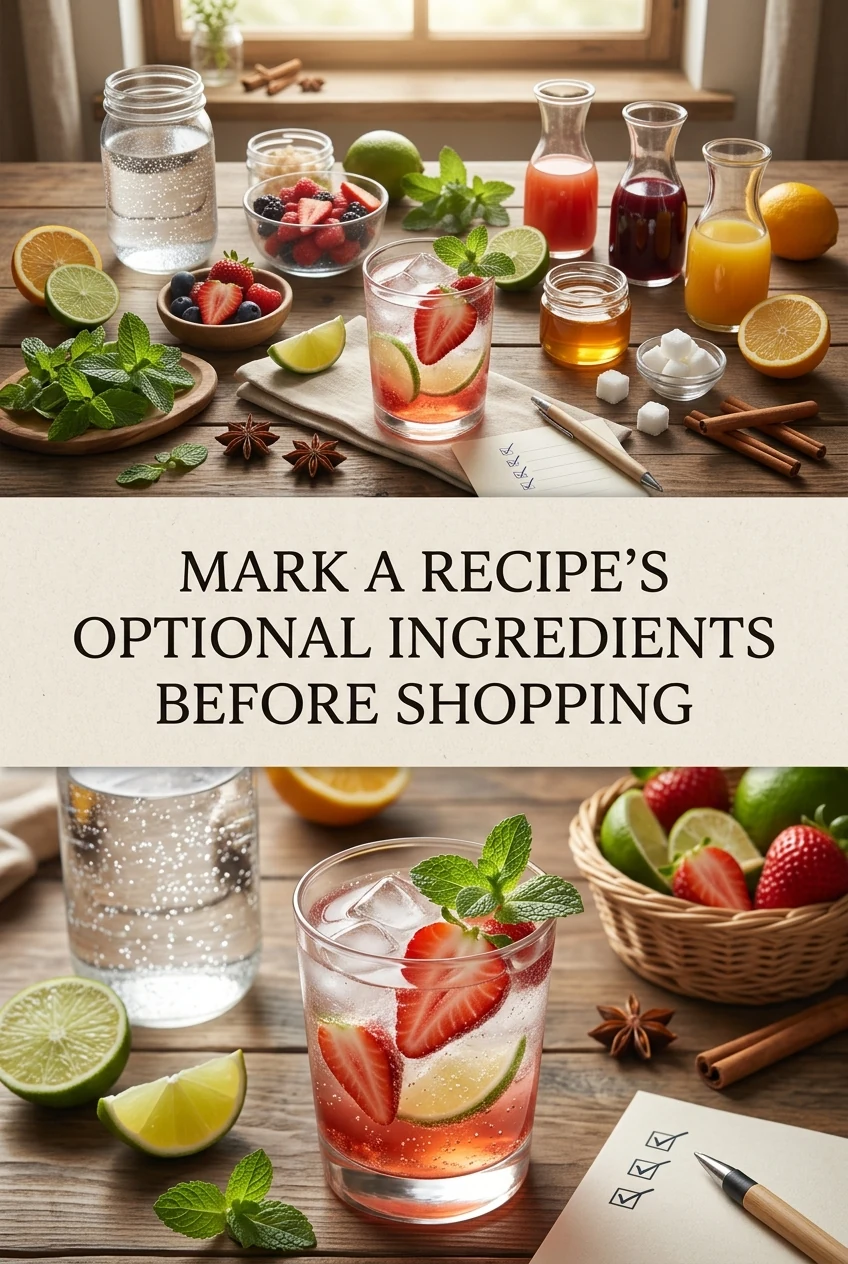
AI-generated editorial concept created for this article. The image is not a technical diagram or a tested result.
Read the Full Recipe Before Writing Anything Down
Sit with the complete recipe and read it from start to finish before touching your shopping list. Sparkling fruit drink recipes frequently embed optional items mid-sentence, such as 'add mint if desired' or 'substitute raspberry syrup for strawberry.' These phrases signal optional ingredients, but they appear in the same paragraph as required ones. On a first read, your only job is to notice which ingredients appear in the core preparation steps and which appear in topping, garnish, or substitution notes. Mark optional items with a small circle or asterisk directly on the printed or digital recipe so they are visually distinct before you move to the next step.
Separate Required Quantities from Optional Variants
Once you have marked the optional items, rewrite the ingredient list in two columns: Required and Optional. In the Required column, record only the ingredients and quantities the recipe needs to produce the drink as written. In the Optional column, list everything else. For a sparkling fruit drink, the Required column might include sparkling water, a measured volume of fruit juice, a halal-certified simple syrup, and fresh citrus. The Optional column might include edible dried fruit, a flavored syrup swap, or a garnish such as a citrus wheel. This physical separation prevents the two groups from blending together when you are moving quickly through a market.
Choose One Version and Build a Single Shopping List
Look at your Optional column and decide which, if any, of those items you want to include in the version you are making today. This is the decision point. If you want the garnish, move it to your shopping list. If you are skipping the substitution syrup, leave it off entirely. The goal is one shopping list that reflects one chosen version of the drink, not a list that covers all variants. For example, if the recipe offers both lychee syrup and rose syrup as options and you prefer lychee, write only lychee syrup on your list. Buying both to decide later adds cost and can leave an opened perishable syrup unused.
A Worked Example with a Sparkling Strawberry Drink
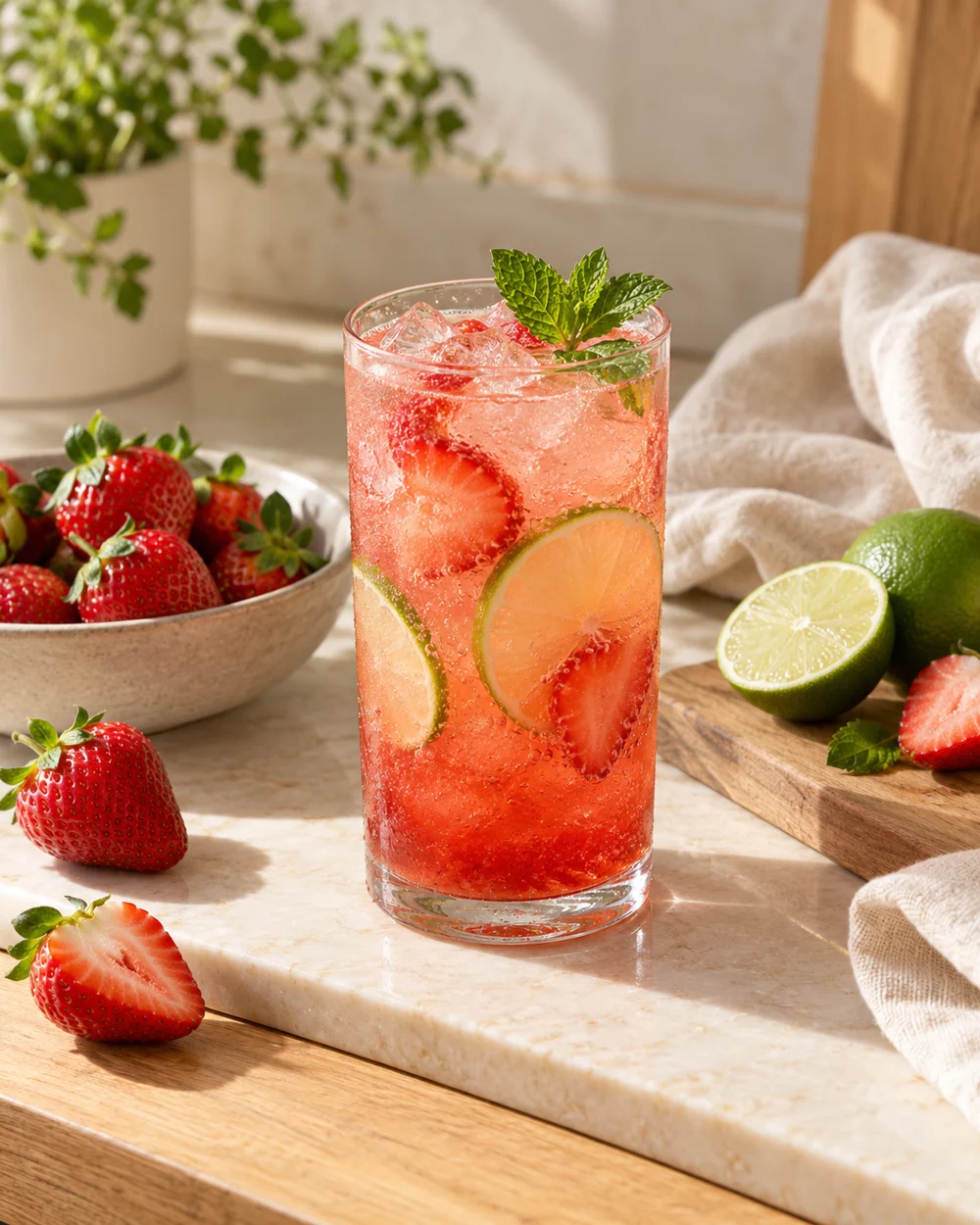
Consider an illustrative plan, not a tested result, for a sparkling strawberry drink that serves four. The recipe lists: 500 ml sparkling water, 200 ml fresh strawberry juice, 60 ml halal-certified simple syrup, and juice of one lime as required. It then lists as optional: fresh mint leaves, a swap of strawberry juice for watermelon juice, and a garnish of halved strawberries. After marking and separating, you decide to keep the mint and skip the watermelon swap and the garnish. Your shopping list becomes: sparkling water, fresh strawberries for juicing, halal-certified simple syrup, limes, and fresh mint. You are buying for exactly one version. The watermelon and extra strawberries for garnish stay off the list. If the syrup or fresh juice will not be used the same day, plan to refrigerate them promptly after purchase, following the storage guidance on the product label.
Keep the Marked Recipe for Future Variations
After shopping and making the drink, keep the marked recipe with its two-column separation intact. The Optional column becomes a reference for next time. If you want to try the watermelon swap on a future occasion, the ingredient is already identified and noted. This approach also helps when you scale the recipe. If you decide to double the batch, you only need to scale the Required column quantities. Optional garnishes often do not scale in a fixed ratio and can be adjusted by preference rather than arithmetic. Storing the marked recipe as your working document means you are not re-reading and re-sorting from scratch each time you return to it.
A little more
to know.
What if the recipe does not clearly label which ingredients are optional?
Look for conditional language in the method steps rather than the ingredient list. Phrases such as 'if using,' 'to taste,' 'for garnish,' or 'alternatively' in the instructions indicate that the ingredient is not required for the base drink. Mark those ingredients as optional in your own copy of the recipe before building your shopping list.
Should I buy optional ingredients in case I change my mind while making the drink?
That decision depends on how perishable the optional item is and whether you have a clear plan to use it. If an optional ingredient is a fresh perishable and you are uncertain you will use it, it is generally more practical to leave it off the list for this session and add it deliberately on a future shop when you have decided to include it. This avoids opening and partially using a perishable item without a plan for the remainder.
Original editorial guidance and recipe formulations, not independently kitchen-tested. Times are estimates and depend on equipment and product directions. Cooked bases need additional cooling and refrigeration before cold serving. Images are AI-generated illustrations; appearance and yield may vary. Check actual ingredient labels, allergens, and any certification you require. We do not certify products. Read our approach.
Save to Pinterest ↗ANOTHER IDEA FOR THE COUNTER