Make a Small Fruit Fool with Whipped Cream
A fruit fool is one of the most straightforward chilled desserts you can assemble at home. It combines lightly sweetened whipped cream with a separately prepared fruit base, layered or folded together and served cold. This guide walks through a small-batch plan using fresh or frozen fruit and pasteurized heavy cream, sized for two to four individual glasses. Every step is an illustrative home-cafe approach rather than a laboratory-tested result, so treat quantities as a starting point and adjust to your own taste and equipment.
Read the note ↓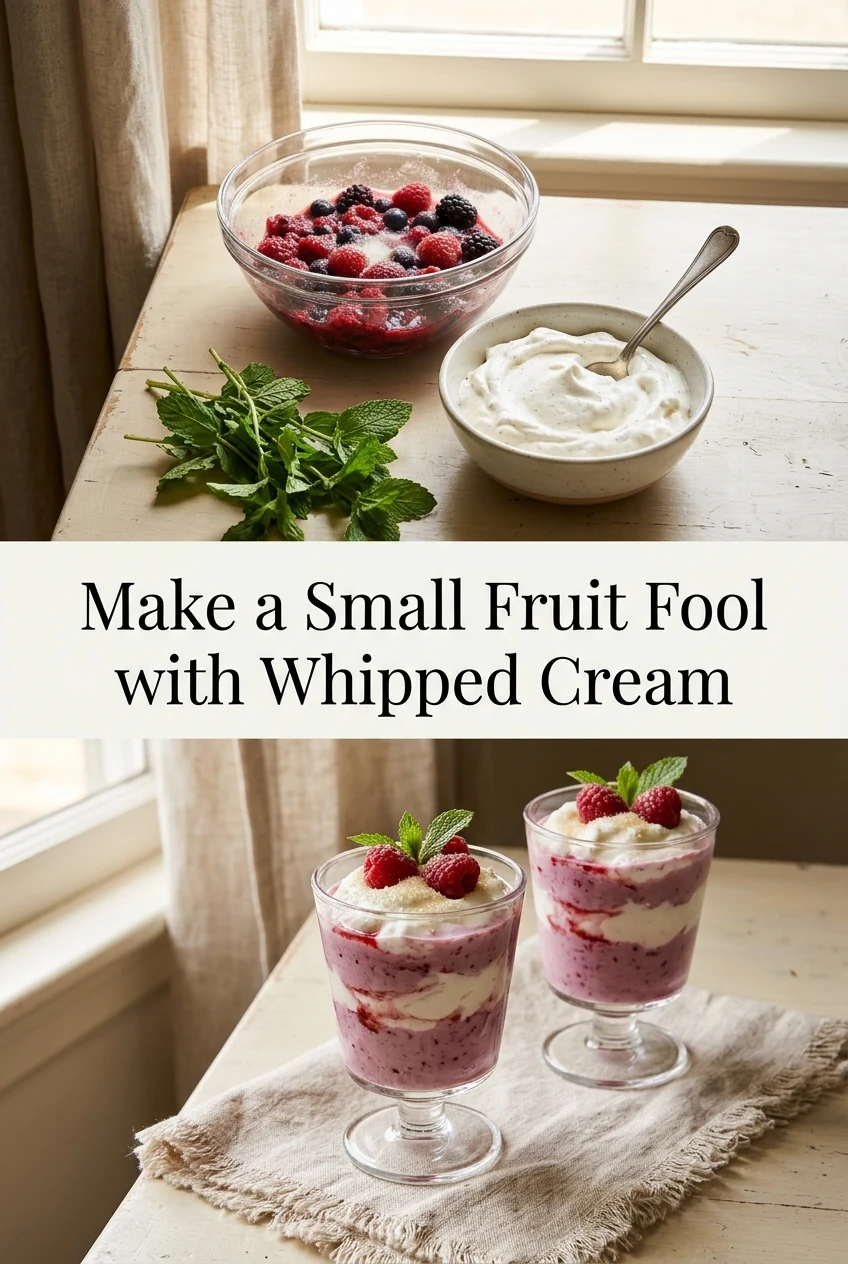
AI-generated editorial concept created for this article. The image is not a technical diagram or a tested result.
Choose and Prepare Your Fruit Base
Select a fruit with enough natural acidity to contrast the cream. Ripe mango, strawberry, raspberry, or gooseberry each work well in a small batch. For this worked example, use 250 grams of fresh or thawed frozen strawberries. Hull and roughly chop them, then place them in a small saucepan with two tablespoons of caster sugar and one tablespoon of water. Cook over medium-low heat, stirring occasionally, until the fruit softens and releases its juice, roughly eight to ten minutes. Remove from heat and allow the mixture to cool completely at room temperature, then transfer it to the refrigerator. The fruit base must be fully cold before it meets the cream, otherwise the cream will lose its structure. You can leave the fruit slightly chunky for texture or mash it further with a fork for a smoother result. Taste and add a small amount of extra sugar if needed before chilling.
Whip the Cream to the Right Stage
Use 200 millilitres of pasteurized heavy whipping cream, kept in the refrigerator until the moment you need it. Cold cream whips more reliably than cream left at room temperature. Pour it into a clean, dry bowl. Add one teaspoon of caster sugar and, if you like, a small amount of alcohol-free vanilla flavoring — check the label explicitly to confirm it contains no alcohol before using it. Whip by hand with a balloon whisk or use a hand mixer on a moderate speed. Stop when the cream holds soft, billowy peaks that droop slightly at the tip rather than standing rigidly upright. Overwhipped cream becomes grainy and can separate, so check frequently near the end. Soft peaks blend more smoothly with the fruit and give the finished fool a lighter, spoonable texture. Keep the whipped cream refrigerated if you are not assembling immediately.
Assemble the Fool in Individual Glasses
This example fills two standard 250-millilitre dessert glasses or four smaller 125-millilitre glasses. Divide the chilled fruit base roughly in half. Spoon a layer of fruit into the base of each glass, using about a quarter of the total fruit per serving if making four glasses. Add a generous spoonful of whipped cream on top, then repeat with another fruit layer and finish with cream. Alternatively, fold the fruit gently through the cream two or three times with a spatula to create a rippled, marbled appearance rather than distinct layers — both approaches are valid and produce different visual results. Leave a small gap at the rim so the glasses are easy to carry to the refrigerator without spilling.
Refrigerate Promptly and Serve Cold
Cover each glass loosely with a small piece of cling film or a fitted lid and place them in the refrigerator straight away. Because this dessert contains whipped cream and cooked fruit, it is a perishable preparation and must stay chilled. Serve the fool cold, directly from the refrigerator. Do not leave assembled glasses at room temperature for extended periods. Consume on the same day you assemble them for the best texture and food safety. The cream may begin to soften and the layers may settle as time passes, which is a natural change rather than a flaw, but the dessert is best enjoyed soon after it is made.
Vary the Fruit to Suit the Season
The same method adapts to many other fruits. Ripe mango pureed with a little lime juice makes a vivid yellow fool. Cooked gooseberries with extra sugar produce a sharp, pale green version. Raspberries can be pressed through a fine sieve after cooking to remove seeds before chilling. If you use a fruit with very high water content, drain off some of the excess liquid after cooking so the base is thick enough to hold its shape against the cream rather than pooling at the bottom of the glass. Adjust sugar levels for each fruit individually, since sweetness varies considerably between varieties and ripeness levels. Each combination is its own small experiment, and the quantities here are a guide rather than a fixed formula.
A little more
to know.
Can I use canned fruit instead of fresh or frozen?
Yes, canned fruit in juice or light syrup can work as a shortcut. Drain the fruit well and taste it before adding any extra sugar, since canned fruit is often already sweetened. You can use it as-is if it is soft enough, or warm it briefly in a saucepan to concentrate the flavor, then cool it completely in the refrigerator before assembling the fool.
Why does my cream look grainy after folding in the fruit?
Grainy or slightly broken cream usually means it was whipped past the soft-peak stage before the fruit was added, or the fruit was not fully cold when it met the cream. Warm or acidic fruit can cause cream to tighten quickly. To reduce the chance of this happening, make sure both the fruit and the cream are thoroughly chilled, and fold gently with a wide spatula using as few strokes as possible.
Original editorial guidance and recipe formulations, not independently kitchen-tested. Times are estimates and depend on equipment and product directions. Cooked bases need additional cooling and refrigeration before cold serving. Images are AI-generated illustrations; appearance and yield may vary. Check actual ingredient labels, allergens, and any certification you require. We do not certify products. Read our approach.
Save to Pinterest ↗ANOTHER IDEA FOR THE COUNTER