Maintain Carbonation Integrity in Sparkling Citrus Drinks
Preparing effervescent citrus beverages at home often results in flat, lifeless drinks when dense citrus cordials cause rapid degassing of cold seltzer. Carbon dioxide remains dissolved under pressure and low temperature, but sudden contact with warm liquids, rough surfaces, or turbulent agitation quickly releases gas into the atmosphere. Preserving effervescence requires synchronizing thermal states, removing particulate nucleation triggers, and utilizing careful pouring mechanics. By managing thermal prep and dispensing angles, you sustain persistent micro-bubbles that maintain bright aromatic lift without resorting to pressurized draft gear.
Read the note ↓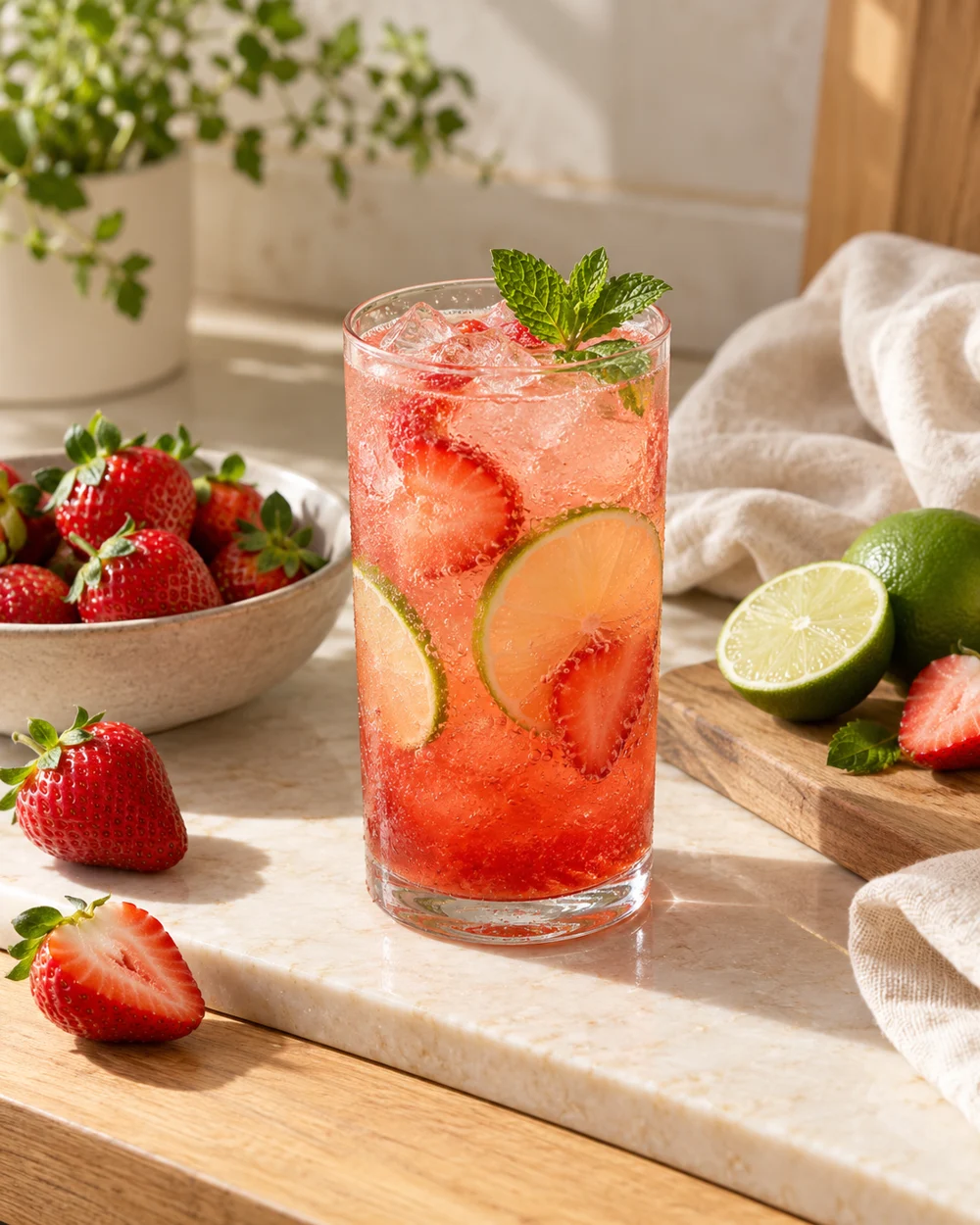
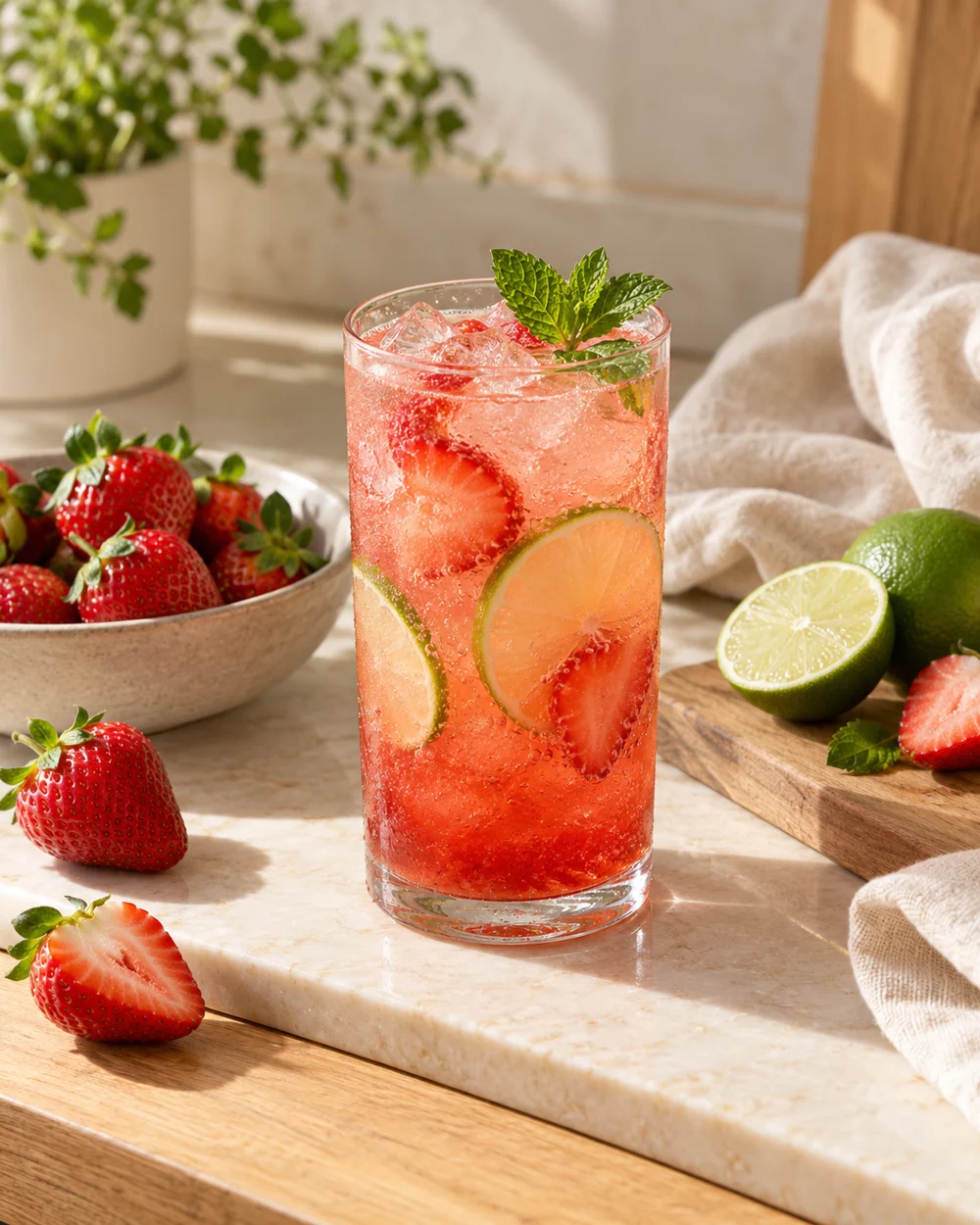
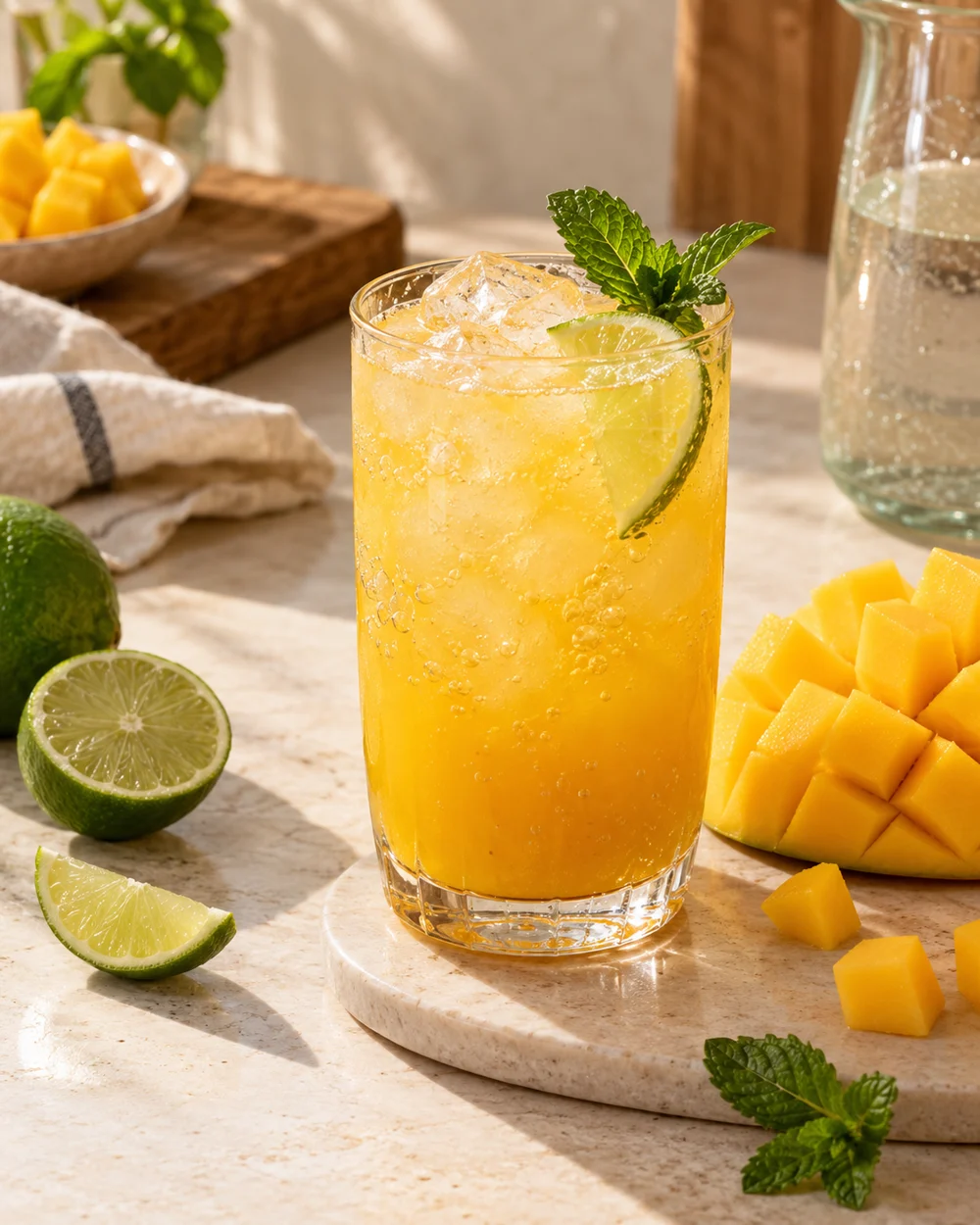
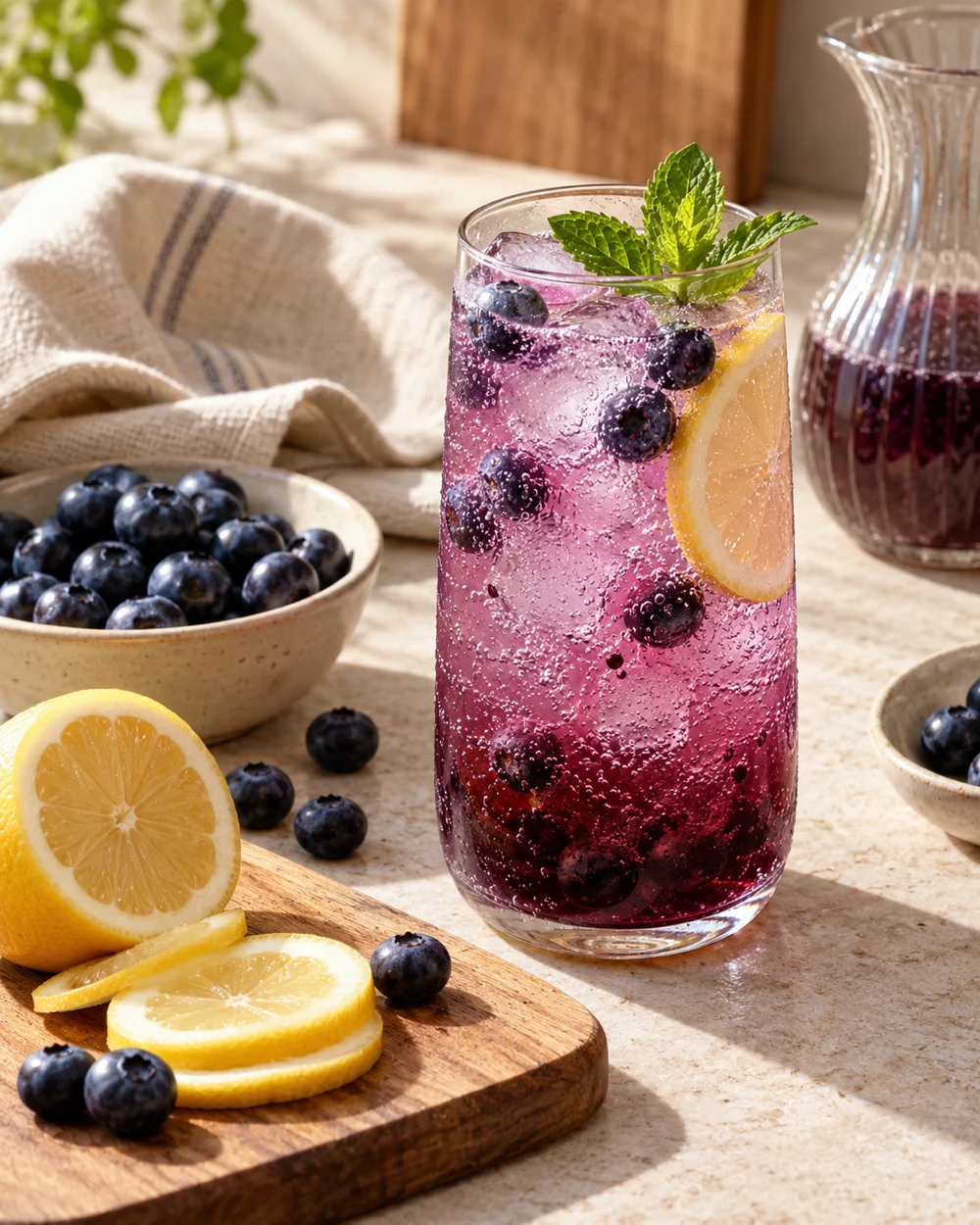
Representative category illustration reused from our editorial library; it does not depict this specific project or a tested result.
Equalize Liquid Temperatures Prior to Mixing
Carbon dioxide dissolves far more readily in cold liquids than in warm mixtures. If pasteurized citrus cordial rests at room temperature while the seltzer is cold, combining them creates a thermal gradient that triggers instant gas release. Store both the citrus base and seltzer in a refrigerator maintained at or below 4C (40F) for several hours before assembly. Chilling the serving glassware alongside the liquids eliminates another source of heat transfer, keeping the blended beverage crisp and well saturated with carbonation.
Strain Suspended Solids to Remove Nucleation Sites
Rough surfaces inside a liquid trigger gas bubbles to form and detach rapidly. Unstrained citrus juices contain floating pulp, microscopic fiber strands, and seed fragments that act as aggressive nucleation centers. Passing your citrus cordial through a fine-mesh conical sieve or paper filter removes these insoluble particles. Clarified or tightly strained syrups provide a smooth fluid environment, allowing dissolved carbonic acid to remain stably integrated rather than erupting into heavy foam when sparkling water enters the glass.
Establish a Wall-Directed Laminar Pour
Pouring carbonated water directly into the center of a glass creates fluid turbulence and folds atmospheric air into the liquid, driving out gas. Instead, tilt your serving tumbler at roughly a forty-five-degree angle. Rest the lip of the chilled seltzer bottle against the interior rim of the glass and pour steadily along the glass wall. This laminar flow directs the fluid smoothly downward with minimal agitation, buffering the force of impact and keeping bubble structures intact.
Manage Addition Sequence and Density Disparities
Sugar-dense citrus cordials sink immediately if poured onto carbonated water, necessitating aggressive stirring that strips fizz. Add measured syrup to the empty glass first. For an illustrative glass of 180 milliliters total volume, deposit 30 milliliters of chilled cordial into the bottom, then carefully run 150 milliliters of cold seltzer down the wall. The rising carbonated water naturally incorporates into the syrup layer, requiring only a single, slow upward lift with a bar spoon to achieve complete uniformity.
Select Dense Ice and Minimal Agitation
Standard cloudy freezer ice contains trapped air pockets and irregular fractures that serve as internal nucleation sites, accelerating gas escape. Use clear, dense ice cubes with smooth exterior surfaces when chilling the mixed drink. Gently slide the cubes into the glass using tongs after pouring liquids, rather than splashing sparkling water over jagged cubes. Consume the finished beverage immediately, keeping unused portions of pasteurized cordial sealed and refrigerated at or below 4C to limit flavor loss.
A little more
to know.
Does sweetening the cordial with honey cause more gas breakout than simple syrup?
Yes. Honey contains residual micro-particulates, waxes, and natural colloids that create additional nucleation sites compared to filtered sucrose syrup, which can cause faster carbonation loss unless thoroughly clarified through fine filtration before mixing.
Can I pre-mix the cordial and seltzer in a closed pitcher for later service?
Pre-mixing is not recommended. Pitchers leave wide open headspaces where freed carbon dioxide accumulates and escapes every time the container opens, flattening the remaining liquid substantially faster than fresh individual assembly.
Original editorial guidance and recipe formulations, not independently kitchen-tested. Times are estimates and depend on equipment and product directions. Cooked bases need additional cooling and refrigeration before cold serving. Images are AI-generated illustrations; appearance and yield may vary. Check actual ingredient labels, allergens, and any certification you require. We do not certify products. Read our approach.
Save to Pinterest ↗ANOTHER IDEA FOR THE COUNTER