Keep Raw-Dough Tools Separate from Ready-to-Serve Cafe Food
A home cafe setup often means raw cookie dough and chilled smoothies share the same small counter. Raw flour and raw eggs carry bacteria that can transfer to ready-to-serve drinks and plated food through shared spoons, boards, or unwashed hands. Keeping a clear physical boundary between raw-dough work and finished-food plating is a straightforward organisational habit, not a complicated procedure. This article outlines one illustrative planning approach for a home cafe session where baked goods and blended drinks are prepared in the same afternoon.
Read the note ↓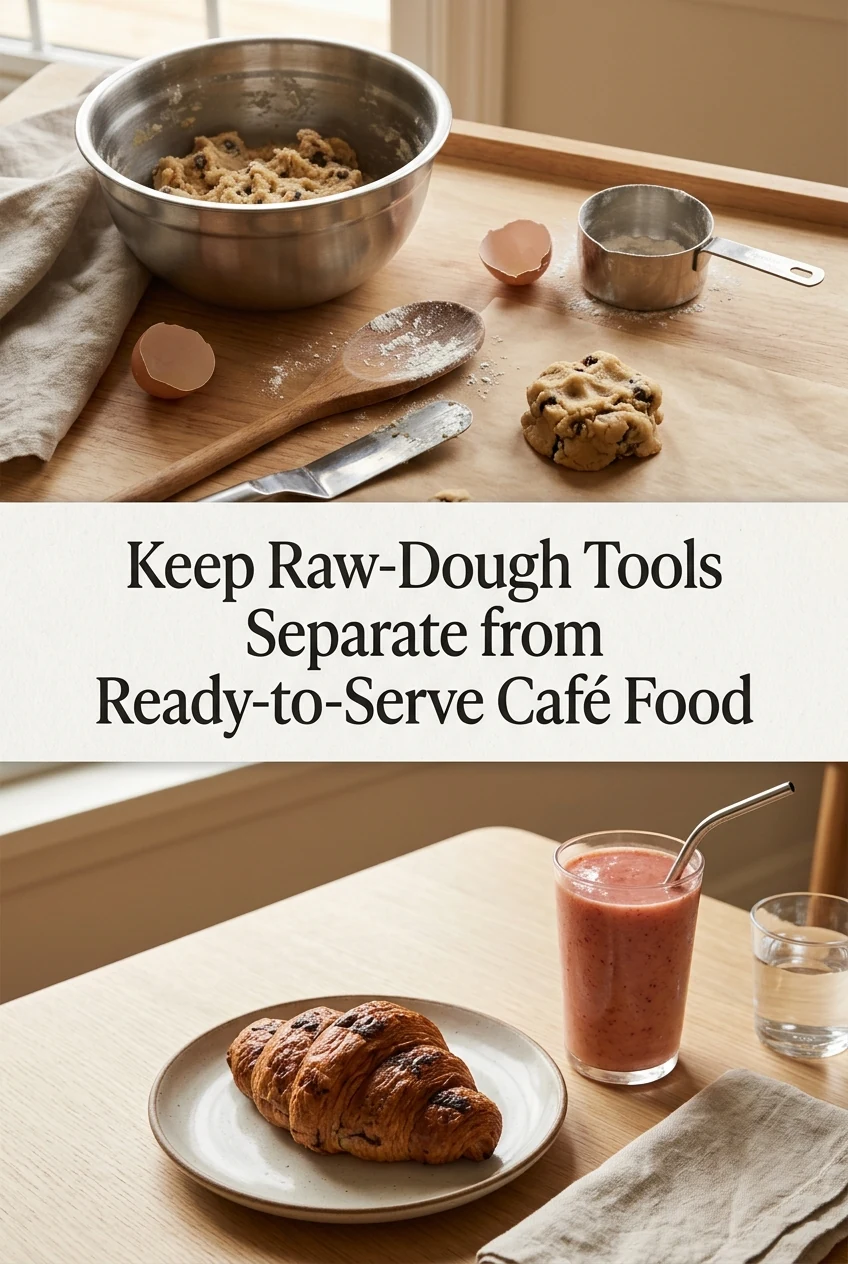
AI-generated editorial concept created for this article. The image is not a technical diagram or a tested result.
Understand Why the Boundary Matters
Raw flour is an unprocessed agricultural product, and raw eggs are perishable ingredients. Both can carry harmful bacteria before heat treatment. A smoothie poured into a glass, a slice of cake lifted onto a plate, or a garnish placed on a drink rim receives no further cooking. Any residue from a raw-dough spatula or an unwashed cutting board that contacts these finished items carries risk. The goal of tool separation is to prevent that transfer at the point of contact, before it can happen.
Assign Dedicated Tools Before You Begin
Before the session starts, lay out two clearly distinct sets of tools on the counter. One set handles only raw dough: a mixing bowl, a silicone spatula marked with a coloured band or a piece of masking tape labelled 'raw', a bench scraper, and a dedicated cutting mat. The second set handles only finished food: a clean serving spatula, a separate cutting board, the smoothie glasses, a jug for blending, and any garnish tools. Colour-coded silicone utensils sold in kitchen shops make this distinction easy to maintain at a glance. Store the raw-dough set on one side of the counter and the finished-food set on the other, with a clear gap between them. This is a planning arrangement, not a tested laboratory result, but it gives every step a logical home.
Clean the Work Area Between Stages
Once the raw dough is shaped and placed in the oven, the raw-dough tools go directly into the sink or dishwasher. Wipe down the raw-dough side of the counter with hot soapy water, rinse, and dry before bringing any finished-food item near that surface. Wash hands thoroughly with soap and water after handling raw flour or eggs and before touching glasses, garnishes, or plated cakes. This transition moment is the most important pause in the session. Do not skip it to save time, because the oven running does not clean the counter or the tools left on it.
A Worked Example: Cookie Afternoon with Smoothies
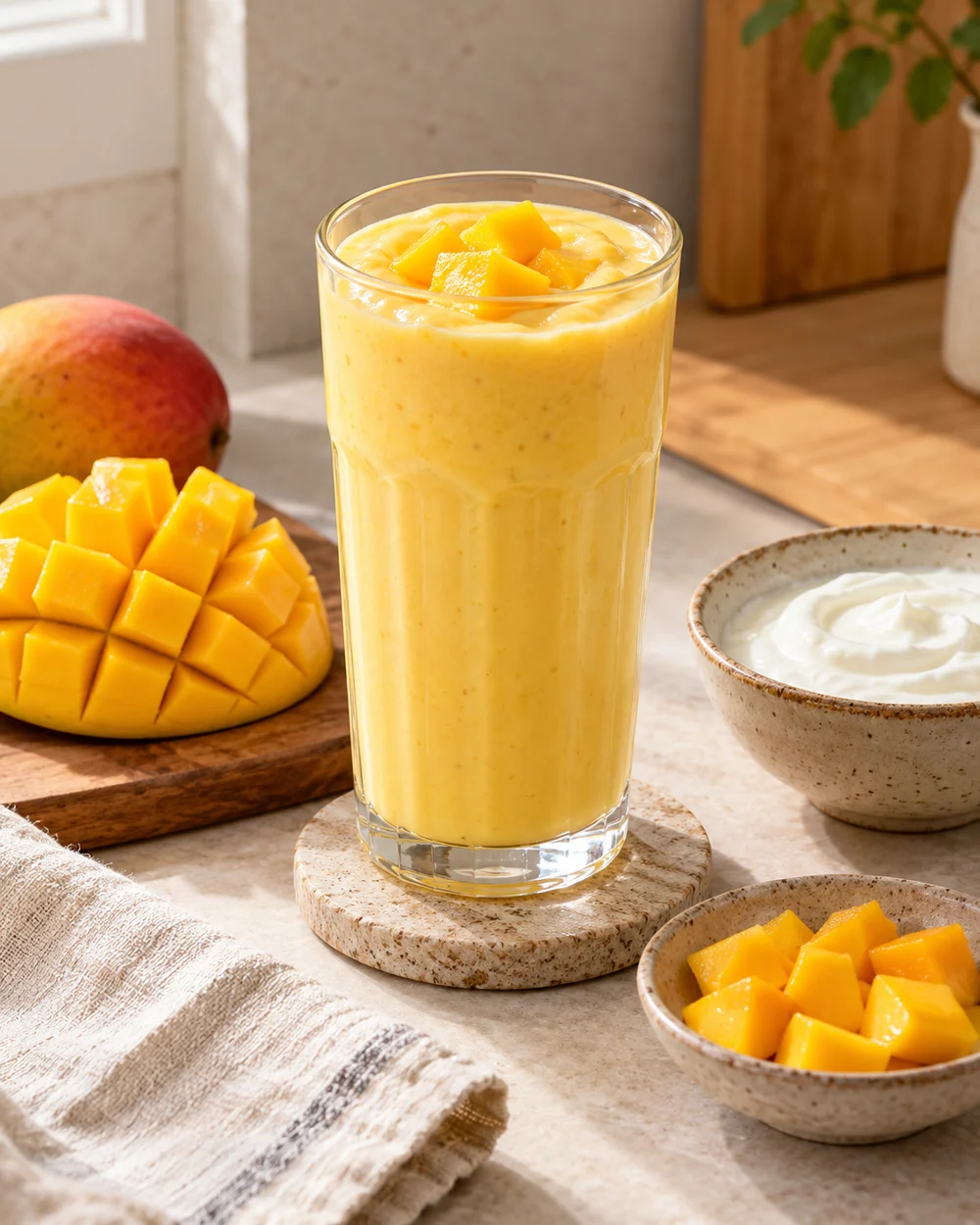
Imagine a Saturday home-cafe plan: vanilla sugar cookies baked first, then mango lassi smoothies served to guests. The vanilla extract used is explicitly labelled alcohol-free. Raw-dough tools — one bowl, one spatula, one mat — are set on the left side of the counter. Smoothie glasses, the blender jug, a ladle, and a fruit board are set on the right. The cookie dough is mixed, shaped, and loaded onto a baking tray using only the left-side tools. The tray goes into the oven following the recipe maker's stated temperature and time. At that point, the left-side tools move to the sink, hands are washed, and the counter left of centre is wiped with hot soapy water and dried. Only then does smoothie preparation begin on the right side. Mango, yoghurt, and a splash of chilled water go into the blender. The finished lassi is poured into glasses that have never been near raw dough. Cookies cool on a rack; once fully cooled, they are plated using the right-side serving spatula. Leftover yoghurt and any cut fruit go into the refrigerator promptly, within the timeframe recommended by food safety guidance for perishable dairy and fresh fruit.
Maintaining the Habit Over Multiple Sessions
The separation plan only works if it is reset each session. After guests leave, wash all tools thoroughly, dry them, and store the raw-dough set and the finished-food set in separate drawers or labelled containers so they are ready and distinct for next time. Check that coloured bands or tape labels are still legible before each use. If a tool is used outside its assigned role by mistake, treat it as a raw-contact item and wash it before returning it to the finished-food set. Over time, the habit of reaching for the correct tool becomes automatic, which is the practical goal of the system.
A little more
to know.
Can I use the same blender jug for mixing a raw egg-based batter and then for a smoothie if I rinse it in between?
A quick rinse is not sufficient to remove raw egg residue from a blender jug. Wash the jug with hot soapy water, rinse it thoroughly, and allow it to dry before using it for a ready-to-serve smoothie. Better still, assign a dedicated jug to each role so there is no crossover at all.
How soon should I refrigerate unused raw dough or leftover dairy ingredients?
Follow the guidance given in your specific recipe and any storage instructions on the ingredient packaging. As a general food-safety practice, do not leave raw dough containing eggs or dairy, or open dairy products such as yoghurt or milk, at room temperature for extended periods. Return them to the refrigerator promptly when you are done using them.
Original editorial guidance and recipe formulations, not independently kitchen-tested. Times are estimates and depend on equipment and product directions. Cooked bases need additional cooling and refrigeration before cold serving. Images are AI-generated illustrations; appearance and yield may vary. Check actual ingredient labels, allergens, and any certification you require. We do not certify products. Read our approach.
Save to Pinterest ↗ANOTHER IDEA FOR THE COUNTER