Infuse Whole Warming Spices into Milk Without Grainy Silt
Ground spice powders leave an unpleasant, gritty residue at the base of steamed milk drinks because powdered bark and seeds do not dissolve. Achieving aromatic warmth without silt requires whole, cracked botanicals held in a porous boundary during heating. By bruising whole pods and sticks before simmering them in pasteurized dairy, aromatic essential oils diffuse directly into the warm fats while insoluble fibers remain contained. This workflow eliminates chalky mouthfeel, simplifies straining, and keeps the finished cup clear, smooth, and pleasant down to the final sip.
Read the note ↓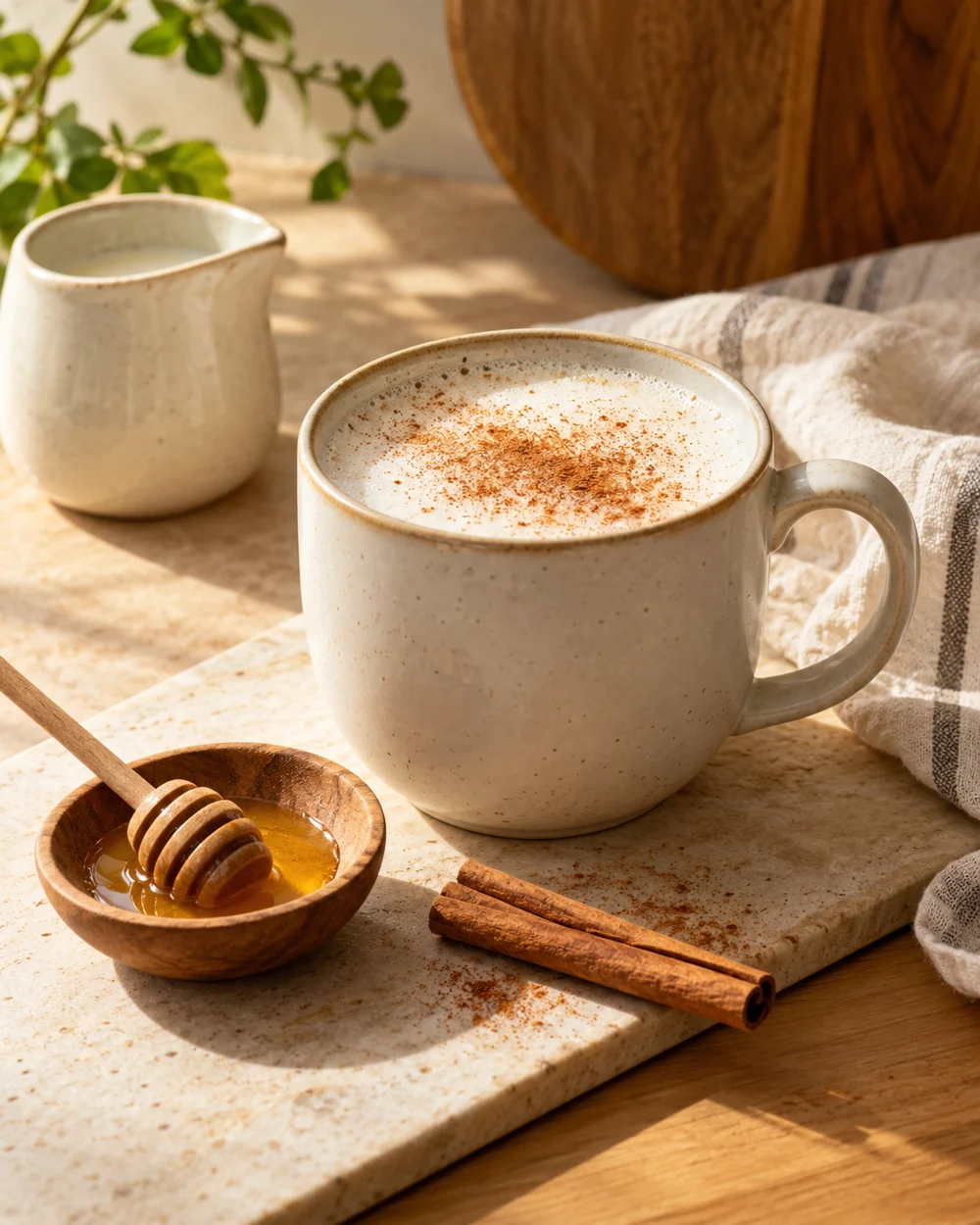
Representative category illustration reused from our editorial library; it does not depict this specific project or a tested result.
Bruising Whole Botanicals to Release Volatiles
Whole spices feature protective outer hulls that trap volatile oils within inner chambers. Crushing green cardamom pods until the seams split exposes the dark inner seeds without pulverizing them into dust. Similarly, snapping a single cinnamon stick into coarse segments and lightly cracking whole cloves breaks open oil glands without shedding powdery detritus. Use a heavy spoon or mortar base to apply flat downward pressure. The goal is mechanical fracture rather than grinding, ensuring botanical fragments remain large enough to be stopped by basic mesh weaves.
Securing Spices in a Porous Boundary
Loose pan infusions often leave micro-fragments that escape standard kitchen strainers. Packing cracked spices into an unbleached cotton brew pouch or an ultra-fine stainless mesh infusion basket isolates the solids entirely. Tie the drawstring firmly or latch the wire cage securely before introducing it to the liquid. This barrier allows hot milk to wash freely across cracked surfaces while capturing woody fragments. It also streamlines cleanup by removing all botanical material in one swift lift once the target extraction finishes.
Calibrating Heat to Prevent Dairy Scorching
Dairy requires gentle thermal handling because whey proteins denature rapidly when exposed to aggressive heat. Pour 240 milliliters of pasteurized whole milk into a small heavy-bottomed stainless saucepan with the spice pouch. Heat over low flame until the surface shows faint steam and edges begin to ripple, roughly 65 to 70 degrees Celsius. Never allow milk to reach a rolling boil, which develops bitter sulfurous notes and a tough surface skin. Hold this gentle sub-simmer for ten minutes to permit thorough diffusion.
Extracting Lipophilic Aromatics into Milk Fats
Many warming spice notes, such as cinnamaldehyde and eugenol, are largely fat-soluble compounds rather than water-soluble salts. Skim dairy extracts these components noticeably slower than standard whole milk containing around 3.5 percent butterfat. If working with low-fat liquids, lengthen the warm steeping duration slightly while agitating the pouch intermittently. Pressing the pouch gently against the pan wall with a silicone spoon encourages fresh dairy flow through the inner spice chamber, speeding extraction without fracturing the enclosed botanical pieces into troublesome silt.
Safe Handling and Immediate Serving Protocol
After completing extraction, lift the pouch, let excess liquid drip back into the pan, and discard the spent botanicals. Serve the warmed milk immediately while hot. If preparing a batch ahead, cool the spiced milk rapidly and place it in sealed refrigeration held at 4 degrees Celsius or colder within two hours of heating. In environments warmer than 32 degrees Celsius, complete this refrigeration transfer within one hour. Never leave warm infused dairy sitting uncovered at ambient counter temperatures.
A little more
to know.
Can disposable paper tea filters replace cotton cloth bags?
Yes, unbleached paper tea sachets trap fine sediment effectively. However, select heavyweight crimped paper filters rather than thin tea bags, which can tear along wet seams when agitated inside dense, hot dairy.
Why does spiced milk taste weak if steeped off the burner?
Warming spice compounds dissolve sluggishly in cooling fats. Maintaining a constant gentle warmth between 65 and 70 degrees Celsius keeps butterfat fluid enough to strip volatile oils efficiently from cracked seed hulls.
Original editorial guidance and recipe formulations, not independently kitchen-tested. Times are estimates and depend on equipment and product directions. Cooked bases need additional cooling and refrigeration before cold serving. Images are AI-generated illustrations; appearance and yield may vary. Check actual ingredient labels, allergens, and any certification you require. We do not certify products. Read our approach.
Save to Pinterest ↗ANOTHER IDEA FOR THE COUNTER