Iced Taro and Oat Milk Latte
Taro powder does not dissolve in cold liquid. When it is added directly to cold oat milk or poured over ice, the powder forms dry clumps that sink and stick to the bottom of the glass before the drink even reaches the table. Dissolving the powder in a small amount of warm water first creates a smooth paste that blends evenly into cold oat milk, giving the drink its characteristic even purple colour and consistent flavour from the first sip to the last.
Read the note ↓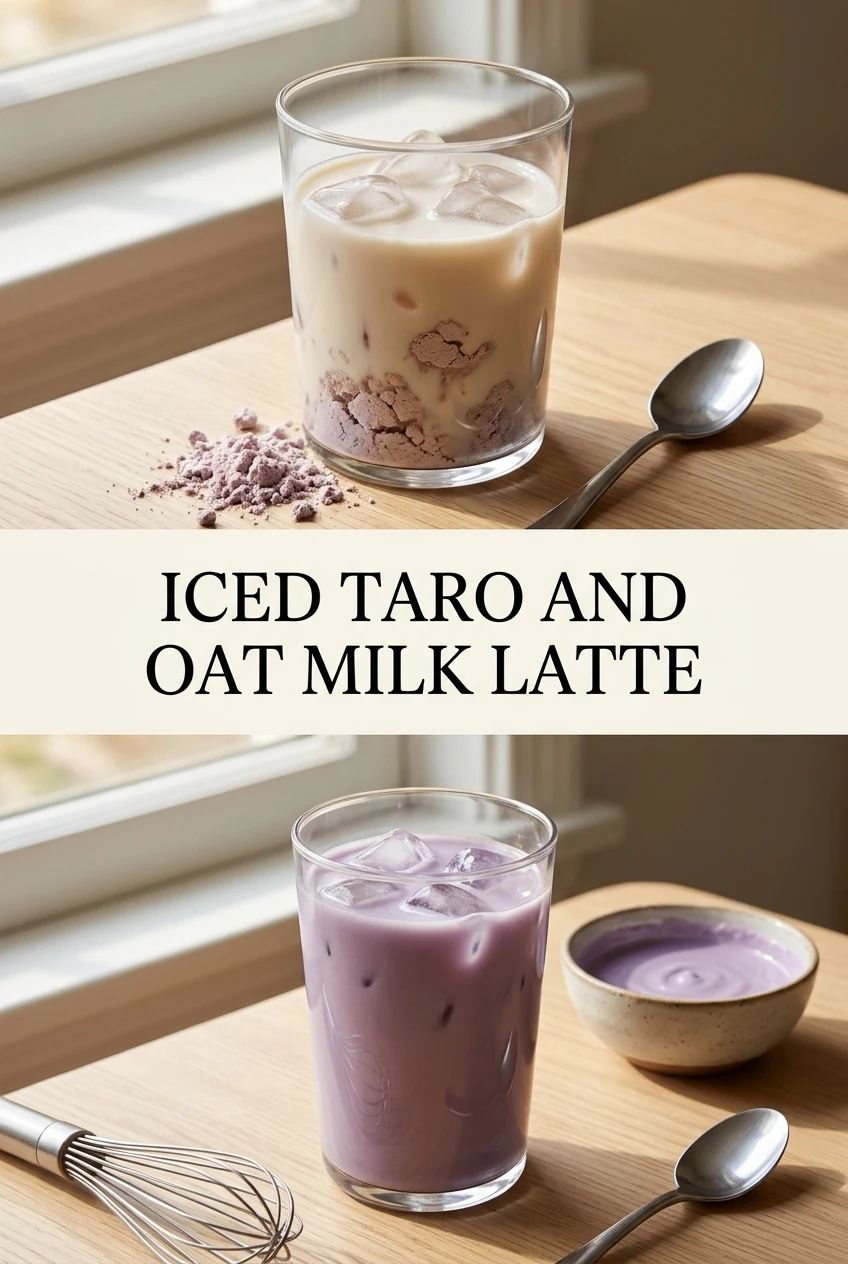
AI-generated editorial concept created for this article. The image is not a technical diagram or a tested result.
Measuring the taro powder correctly
Use 25 grams of taro powder for a single 350-millilitre serving. This amount gives a noticeable taro flavour and colour without making the drink overly thick or starchy. Taro powders vary in sweetness and intensity between brands, so treat 25 grams as a starting point for your first batch and adjust by 5 grams in either direction on subsequent attempts. Measure by weight rather than by the tablespoon, as powder density varies and tablespoon measures can differ by several grams.
Dissolving the powder in warm water
Add the 25 grams of taro powder to a small cup or jug. Pour 60 millilitres of water heated to around 70 degrees Celsius over the powder. Stir vigorously with a small whisk or a spoon for 30 to 45 seconds until the mixture is completely smooth with no dry patches or lumps visible. The result should look like a thick, uniform paste. If any dry powder remains on the sides of the cup, scrape it down and stir again before moving to the next step.
Adding sweetener to the warm base
Stir your chosen sweetener into the warm taro paste while it is still fluid, as sweeteners dissolve more readily in warm liquid than in cold. A common starting point is 15 millilitres of simple syrup or one level teaspoon of caster sugar. Stir until fully incorporated. Adding sweetener at this stage rather than at the end means it is evenly distributed throughout the drink rather than pooling at the bottom under the ice, which is a common issue when sweetener is added last.
Building the drink over ice
Fill a 400-millilitre glass with ice cubes, leaving about 4 centimetres of space at the top. Pour the warm taro paste over the ice and watch it cool and settle slightly. Then pour 240 millilitres of chilled oat milk over the taro base in a slow, steady stream. The contrast between the taro layer and the oat milk creates a visible layered effect before stirring. Stir the drink fully before serving to combine the layers into a uniform colour and flavour.
Serving and handling the finished drink
Serve immediately after stirring. Taro powder can begin to settle again within a few minutes if the drink sits undisturbed, so provide a straw or a long spoon so the drinker can stir it themselves if needed. Do not prepare the taro paste base more than 30 minutes ahead, as it thickens as it cools and becomes harder to incorporate into the cold milk evenly. If you are making multiple drinks, prepare each taro base individually just before building the glass.
A little more
to know.
Why does the colour sometimes look grey rather than purple?
Grey colour usually means the powder was not fully dissolved before the cold milk was added, leaving starchy particles that dull the colour. Fully dissolving the paste in warm water before any cold liquid is introduced is the key step. Some lower-quality taro powders also produce a less vivid colour regardless of technique.
Can oat milk be swapped for whole dairy milk?
Yes. Whole dairy milk produces a creamier result and the taro flavour reads slightly richer against it. The dissolving process for the taro paste does not change. Use the same 240-millilitre quantity and keep the milk refrigerated until the moment you pour it over the ice.
Original editorial guidance and recipe formulations, not independently kitchen-tested. Times are estimates and depend on equipment and product directions. Cooked bases need additional cooling and refrigeration before cold serving. Images are AI-generated illustrations; appearance and yield may vary. Check actual ingredient labels, allergens, and any certification you require. We do not certify products. Read our approach.
Save to Pinterest ↗ANOTHER IDEA FOR THE COUNTER