Iced Hojicha Latte With Oat Milk
Hojicha brings a toasty, low-bitterness character that pairs naturally with the mild sweetness of oat milk, but the balance can slip easily when the drink is served cold. Dilution from melting ice, the natural sugars already present in oat milk, and the intensity of the hojicha steep all shift the final flavor. This guide walks through making a strong hojicha concentrate, chilling it before assembly, and building the drink over ice so the layers stay distinct and the roasted notes come through clearly.
Read the note ↓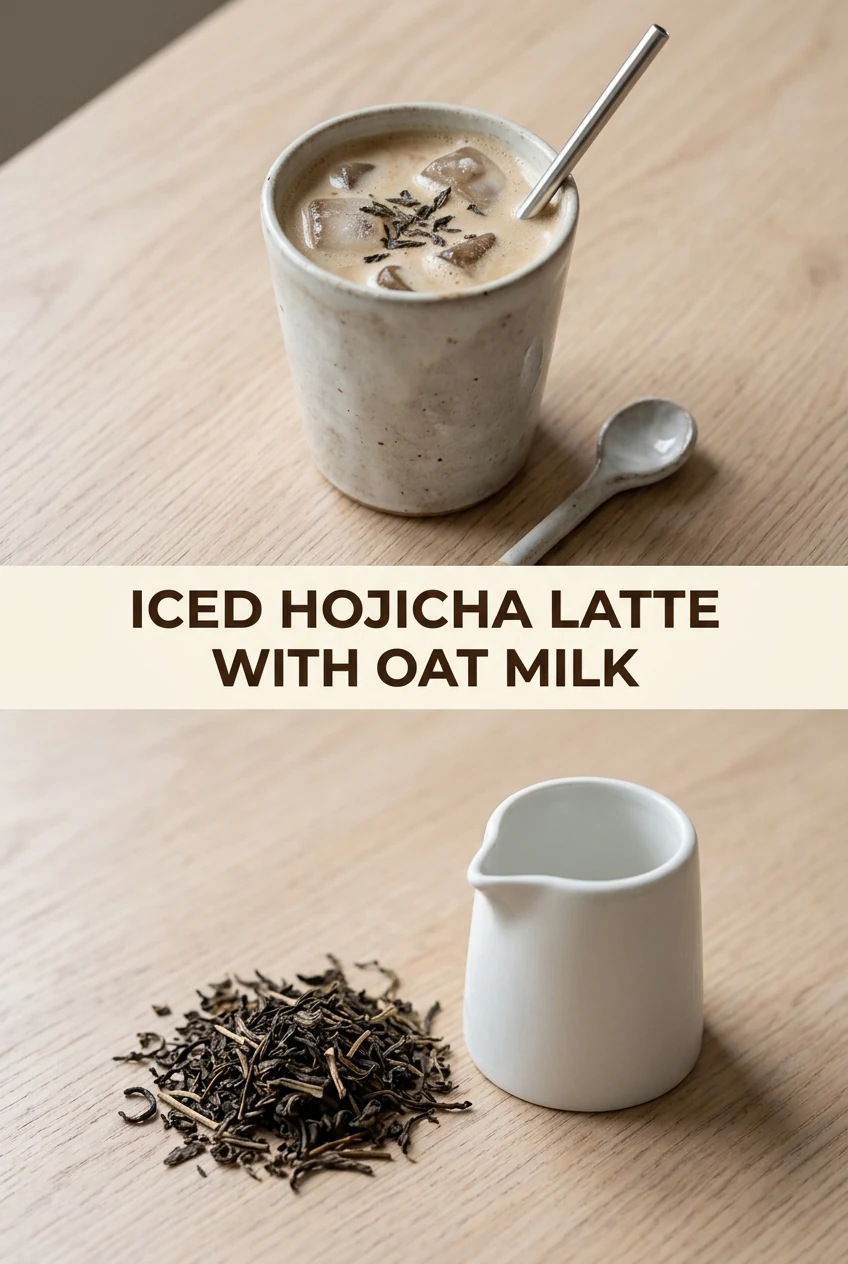
AI-generated editorial concept created for this article. The image is not a technical diagram or a tested result.
Understanding Hojicha and Why Concentration Matters
Hojicha is a Japanese green tea roasted at high heat, which converts many of the grassy, astringent compounds into warmer, caramel-adjacent flavors. Because it is naturally lower in bitterness than matcha or sencha, it can handle a slightly higher leaf-to-water ratio without becoming harsh. When building an iced drink, ice dilutes the liquid as it melts. Brewing a concentrate rather than a standard-strength cup compensates for that dilution and keeps the roasted flavor present after the oat milk is added. A concentrate brewed at roughly double the standard leaf ratio gives you a starting point that survives both the ice and the oat milk without disappearing into the background.
Brewing the Hojicha Concentrate
For one serving, measure approximately two teaspoons of loose hojicha leaves or two hojicha tea bags into a small heatproof vessel. Pour around 120 milliliters of hot water over the leaves. Hojicha tolerates water in the range of 90 to 95 degrees Celsius without significant bitterness increase, so water just off the boil works well here. Steep for two to three minutes, then remove the leaves or bags promptly to avoid over-extraction. You now have a small, strong concentrate. Allow it to cool at room temperature for several minutes, then transfer it to the refrigerator until it is fully cold before you build the drink. Pouring warm concentrate over ice melts the ice quickly and dilutes the drink unevenly, so patience at this stage matters.
Choosing and Measuring the Oat Milk
Oat milk varies noticeably between brands in sweetness and body. Barista-style oat milk tends to be creamier and blends more smoothly with tea concentrates, while standard oat milk is lighter and lets the hojicha flavor come forward more clearly. For this illustrative example, use around 150 milliliters of cold oat milk straight from the refrigerator. Avoid frothing or warming it, since the goal is a cold layered drink rather than a latte with foam. If your oat milk already tastes noticeably sweet, you may want to hold off on adding any sweetener until you taste the assembled drink.
Assembling the Layered Drink
Fill a tall glass with ice cubes, aiming for roughly three-quarters full. Pour the cold oat milk over the ice first. Then pour the cold hojicha concentrate slowly over the back of a spoon held just above the surface of the milk or directly over an ice cube. Because the hojicha concentrate is less dense than the oat milk, slowing the pour allows it to rest on top rather than mixing immediately, creating a distinct two-toned layer. The two liquids will gradually blend as you stir or as the ice shifts. If you prefer a sweetener, stir a small amount of simple syrup made with sugar and water into the oat milk before adding the hojicha, which integrates more evenly than granulated sugar added at the end. Taste before adding sweetener, since the oat milk may already provide enough background sweetness for your preference.
Adjusting the Balance to Your Taste
The worked example above uses a 120-milliliter concentrate and 150-milliliter oat milk ratio as an illustrative starting point, not a guaranteed outcome. If the drink tastes too mild, try steeping for closer to three minutes or increasing the leaf quantity slightly on your next attempt. If it tastes too strong or slightly bitter, reduce the steep time to two minutes or add a small additional pour of oat milk. Keeping brief notes on your adjustments across a few attempts makes it easier to land on a ratio that suits your specific hojicha brand and oat milk choice. The variables involved, including water temperature, leaf freshness, and oat milk sweetness, mean that personal calibration produces better results than following any single fixed recipe.
A little more
to know.
Can I make the hojicha concentrate ahead of time and store it?
You can prepare the concentrate in advance and keep it in a sealed container in the refrigerator for use within the same day. Beyond that, brewed tea changes in flavor as it sits, so brewing fresh concentrate each time you make the drink gives you the most consistent result. Avoid leaving brewed tea at room temperature for extended periods.
Does hojicha contain caffeine?
Hojicha does contain caffeine, though the roasting process and the fact that it is often made from more mature tea leaves mean the caffeine level is generally lower than in many other green teas. The exact amount varies by brand, leaf grade, and steep time. If caffeine intake is a consideration for you, check the packaging of your specific hojicha product for any available information.
Original editorial guidance and recipe formulations, not independently kitchen-tested. Times are estimates and depend on equipment and product directions. Cooked bases need additional cooling and refrigeration before cold serving. Images are AI-generated illustrations; appearance and yield may vary. Check actual ingredient labels, allergens, and any certification you require. We do not certify products. Read our approach.
Save to Pinterest ↗ANOTHER IDEA FOR THE COUNTER