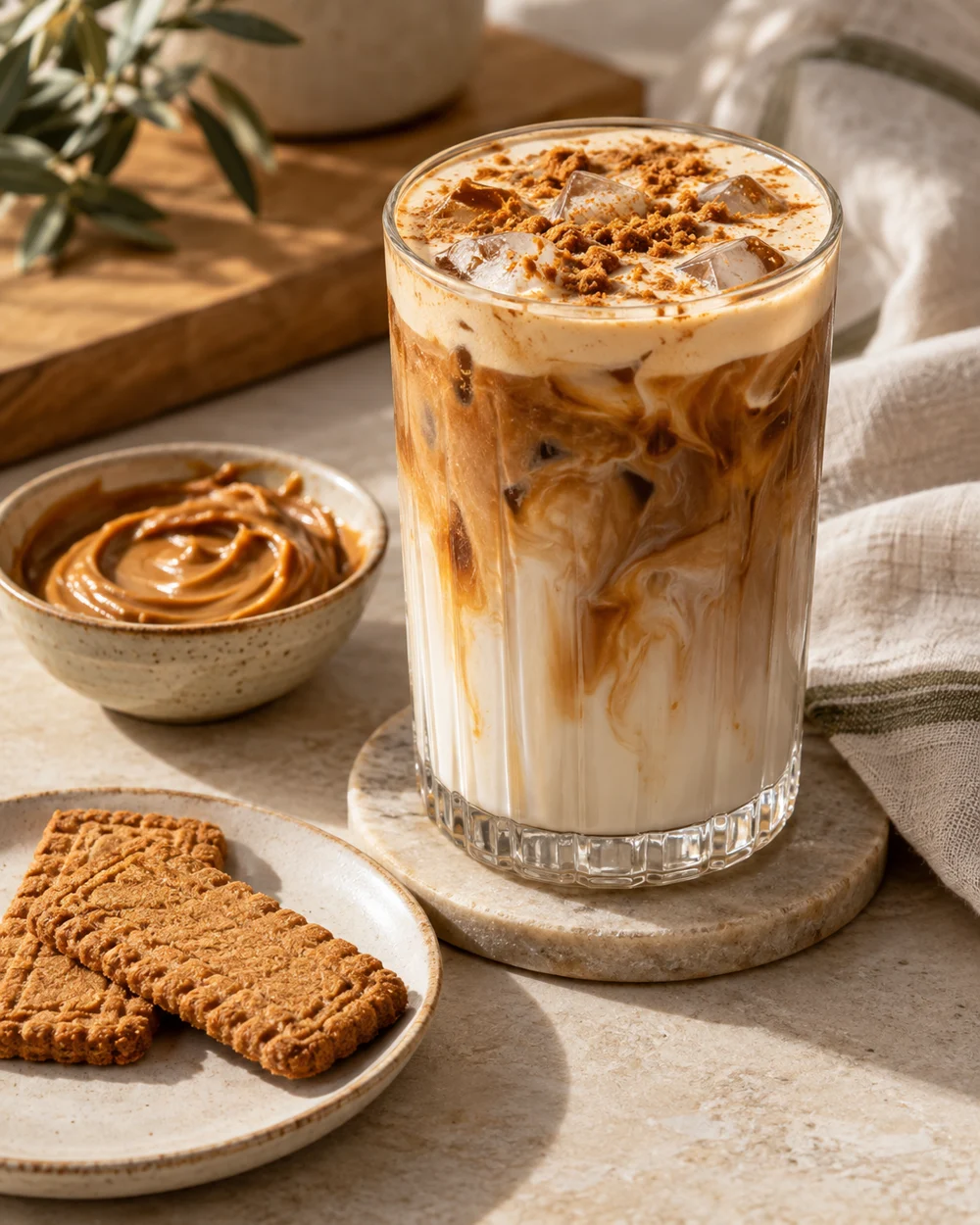
Iced Barley Coffee With Cold Oat Milk
Roasted barley brewed as a hot drink has a toasty, slightly nutty character that translates well into an iced format, but the ratio between grain and water matters more than most people expect. Brew it too concentrated and a sharp, acrid edge dominates the cup. Brew it too lightly and the flavour vanishes the moment cold oat milk enters the glass. This article walks through a straightforward stovetop method, a practical chilling step, and a measured combination with oat milk over ice so the finished drink holds its character from first sip to last.
Read the note ↓
AI-generated editorial concept created for this article. The image is not a technical diagram or a tested result.
Choosing and Measuring Roasted Barley
Roasted barley sold for brewing is available in whole grain and coarsely cracked forms from health food shops and some online suppliers. Cracked barley releases flavour faster than whole grain, which is useful on the stovetop. For a single large serving of roughly 300 ml finished drink, a starting point worth trying is 25 g of cracked roasted barley measured into a small saucepan with 300 ml of cold water. This is an illustrative plan rather than a guaranteed outcome, because individual batches of roasted barley vary in roast depth and grind size. If your first attempt tastes thin after chilling, increase the barley by 5 g on the next batch. If it tastes sharp or acrid, reduce by 5 g or shorten the simmer time slightly.
Simmering on the Stovetop
Place the saucepan over medium heat and bring the water and barley to a gentle simmer, not a rolling boil. Once small bubbles appear consistently, reduce the heat to keep the liquid just simmering and set a timer for eight minutes. Stir once or twice during this window. The liquid will deepen to a warm amber-brown. After eight minutes, remove the pan from the heat and allow it to sit undisturbed for two minutes so the grains settle slightly before straining. Avoid prolonged high boiling, as this can push the flavour toward bitterness beyond what chilling and milk can balance.
Straining and Chilling
Set a fine-mesh strainer over a heatproof jug and pour the contents of the saucepan through it slowly. Press the spent grains gently with the back of a spoon to recover liquid without forcing fine sediment through. Discard the strained grains. You should have approximately 220 to 250 ml of liquid after straining, accounting for absorption by the grain. Allow the jug to cool at room temperature for around 20 minutes, then place it in the refrigerator until the liquid is fully cold. Do not pour hot liquid directly over ice, as this dilutes the brew significantly before you have a chance to balance the ratio with oat milk.
Combining With Cold Oat Milk and Ice
For a worked example using 240 ml of chilled barley brew, a ratio of two parts barley brew to one part cold oat milk produces a drink where the roasted grain flavour remains present but the oat milk rounds off any remaining sharpness. That means approximately 160 ml of barley brew and 80 ml of cold oat milk for a single glass. Fill a tall glass with ice first, pour the chilled barley brew over the ice, then add the oat milk. Stir briefly to combine. Taste before drinking and adjust the ratio in your next batch if you prefer a creamier or more pronounced grain flavour. Barista-style oat milk, which is formulated to mix smoothly with cold liquids, tends to blend evenly without separating.
Adjusting the Recipe to Your Taste
The variables in this drink are the amount of roasted barley, the simmer duration, and the brew-to-milk ratio. Changing any one of them shifts the result. A shorter simmer of five minutes with the same 25 g of barley produces a lighter, more delicate brew that suits a higher proportion of oat milk, such as equal parts. A longer simmer of ten to twelve minutes with the same quantity produces a darker, more assertive brew that can carry a smaller proportion of oat milk. If you want a touch of sweetness, a small amount of date syrup or plain sugar dissolved into the warm brew before chilling integrates more evenly than sweetener added to a cold drink. Keep adjustments incremental so each batch gives you clear information about what changed.
A little more
to know.
Can I use whole roasted barley grains instead of cracked barley?
Yes, but whole grains release flavour more slowly. To compensate, you can extend the simmer time to around twelve to fifteen minutes and check the colour and taste of the liquid before straining. The finished flavour profile may differ slightly from a batch made with cracked barley, so treat your first attempt as a starting point and adjust from there.
How long can I keep the strained barley brew in the refrigerator?
Brewing a fresh batch for each use is the most straightforward approach. If you store the strained brew in a covered container in the refrigerator, use your own judgment based on smell and appearance before using it, as storage conditions vary between households and no universal lifespan can be stated here.
Original editorial guidance and recipe formulations, not independently kitchen-tested. Times are estimates and depend on equipment and product directions. Cooked bases need additional cooling and refrigeration before cold serving. Images are AI-generated illustrations; appearance and yield may vary. Check actual ingredient labels, allergens, and any certification you require. We do not certify products. Read our approach.
Save to Pinterest ↗ANOTHER IDEA FOR THE COUNTER