Cool and Refrigerate a Brewed Grain Drink
Prepare a grain infusion under its product directions and plan appropriate cooling before brewing a large batch. Use compatible vessels and prompt refrigeration where required. Neither a timer prediction nor a toasted aroma verifies that a stored drink is safe.
Read the note ↓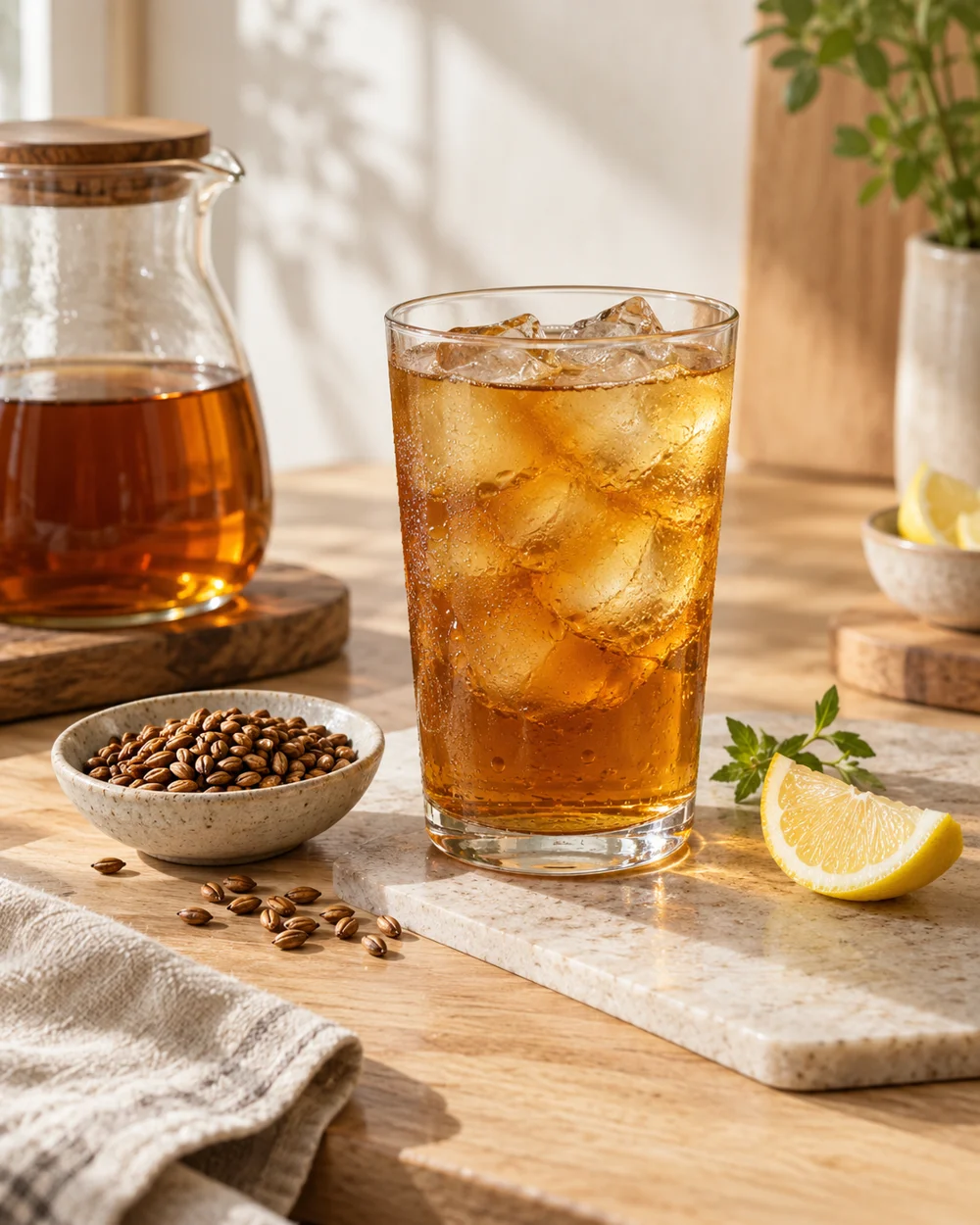
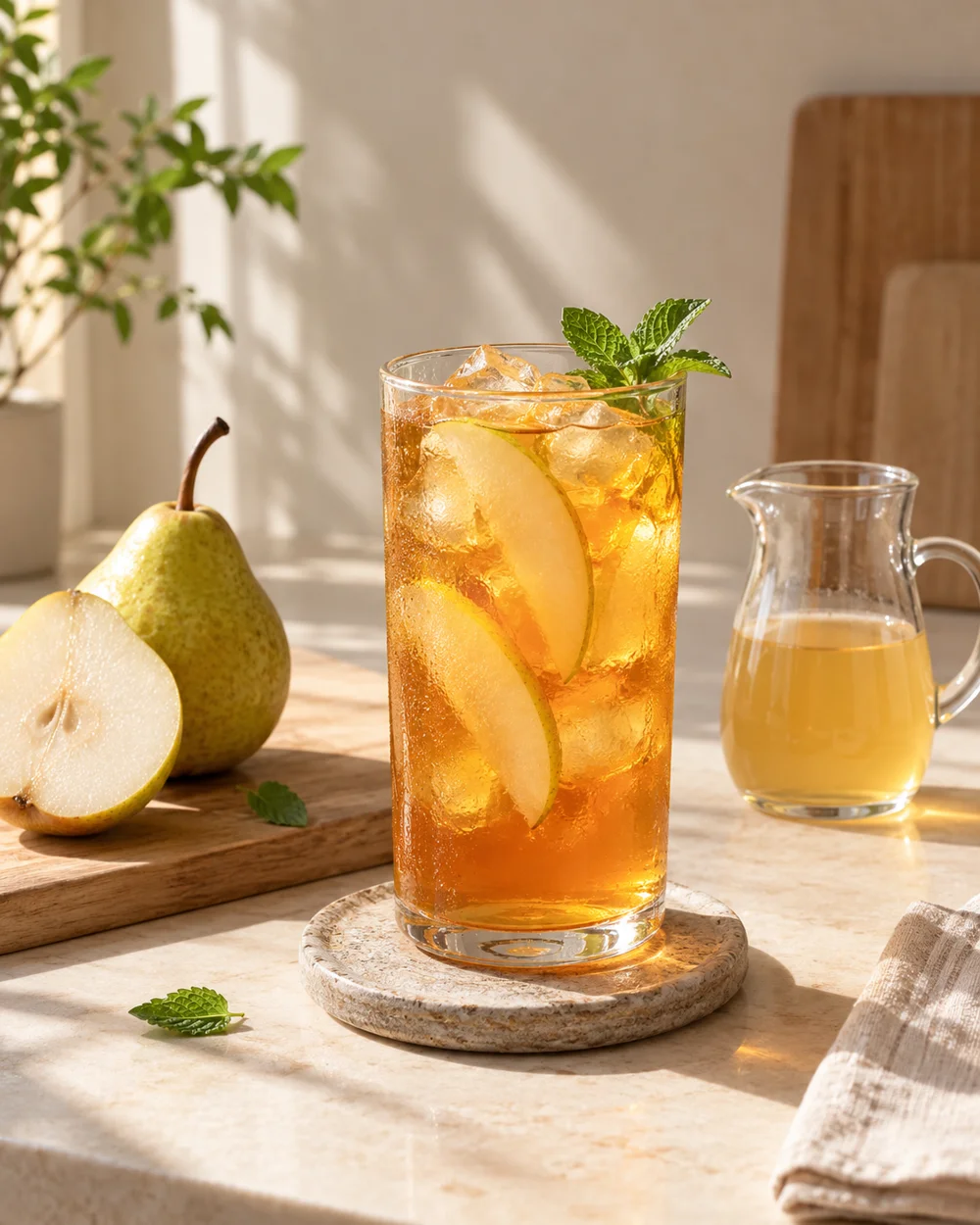
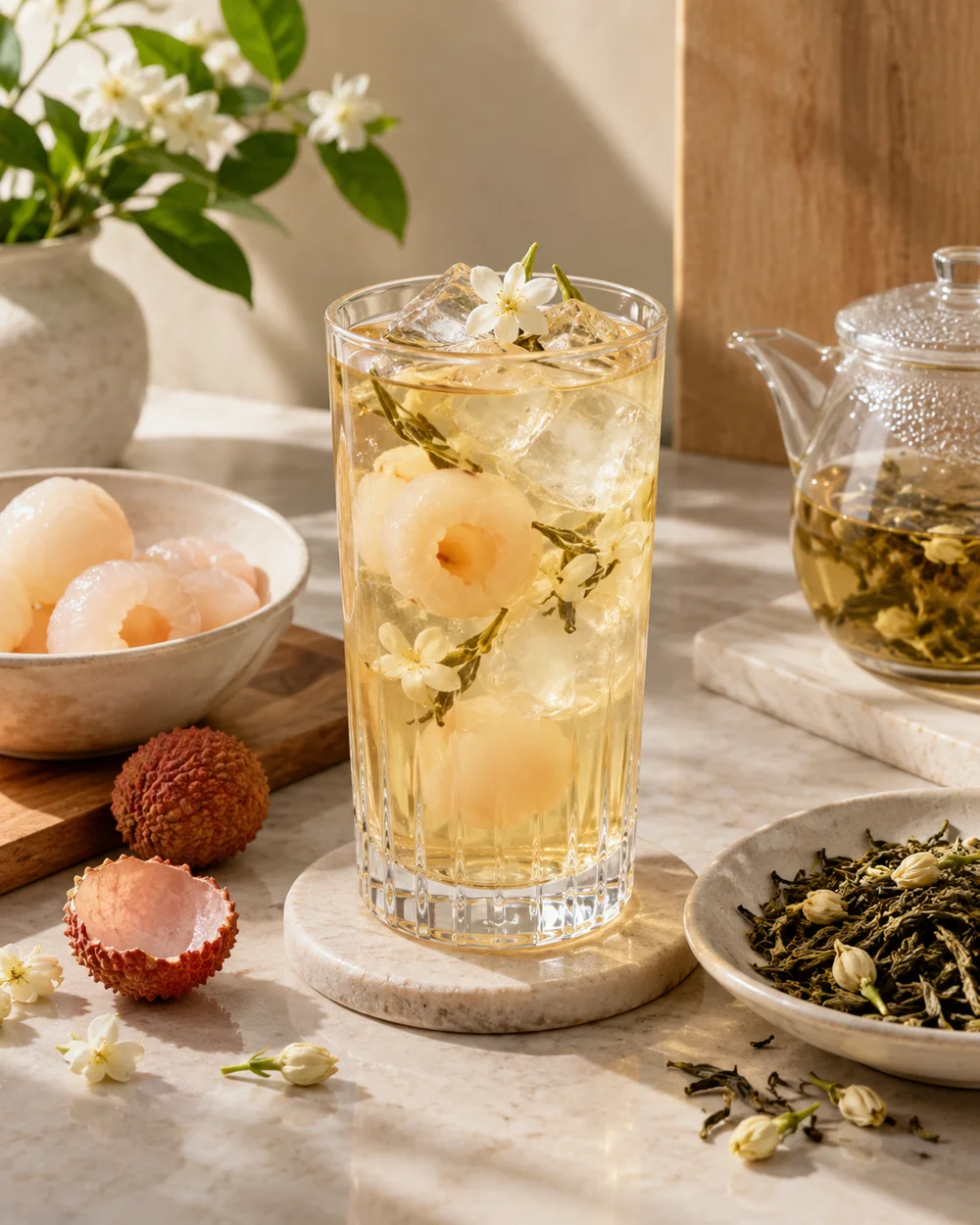
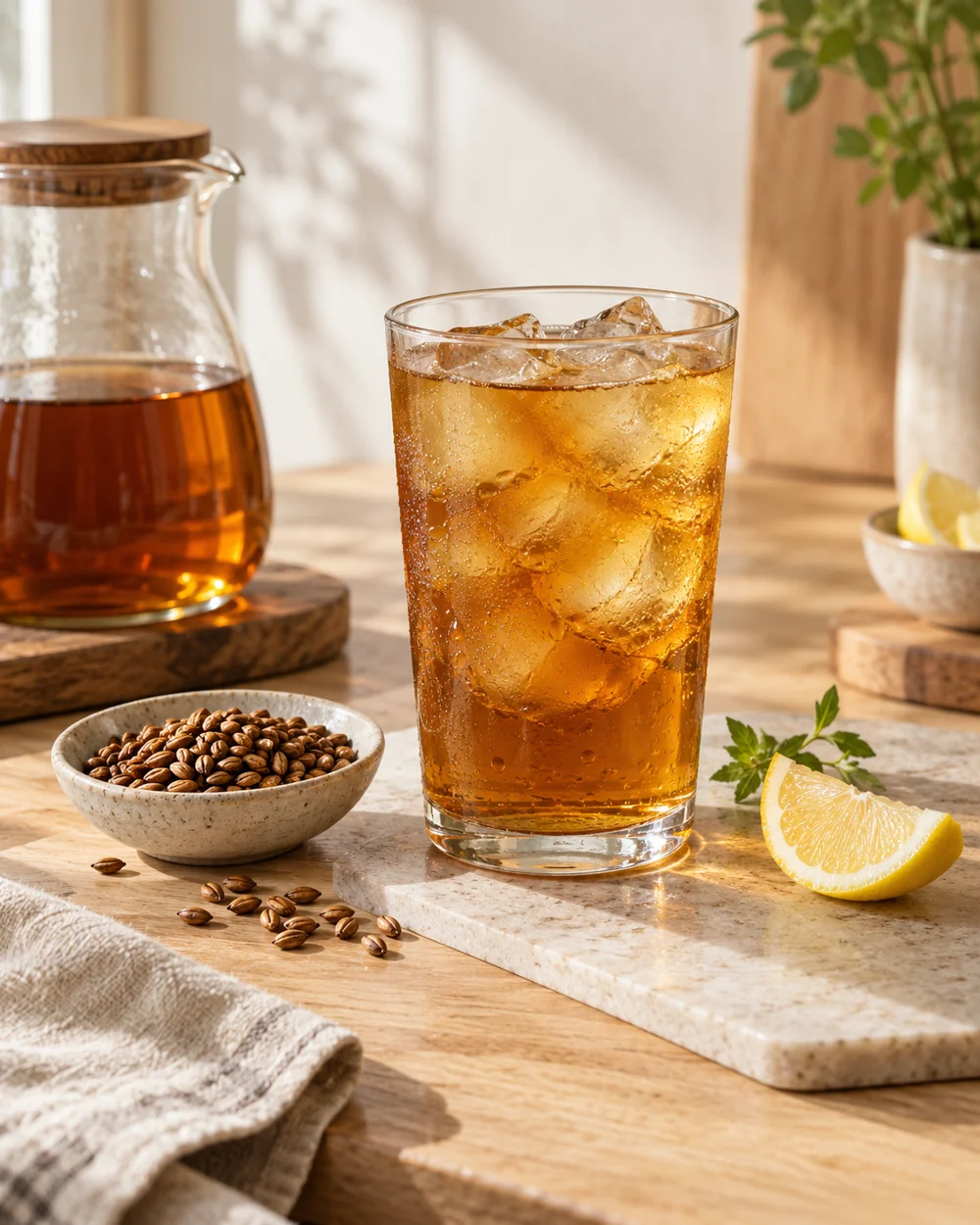
Representative category illustration reused from our editorial library; it does not depict this specific project or a tested result.
Retain the product directions
Use the actual grain-infusion package for preparation and prepared-drink handling. Do not classify it by an assumed pH, starch content or lack of tea compounds. Product formulation and handling requirements matter.
Apply the relevant time and cold limits
For a prepared drink that requires refrigeration, keep the refrigerator at 4 C/40 F or below. General food-safety guidance is to refrigerate perishable food within two hours, or within one hour if the surroundings are above 32 C/90 F. These limits are not permission to leave a batch on display until the last minute. They are also not a validated shelf life for any particular drink.
Use suitable cooling equipment
Rather than leaving a large hot batch out to cool slowly, divide it into smaller, shallow portions in containers the maker says are suitable for hot liquids. Smaller portions cool faster. Check the refrigerator has room and that the containers are suitable for the temperature change. Use an ice bath only with a vessel explicitly rated for it. Never put unspecified hot glass or ceramic into ice water, because sudden temperature change can damage it.
Follow straining and cooling directions
Remove bags or solids as the product directs, using clean equipment. Where a cooling temperature must be checked, use a suitable thermometer according to its instructions. Do not assume that a cooling bath of any set length has cooled the drink. Check the actual temperature instead.
Store and serve under the actual requirements
Keep the prepared drink covered and refrigerated as required by its directions. Pour serving portions with clean suitable equipment and return the master container promptly. No generic chilled-bottle technique or storage duration is validated here.
A little more
to know.
Can a drink requiring refrigeration sit overnight on the counter?
No. Follow its preparation and storage directions and the relevant perishable-food time limits; smell is not a safety test.
Can every grain product be cold-brewed instead?
No. Use cold preparation only where the actual product directions support it. Refrigeration does not replace a required preparation step.
Original editorial guidance and recipe formulations, not independently kitchen-tested. Times are estimates and depend on equipment and product directions. Cooked bases need additional cooling and refrigeration before cold serving. Images are AI-generated illustrations; appearance and yield may vary. Check actual ingredient labels, allergens, and any certification you require. We do not certify products. Read our approach.
Save to Pinterest ↗ANOTHER IDEA FOR THE COUNTER