Fold Chopped Dates Into Scone Dough Without Sinking or Clumping
Chopped dates are dense and sticky, which makes them prone to settling at the bottom of the mixing bowl or clumping into dense pockets that disrupt the crumb. A simple flour-tossing step before folding separates the cut surfaces and helps the pieces disperse evenly throughout the dough. This guide walks through the preparation, folding method, and shaping decisions that keep dates distributed from top to bottom in every baked scone.
Read the note ↓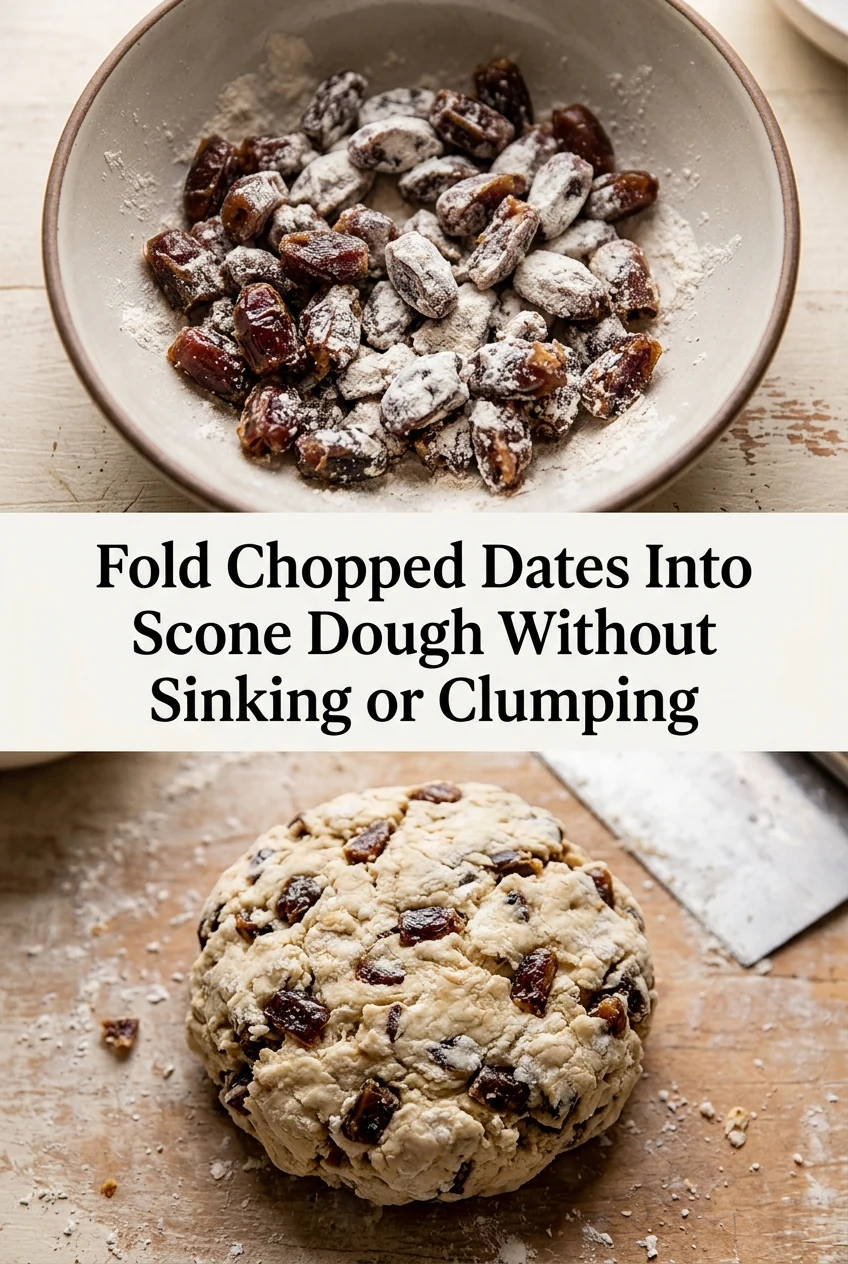
AI-generated editorial concept created for this article. The image is not a technical diagram or a tested result.
Choose and Prepare the Dates Before Cutting
Medjool or Deglet Noor dates both work, but very soft, syrupy Medjool dates need slightly more attention. Remove the pit from each date, then pat the flesh lightly with a dry paper towel to lift surface moisture before chopping. Aim for pieces roughly one centimeter across. Pieces much smaller than that tend to mash into paste and smear dark streaks through the dough, while pieces larger than about one and a half centimeters tear the dough during shaping and disrupt an even rise.
Toss the Chopped Dates in a Measured Amount of Flour
Place the chopped dates in a small bowl and add one teaspoon of plain flour per forty grams of dates. Toss until every cut surface looks lightly dusted rather than caked. This thin coating does two things: it absorbs the stickiest surface moisture and gives the dough something to bond to around each piece. Using more than about one and a half teaspoons per forty grams risks adding noticeable raw flour pockets to the finished scone, so keep the quantity modest.
Time the Addition Correctly Within the Mixing Sequence
Add the flour-coated dates after the fat has been rubbed into the dry ingredients and just before you pour in the liquid. At this stage the mixture resembles coarse breadcrumbs and can cradle the date pieces without compressing them. If you add dates after the liquid, the dough is already cohesive and you must work it harder to distribute them, which overdevelops gluten and toughens the scone. A pre-liquid addition keeps mixing time short.
Use a Fold Rather Than a Stir to Distribute Evenly
Pour the liquid over the date-studded crumb mixture, then use a flexible bench scraper or a wide spatula to fold from the outside edge inward, rotating the bowl a quarter turn after each fold. Six to eight folds are usually enough to bring the dough together. This motion moves dates upward through the mass rather than pushing them to one side. Stop as soon as no dry patches remain; a slightly shaggy surface is fine and signals that gluten development is still low.
Shape and Position the Scones to Support Even Distribution
Pat the dough to a thickness of about two and a half centimeters on a lightly floured surface rather than rolling it thinner. Rolling the dough too thin forces date pieces to break through the surface, exposing sticky fruit directly to the baking sheet where it can scorch. Cut straight down with a sharp cutter without twisting, which can seal the edges and cause uneven rise. Place scones on a lined baking tray with a small gap between them, and bake promptly without resting the tray at room temperature for more than ten minutes.
A little more
to know.
Can I use the same flour-tossing method with other dried fruit like raisins or apricots?
Yes, the approach transfers well to most chopped dried fruit, including figs, apricots, and raisins. Any dried fruit with tacky cut surfaces benefits from a light flour coating to keep the pieces separated and prevent them from clumping together during folding.
Why do my dates still sink even after tossing them in flour?
In scone dough, dates do not sink through the dough during baking; instead, they end up clustered at the base if they fall to the bottom of the mixing bowl before the liquid is added, or if they are pressed downward during shaping. Ensure the pieces are evenly distributed through the dry crumb mixture before adding liquid, and check that you have not added excess liquid, which can make the dough overly slack and difficult to handle evenly.
Original editorial guidance and recipe formulations, not independently kitchen-tested. Times are estimates and depend on equipment and product directions. Cooked bases need additional cooling and refrigeration before cold serving. Images are AI-generated illustrations; appearance and yield may vary. Check actual ingredient labels, allergens, and any certification you require. We do not certify products. Read our approach.
Save to Pinterest ↗ANOTHER IDEA FOR THE COUNTER