Decide Whether to Use Whole or Skimmed Milk in a Warm Café Cup
Choosing between whole and skimmed milk is not simply a matter of preference; fat content changes how milk behaves when heated, how it integrates with espresso or cocoa, and how the finished drink feels in the mouth. Making a direct comparison in your own kitchen with the same drink recipe is more informative than relying on general descriptions. This guide explains what to observe during heating, how to taste the difference systematically, and how to make a consistent choice for your regular recipe.
Read the note ↓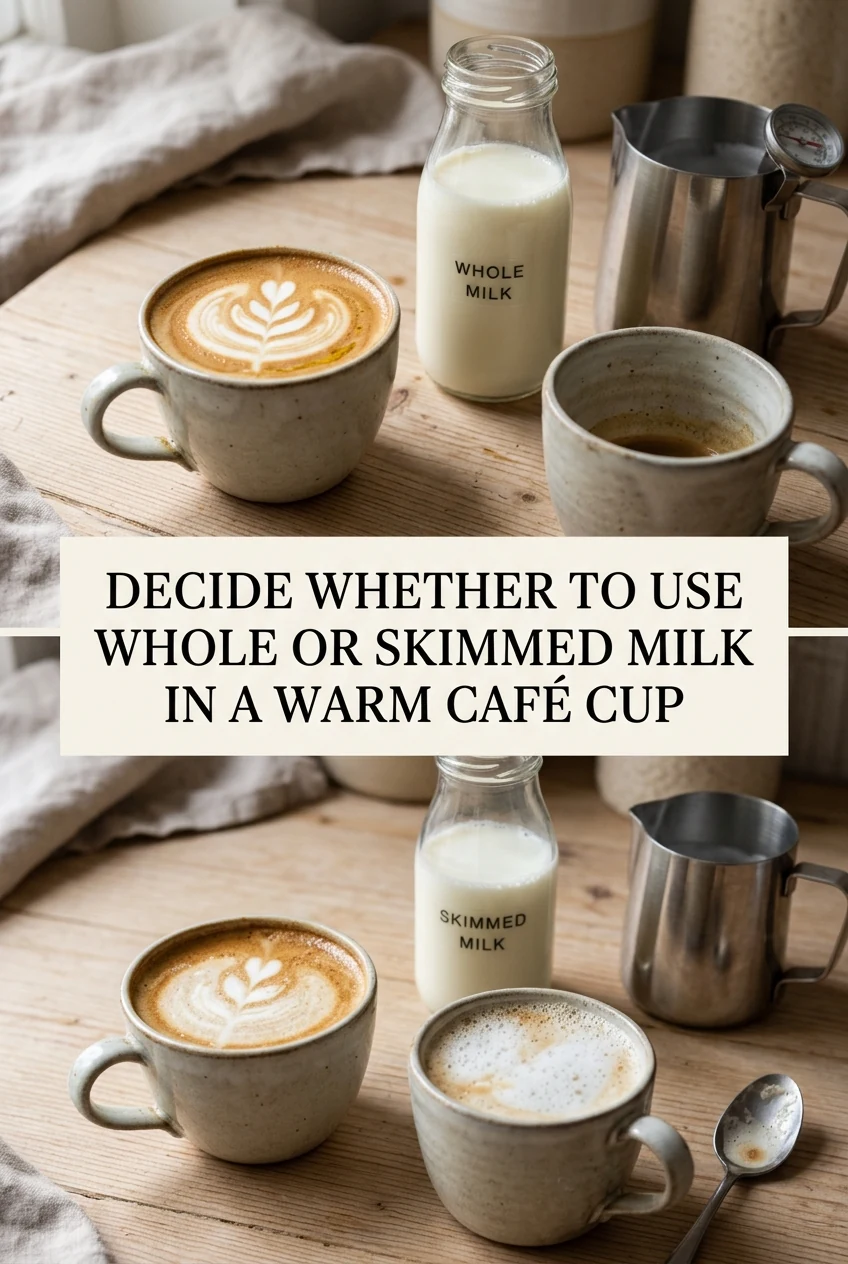
AI-generated editorial concept created for this article. The image is not a technical diagram or a tested result.
Understand What Fat Does During Heating
Whole milk typically contains around 3.5 percent fat, while skimmed milk contains less than 0.5 percent. When heated, fat molecules coat the palate and carry dissolved flavour compounds, producing a rounder, fuller sensation. Skimmed milk heats to the same temperature but feels thinner because fewer fat molecules are present. Neither is better in absolute terms; the difference matters most when the milk is a significant proportion of the drink, such as in a large warm cup with a single espresso shot.
Run a Side-by-Side Comparison in Your Kitchen
Prepare two identical cups using the same recipe, same espresso or cocoa quantity and the same milk volume, changing only the milk type. Heat both milks to the same temperature, around 65 degrees Celsius, using a thermometer rather than estimating. Pour simultaneously if possible, or within thirty seconds of each other. Taste each without adding sugar first, then with your usual sweetener. Note the texture on the palate and whether the coffee or cocoa flavour reads as sharper or softer with each milk.
Observe How Each Milk Integrates With Espresso
Whole milk tends to soften espresso bitterness because fat binds with some of the bitter compounds. Skimmed milk integrates more transparently, meaning the espresso character stays more prominent. If your espresso is already mild or lightly roasted, skimmed milk may produce a thinner drink than you want. If your espresso is bold and you prefer a softer result, whole milk is likely the better fit. These are observable tendencies, not guaranteed outcomes, as espresso variables also play a role.
Consider How Each Milk Behaves With Cocoa
In a spiced cocoa drink, whole milk carries the cocoa and cinnamon flavours more evenly across the palate. Skimmed milk produces a slightly more watery texture that some people find less satisfying in a warm cocoa context. However, skimmed milk also allows the cocoa flavour itself to come through more directly without the fat softening it. If you are using a strongly flavoured cocoa powder, skimmed milk may actually highlight it more clearly, which can be desirable.
Make a Consistent Choice and Record It
After your comparison, write down which milk you preferred for each drink type. Your choice may differ between an espresso-based drink and a cocoa drink. Recording the decision means you do not repeat the comparison every time you shop. Note also the milk brand you used, as fat content can vary slightly between brands even within the same category. Consistent ingredients produce consistent results, which matters when you are serving drinks to others and want to repeat a result reliably.
A little more
to know.
Does semi-skimmed milk behave like whole or skimmed milk in a warm drink?
Semi-skimmed milk, typically around 1.5 to 1.8 percent fat, sits between the two in both texture and flavour integration. It is a practical middle option if whole milk feels too rich and skimmed milk feels too thin for your preferred drink style.
Will the milk choice affect how long a warm drink stays at a comfortable temperature?
Fat content has a negligible effect on how quickly a drink cools. Cup material, wall thickness and room temperature have far more influence on cooling rate than whether you use whole or skimmed milk.
Original editorial guidance and recipe formulations, not independently kitchen-tested. Times are estimates and depend on equipment and product directions. Cooked bases need additional cooling and refrigeration before cold serving. Images are AI-generated illustrations; appearance and yield may vary. Check actual ingredient labels, allergens, and any certification you require. We do not certify products. Read our approach.
Save to Pinterest ↗ANOTHER IDEA FOR THE COUNTER