Decide Whether to Strain a Fruit Smoothie Before Serving or Leave It Unfiltered
After blending a fruit smoothie, you face a quick decision: pour it straight into the glass or pass it through a strainer first. The right answer depends on which fruit you used, how your blender handled it, and what texture the finished drink should have. Straining is not automatically an improvement. For some fruits it removes exactly the fibrous body that makes the drink satisfying, while for others it eliminates gritty or stringy material that genuinely distracts from the drink.
Read the note ↓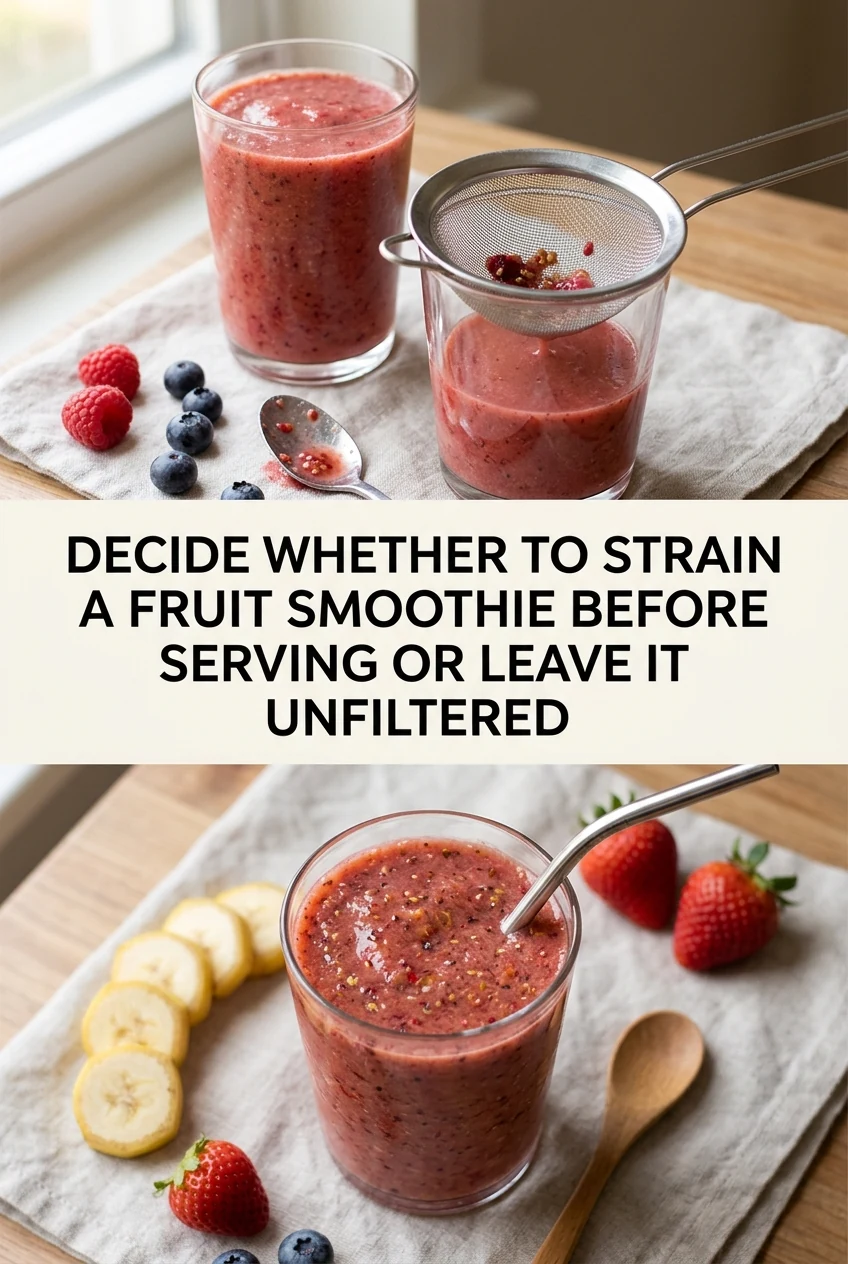
AI-generated editorial concept created for this article. The image is not a technical diagram or a tested result.
Identify Which Fruits Benefit From Straining
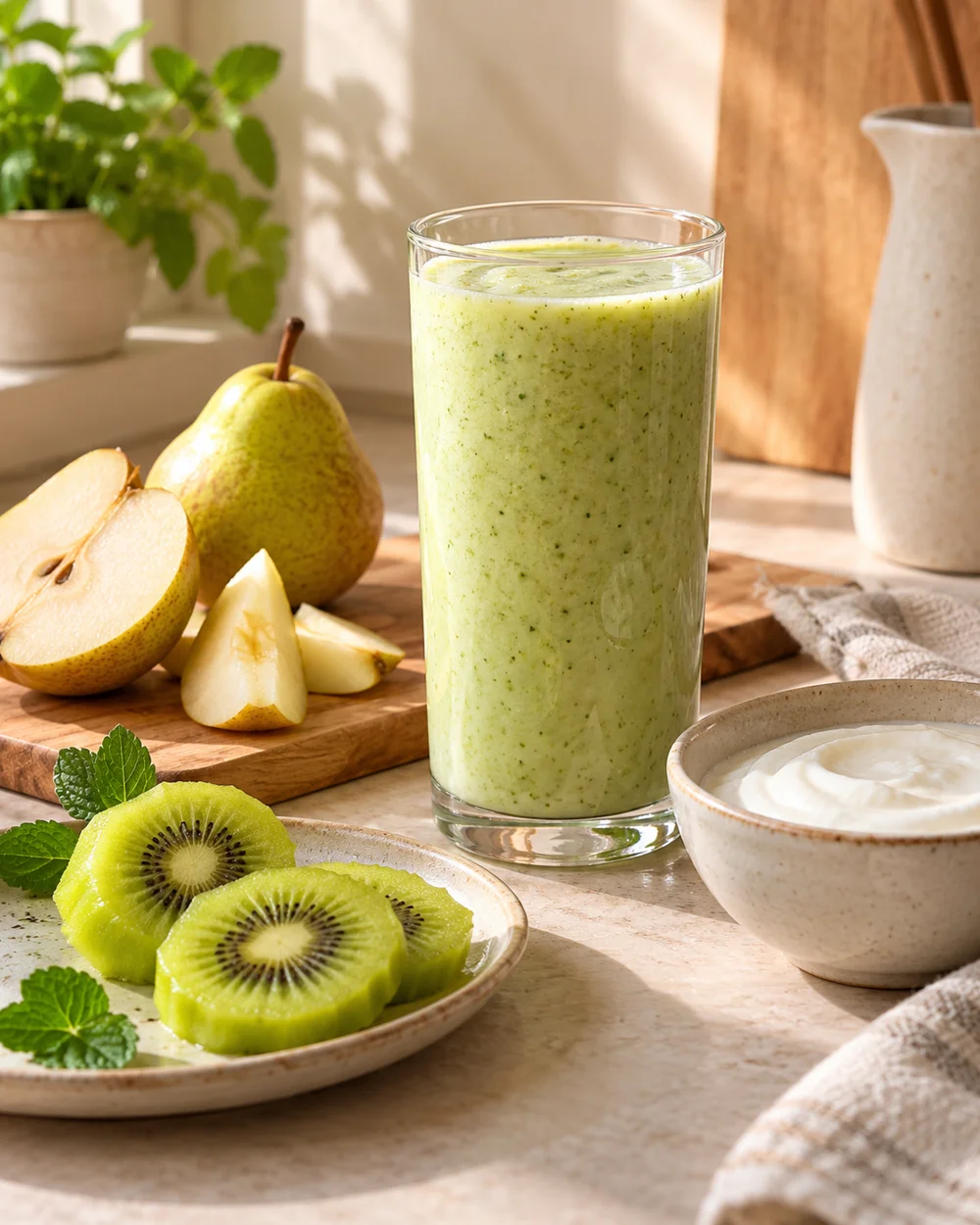
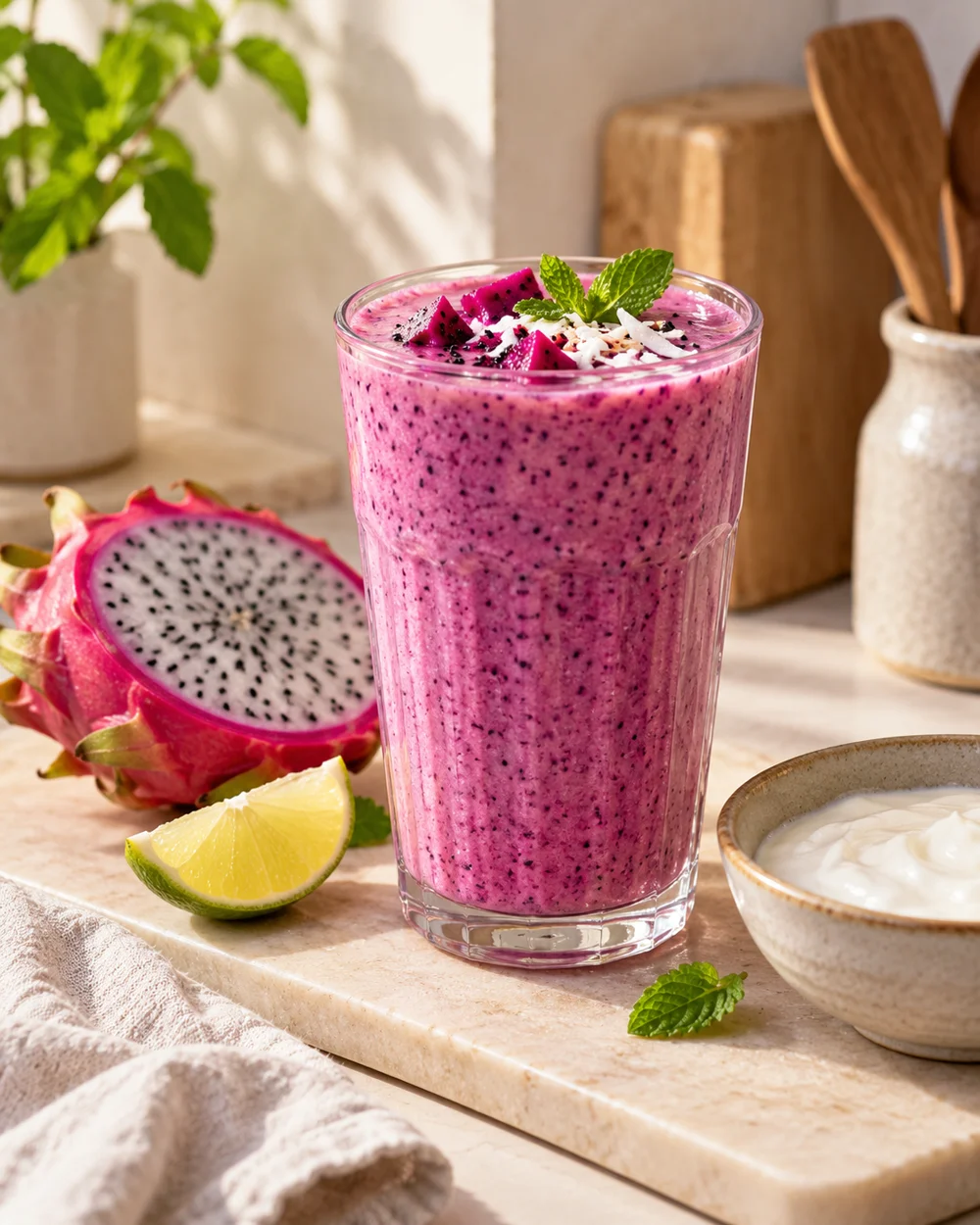
Passion fruit, guava, and blackberries contain seeds or coarse fibres that a standard blender cannot fully break down. Running these through a fine-mesh strainer removes the gritty texture without discarding significant flavour. Mango, banana, and strawberry, by contrast, blend into a uniformly smooth puree. Straining them removes the natural pulp that gives the drink its characteristic thickness, leaving a thinner liquid that many people find less satisfying. Identify your main fruit before deciding.
Test the Blended Texture Before Committing
Pour a small spoonful onto a white plate and tilt it. If the smoothie flows in one smooth sheet without visible seed clusters or fibrous streaks, straining is unlikely to improve it. If you see distinct seed fragments or threads that did not break down, straining will make a noticeable difference. This quick plate test takes under thirty seconds and prevents you from straining a batch that did not need it, or skipping a step that would have improved the result.
Choose the Right Strainer for the Job
A fine-mesh stainless strainer with a bowl diameter of roughly 18 to 20 centimetres handles a standard 350 to 400 millilitre smoothie portion without overflowing. For seeds as small as passion fruit, place a layer of dampened muslin inside the mesh strainer. Pour slowly and use a silicone spatula to press the pulp gently rather than forcing it through, which pushes unwanted material into the strained liquid. Rinse the strainer immediately after use so seeds do not dry and clog the mesh.
Preserve Thickness When You Do Strain
Straining removes some of the suspended solids that create body. To compensate without adding extra fruit, blend a small amount of ripe banana or plain pasteurised yogurt into the batch before straining. As an illustrative example, adding 40 grams of banana to a 350 millilitre passion fruit smoothie before straining can restore noticeable thickness to the finished drink, though the exact result will vary with your fruit and blender. This approach keeps the texture useful without masking the primary fruit flavour.
Serve and Store the Finished Smoothie Correctly
Smoothies made with fresh or thawed frozen fruit are perishable. Serve immediately after straining for best texture, as separation begins quickly. If you prepare a batch ahead, refrigerate it in a sealed container at 4 degrees Celsius or below within two hours of blending, or within one hour if your kitchen is above 32 degrees Celsius. Stir or briefly re-blend before serving because separation is normal. Do not store a strained smoothie at room temperature and expect it to remain safe or palatable.
A little more
to know.
Does straining a smoothie reduce its nutritional fibre content?
Yes, straining removes insoluble fibre along with seeds and coarse pulp. The liquid that passes through the strainer retains soluble components but loses the fibrous solids. If dietary fibre is a priority for you, leaving the smoothie unfiltered preserves more of it.
Can I strain a frozen fruit smoothie while it is still very cold?
You can, but very cold thick blends move through a fine-mesh strainer slowly. Letting the smoothie rest for two to three minutes after blending makes it slightly easier to strain without pressing so hard that unwanted pulp is forced through the mesh.
Original editorial guidance and recipe formulations, not independently kitchen-tested. Times are estimates and depend on equipment and product directions. Cooked bases need additional cooling and refrigeration before cold serving. Images are AI-generated illustrations; appearance and yield may vary. Check actual ingredient labels, allergens, and any certification you require. We do not certify products. Read our approach.
Save to Pinterest ↗ANOTHER IDEA FOR THE COUNTER