Decide Whether to Brew Tea Directly in Milk or Separately in Water
The choice between steeping tea in hot water first and then adding milk, or steeping directly in warm milk, is not simply a matter of preference. Each method extracts different compounds at different rates, and the result changes the drink's strength, colour, and how much bitterness reaches the cup. Understanding what each approach does to a specific tea type helps you make a deliberate decision rather than defaulting to habit.
Read the note ↓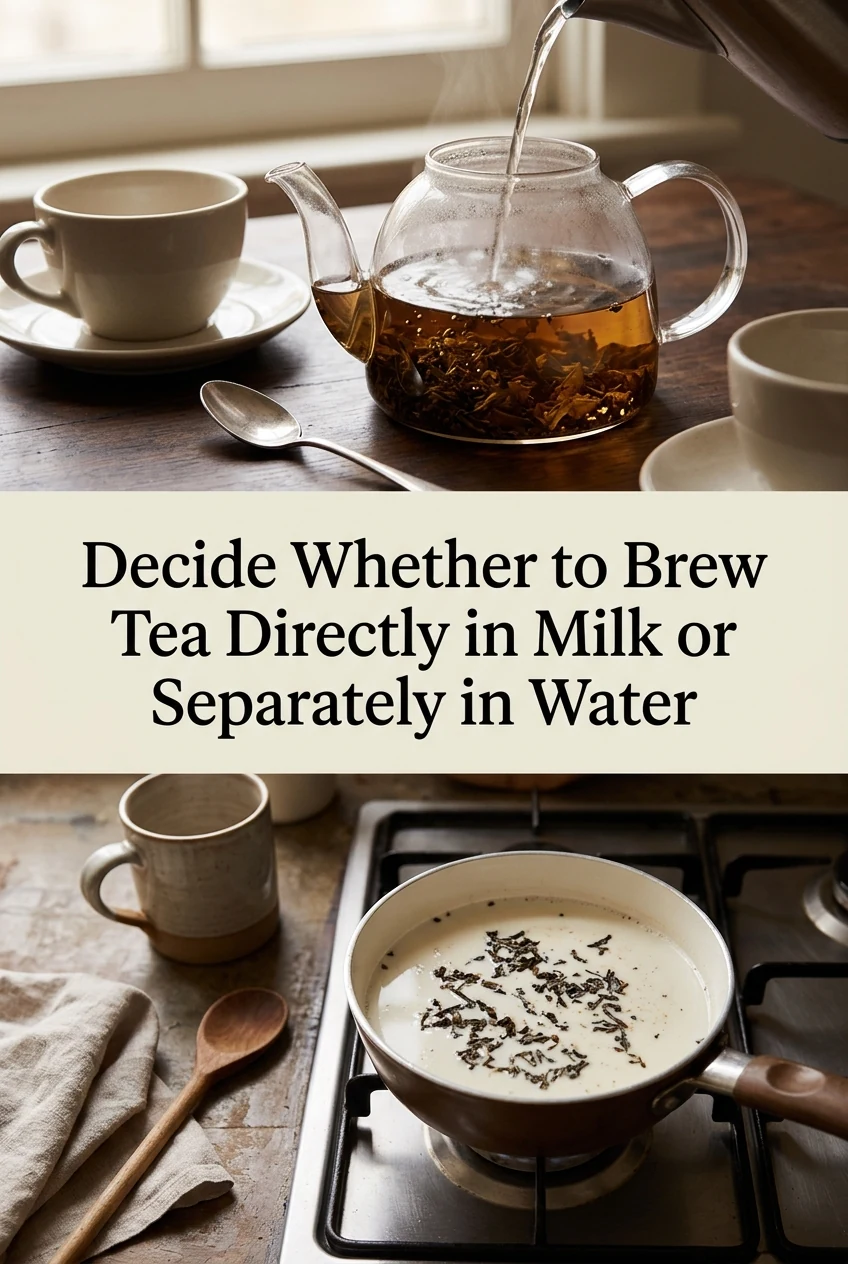
AI-generated editorial concept created for this article. The image is not a technical diagram or a tested result.
What Happens When Tea Steeps in Water Versus Milk
Water extracts tea compounds quickly and completely, producing a clear, strong liquor. Milk is mostly water but its fat and protein content slows extraction and binds some tannins before they reach your palate, which reduces perceived bitterness. Steeping in milk also requires lower temperatures to avoid scorching, which further slows extraction. The result is a softer, less astringent cup that can taste weaker even when the same quantity of leaf is used.
Which Tea Types Suit Direct Milk Steeping
Robust, fully oxidised black teas with large surface area, such as broken-leaf or fannings grades, extract enough flavour even in milk's slower environment to produce a satisfying cup. A practical example: steep two teaspoons of broken black tea in 250 ml of whole milk held at around 80 to 85 degrees Celsius for five to seven minutes, stirring once. This is an illustrative starting point, not a guaranteed outcome, because leaf grade and milk fat content both affect the result.
When to Brew in Water First
Delicate teas, including green, white, and lightly oxidised oolongs, lose their character when steeped in milk. Brew these in water at the temperature the maker recommends, then add cold or room-temperature milk to the finished liquor. This preserves the tea's clarity and allows you to control milk ratio without risking overextraction or off-flavours from overheating a delicate leaf. The same logic applies when serving iced tea with milk, where a concentrated water brew is chilled before milk is added.
Temperature Management for Milk Steeping
Milk should not boil during steeping. Bring it to a gentle simmer, around 80 to 85 degrees Celsius, then reduce heat to the lowest setting before adding the tea. Stirring occasionally helps even extraction. Watch for the surface beginning to skin over, which signals the milk is too hot and has been held too long. Remove the tea promptly using a strainer. Overheating changes the milk's flavour independently of the tea, adding a cooked note to the cup.
Matching the Method to Serving Temperature
For a hot drink served immediately, either method works if the tea type is appropriate. For an iced drink, brewing in water first is almost always the better choice because chilling a milk-steeped brew changes its texture unpredictably as fat globules cool. Brew a double-strength water infusion, strain it, cool it to room temperature, refrigerate promptly at 4 degrees Celsius or below, then combine with cold milk at serving time for a cleaner, more stable result.
A little more
to know.
Does plant-based milk behave the same way as dairy milk when steeping tea?
No. Oat and soy milk have different protein and fat structures that affect extraction and heat stability differently from dairy. Some plant milks separate or develop a chalky texture when held at steeping temperatures, so check the product label for heat guidance before using them for direct steeping.
Can I steep tea in milk overnight in the refrigerator instead of using heat?
Cold steeping tea in milk is possible for robust black teas and takes significantly longer, often eight to twelve hours. Keep the vessel sealed and refrigerated at 4 degrees Celsius throughout. Strain before serving and use within 24 hours, as the milk's shelf life governs safety, not the tea.
Original editorial guidance and recipe formulations, not independently kitchen-tested. Times are estimates and depend on equipment and product directions. Cooked bases need additional cooling and refrigeration before cold serving. Images are AI-generated illustrations; appearance and yield may vary. Check actual ingredient labels, allergens, and any certification you require. We do not certify products. Read our approach.
Save to Pinterest ↗ANOTHER IDEA FOR THE COUNTER