Decide Whether to Blend or Stir a Fruit and Yogurt Drink for a Single Serving
The choice between blending and stirring a fruit and yogurt drink is a practical one that depends on the fruit you are using and the texture you want in the finished cup. Stirring works quickly and produces a drink with visible fruit pieces, while blending is necessary when the fruit is frozen or when you want a uniformly smooth result. Making this decision before you start means you set up the right tool and avoid switching halfway through preparation.
Read the note ↓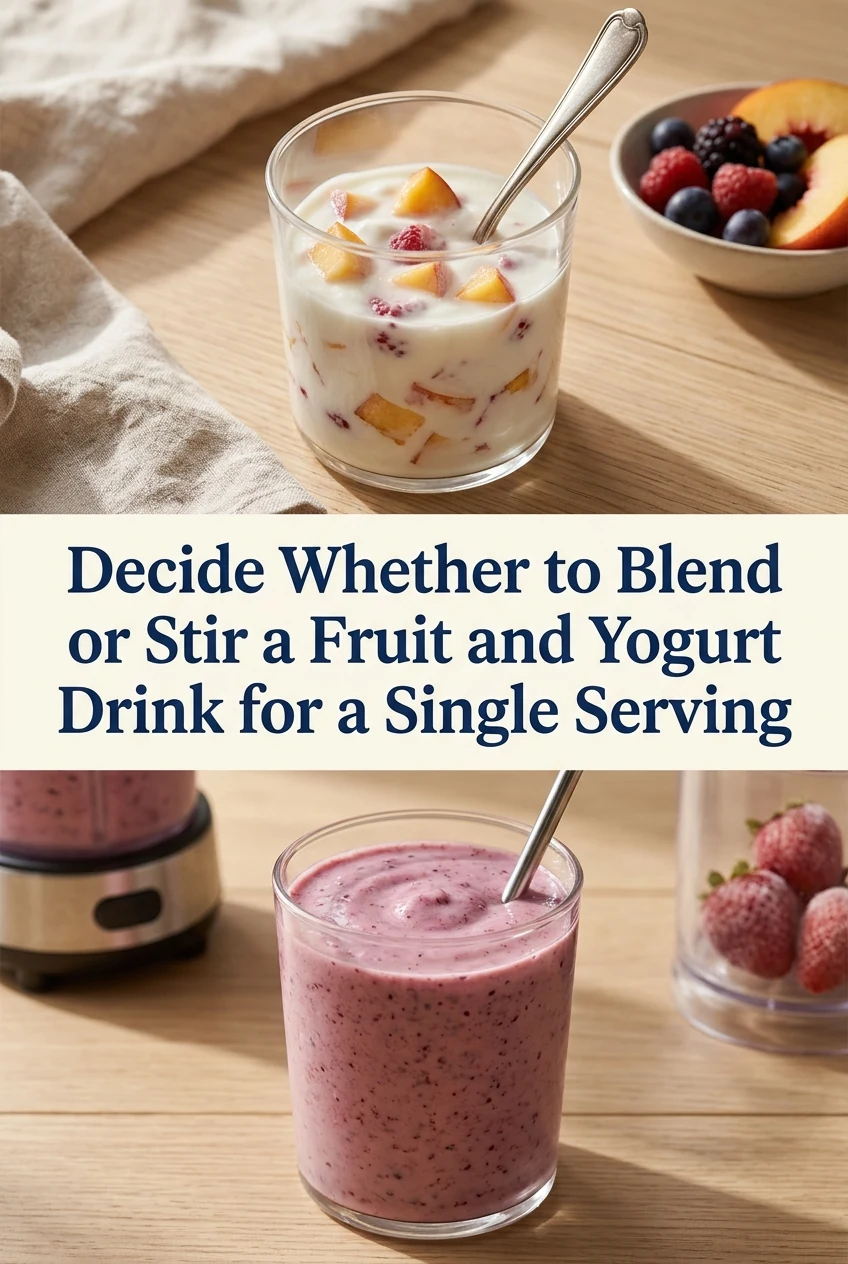
AI-generated editorial concept created for this article. The image is not a technical diagram or a tested result.
Assess the Fruit Before Choosing a Method
Ripe soft fruit such as ripe banana, ripe mango, or very ripe strawberries breaks down easily when mashed with a fork and stirred into drinking yogurt. Fruit that is firm, partially frozen, or frozen solid will not incorporate by stirring alone; it leaves hard pieces that block a straw and create an uneven texture. Check the fruit before you reach for any equipment. If it yields easily to gentle pressure with your finger, stirring is viable. If it resists, blending is the appropriate method.
The Stirred Method for Soft Ripe Fruit
For a single 300 ml serving, use approximately 80 to 100 g of ripe soft fruit and 200 ml of plain or lightly sweetened drinking yogurt made from pasteurized milk. Mash the fruit in the serving glass or a small bowl using a fork until it is mostly smooth with some small pieces remaining. Add the drinking yogurt and stir with a long spoon until the fruit is evenly distributed. This takes about 60 seconds and requires no additional equipment to wash. Serve immediately.
The Blended Method for Frozen Fruit or Smooth Texture
For a blended single serving, use 80 to 100 g of frozen fruit directly from the freezer and 200 ml of pasteurized drinking yogurt. Add the yogurt to the blender first so the liquid surrounds the frozen fruit and the blades engage more easily at startup. Blend on a medium setting until no visible fruit chunks remain, which typically takes 20 to 40 seconds depending on the blender and fruit size. Pour into a glass and serve promptly, as the frozen fruit begins to warm and the texture changes quickly.
When Neither Method Gives the Result You Want
If stirring leaves the drink too chunky and you do not want to use a blender, a hand-held immersion blender in a tall cup is a middle option for soft fruit. If blending produces a drink that is thicker than you intended, add an additional 30 to 50 ml of drinking yogurt or cold water and blend for five more seconds. Avoid adding ice to thin the drink if you used frozen fruit, as the combination can over-dilute the flavor once the ice melts.
Yogurt Selection Affects Both Methods
Drinking yogurt, which is pourable and already thinned, produces a drinkable consistency by either method without adding water or milk. Thick set yogurt or Greek-style yogurt used in the same quantities produces a spoonable result rather than a drinkable one. If you only have thick yogurt, thin it with 50 to 80 ml of cold water or plain pasteurized milk before combining with fruit. Use pasteurized yogurt products and refrigerate any unused portion promptly at 4 degrees Celsius or below.
A little more
to know.
Can I prepare the drink in advance and refrigerate it for later?
You can refrigerate a prepared fruit and yogurt drink for a few hours at 4 degrees Celsius or below. Blended drinks tend to separate on standing; stir or shake before serving. Flavor and texture are best when consumed the same day it is made.
Does the type of fruit affect how sweet the finished drink tastes?
Yes. Frozen fruit is often picked at peak ripeness and can taste sweeter than out-of-season fresh fruit once blended. Taste the finished drink before adding any sweetener, as the yogurt and fruit combination may already be sweet enough without additions.
Original editorial guidance and recipe formulations, not independently kitchen-tested. Times are estimates and depend on equipment and product directions. Cooked bases need additional cooling and refrigeration before cold serving. Images are AI-generated illustrations; appearance and yield may vary. Check actual ingredient labels, allergens, and any certification you require. We do not certify products. Read our approach.
Save to Pinterest ↗ANOTHER IDEA FOR THE COUNTER