Decide How to Split One Blender Batch of Fruit Smoothie Across Two Different Glass Sizes
Pouring a blended smoothie directly from the jug into two mismatched glasses almost always ends with one glass overflowing and one sitting half-empty. The fix is a single extra step: decant the entire batch into a measuring jug first, read the total yield, then divide deliberately rather than by instinct. This guide walks through that process so both servings look intentional and neither guest receives a noticeably smaller drink.
Read the note ↓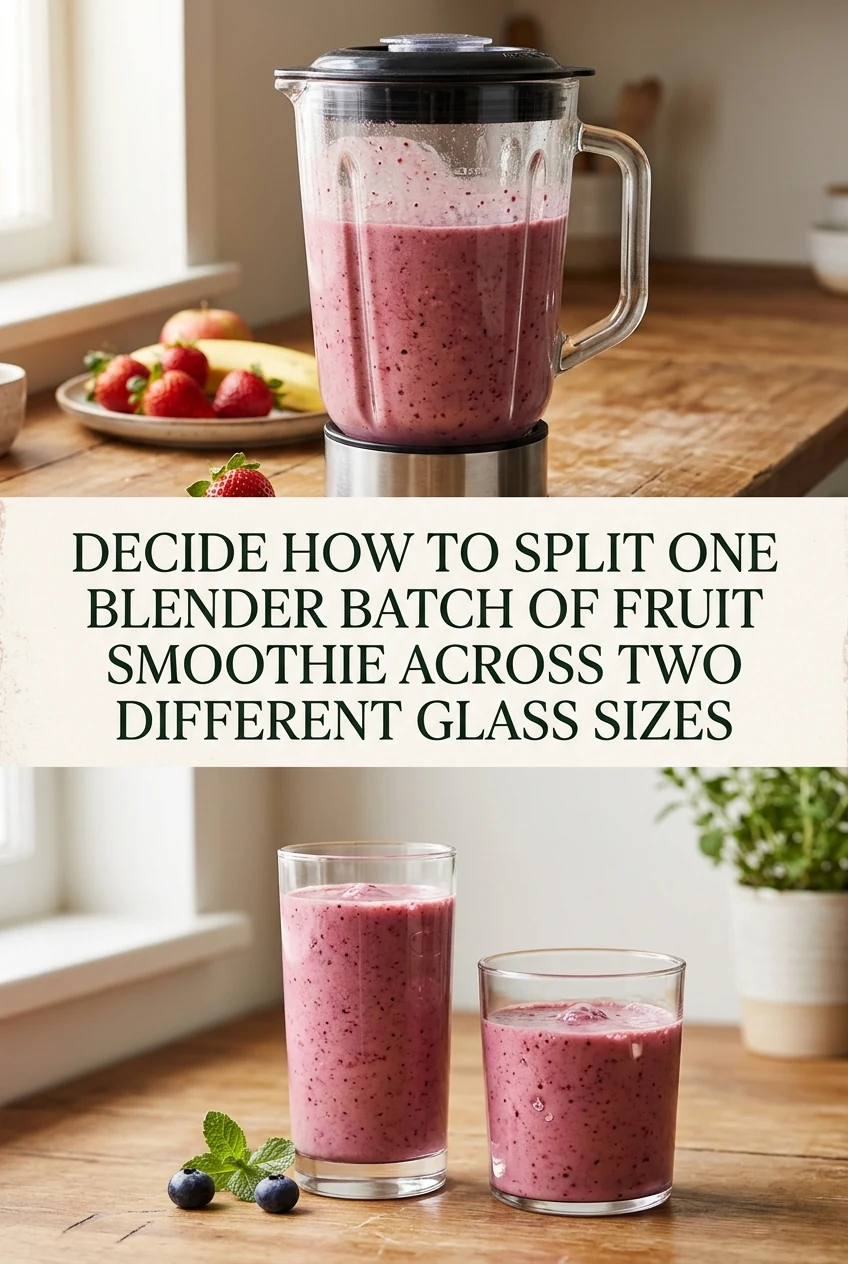
AI-generated editorial concept created for this article. The image is not a technical diagram or a tested result.
Blend First, Then Measure Total Yield
Run your blender as normal, then pour the complete batch into a clear measuring jug rather than straight into glasses. Note the total volume. This number is your working figure for everything that follows. Blending introduces air, so the yield is often slightly higher than the raw ingredient volume you added. Reading the jug before touching the glasses removes all guesswork from the split and gives you a fixed number to divide.
Calculate Each Serving Share
Divide the total yield by two for equal portions, or adjust the ratio if one glass is noticeably larger. As an illustrative example, a jug reading 480 ml split evenly gives 240 ml per glass. If your taller glass holds 350 ml comfortably and the shorter one holds 200 ml, a 60-to-40 split across 480 ml yields approximately 288 ml and 192 ml, keeping both drinks well below their rims. Write the target numbers on a sticky note beside the jug before you pour.
Use a Kitchen Scale When Glasses Look Similar
When two glasses appear close in size but are not identical, a kitchen scale removes doubt. Place the first glass on the scale, tare to zero, pour to your target gram figure, then repeat for the second glass. Smoothie density sits close enough to water that grams and millilitres are interchangeable for this purpose. This method is faster than eyeing a narrow measuring jug at an angle and avoids parallax reading errors.
Account for Foam and Settling
Freshly blended smoothie carries foam that deflates within a minute or two. If you measure immediately, the foam inflates your reading slightly. Pour both portions, let the foam settle for sixty seconds, then distribute any remainder left in the jug to hit each glass's target fill mark. Keep the jug on the counter rather than rinsing it until both servings are complete. This settling step matters most with banana or mango bases, which foam noticeably.
Serve Promptly and Refrigerate Any Remainder
Blended fruit smoothies are perishable. Serve both glasses immediately after splitting. If any smoothie remains in the jug after filling both glasses, transfer it to a sealed container and refrigerate at 4 degrees Celsius or below within two hours of blending, or within one hour if your kitchen is above 32 degrees Celsius. Do not leave the jug on the counter while guests finish other courses and expect to serve the remainder safely later.
A little more
to know.
Can I split the batch before blending by weighing raw ingredients into two groups?
You can, but different fruits release different amounts of liquid during blending, so pre-split raw weights rarely produce equal final volumes. Measuring after blending is more reliable for matching finished servings.
What if my measuring jug is smaller than the blender batch?
Pour what fits into the measuring jug, note that first volume, and empty the jug into your first glass or a temporary vessel. Then pour the remaining smoothie from the blender into the measuring jug, record that second volume, and add both figures together to determine your true total before dividing.
Original editorial guidance and recipe formulations, not independently kitchen-tested. Times are estimates and depend on equipment and product directions. Cooked bases need additional cooling and refrigeration before cold serving. Images are AI-generated illustrations; appearance and yield may vary. Check actual ingredient labels, allergens, and any certification you require. We do not certify products. Read our approach.
Save to Pinterest ↗ANOTHER IDEA FOR THE COUNTER