Decide How Much Ice to Add to a Sparkling Fruit Drink to Avoid Over-Dilution
Filling a glass to the brim with ice before adding a sparkling fruit drink seems refreshing, but it works against you. The large surface area of densely packed ice melts quickly, watering down both the fruit flavour and the carbonation before the drink is half finished. Measuring ice to roughly half the glass capacity gives the liquid room to stay cold without drowning the taste. This guide walks through how to make that call confidently for a standard 350 ml serving glass.
Read the note ↓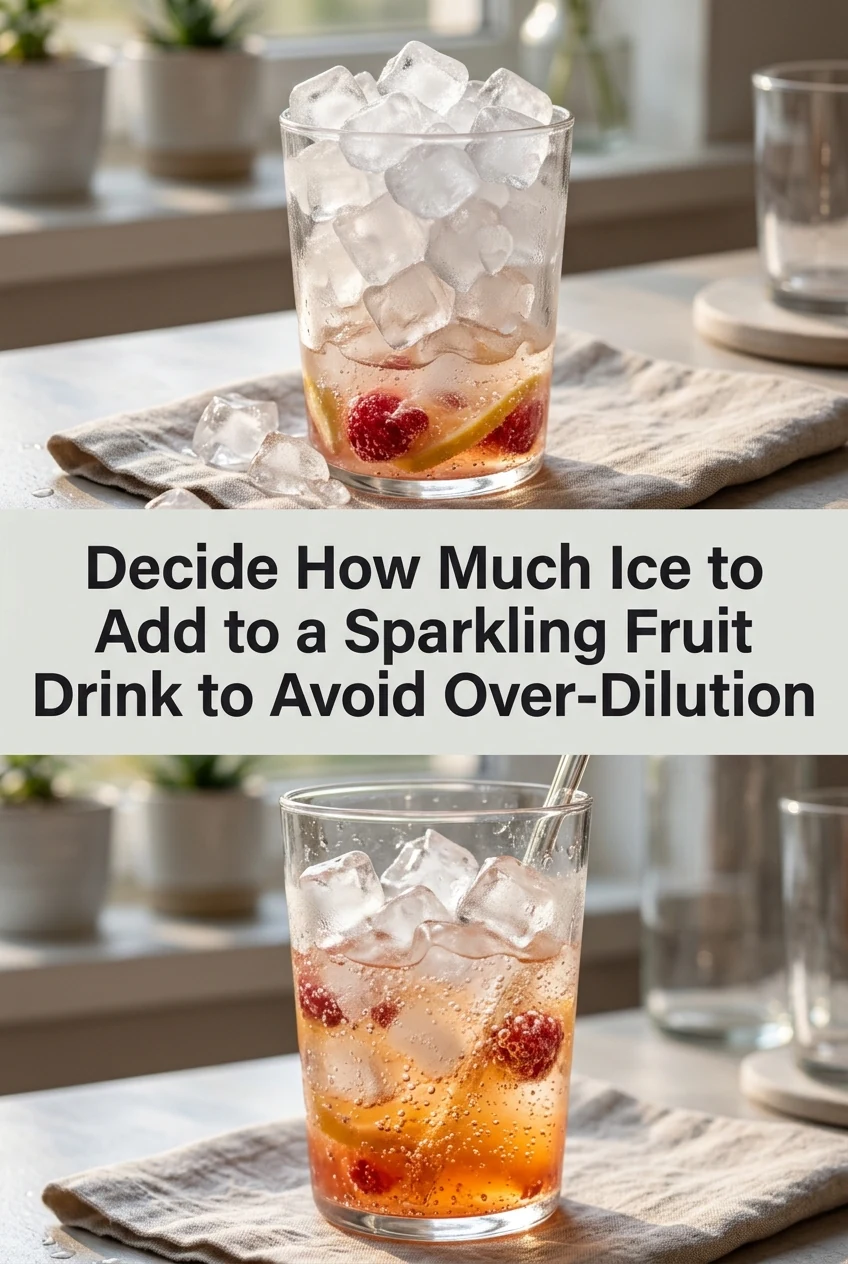
AI-generated editorial concept created for this article. The image is not a technical diagram or a tested result.
Understand Why Ice Volume Affects Flavour and Fizz
Carbonation escapes faster when liquid is agitated or comes into contact with numerous ice surfaces that act as nucleation sites. Furthermore, filling a glass to the brim with ice leaves very little volume for the actual beverage, so even modest melting rapidly thins the fruit flavour. Keeping ice to roughly half the glass capacity leaves sufficient room for liquid while providing enough cooling to keep the drink cold without immediate flavour loss.
Measure Ice to Half the Glass Capacity Before Pouring
For a 350 ml glass, aim for roughly 150 to 175 ml of ice by volume before any liquid is added. A simple way to check without a measuring cup is to fill the glass with water to the halfway mark, note the level, then empty and dry the glass before adding ice to that same line. This takes about thirty seconds and removes the guesswork. Standard cubed ice from a home freezer tray works well for this approach.
Add Fruit Juice or Concentrate First, Then Sparkling Water
Pour your fruit juice or cordial over the measured ice before adding the sparkling water. Chilling the flavour base first helps reduce carbonation loss when the sparkling water is poured. For an illustrative example using a cordial mixed at one part cordial to four parts sparkling water in a 350 ml glass with half ice, aim for roughly 35 ml of cordial followed by 140 ml of sparkling water to match the available volume. These figures serve as a practical starting guide rather than a fixed formula.
Pour Sparkling Water Slowly Down the Side of the Glass
Pouring sparkling water directly onto ice from height causes rapid agitation and releases carbonation before the drink reaches the person drinking it. Tilting the glass slightly and pouring the sparkling water down the inner wall reduces turbulence. You will see noticeably less foaming at the surface compared with a straight vertical pour. This technique applies regardless of the juice type and does not require any special equipment beyond the glass itself.
Adjust Ice Amount for Outdoor or Warm Room Conditions
When serving outdoors or in a warm room, ice melts more quickly due to heat transfer from the surroundings. Rather than reducing ice and allowing the beverage to warm up faster, assemble and serve the drink immediately so it can be enjoyed before substantial melting occurs. Pre-chilling the glass in the freezer for ten minutes before preparation also helps temper the glassware and slows initial melting after pouring.
A little more
to know.
Does the type of fruit juice change how much ice to use?
Thicker, pulpy juices dilute slightly differently from clear cordials, but the half-glass ice rule still applies as a starting point. Adjust the juice-to-sparkling-water ratio based on your taste preference rather than changing the ice volume significantly.
Can I prepare the glass with ice ahead of time before guests arrive?
Yes, but ice left in an empty glass for more than a few minutes begins to melt and pool water at the bottom. Fill glasses with ice no more than two to three minutes before pouring to avoid a watery base layer diluting the first sip.
Original editorial guidance and recipe formulations, not independently kitchen-tested. Times are estimates and depend on equipment and product directions. Cooked bases need additional cooling and refrigeration before cold serving. Images are AI-generated illustrations; appearance and yield may vary. Check actual ingredient labels, allergens, and any certification you require. We do not certify products. Read our approach.
Save to Pinterest ↗ANOTHER IDEA FOR THE COUNTER