Control Foam Volume When Pouring Seltzer Over Fruit Syrups
Pouring cold sparkling water directly onto dense fruit syrup often triggers an aggressive surge of carbonation that overflows the tumbler rim. Fruit purees and concentrated syrups introduce suspended pulp fibers and microparticulates that serve as abundant nucleation sites, causing dissolved carbon dioxide to rapidly break out of solution. Simultaneously, the high sugar content increases liquid viscosity, creating elastic bubble walls that resist popping and trap gas into an expanding head of thick foam. Guiding the carbonated water along an angled glass wall preserves crisp effervescence while preventing sticky spills on the counter.
Read the note ↓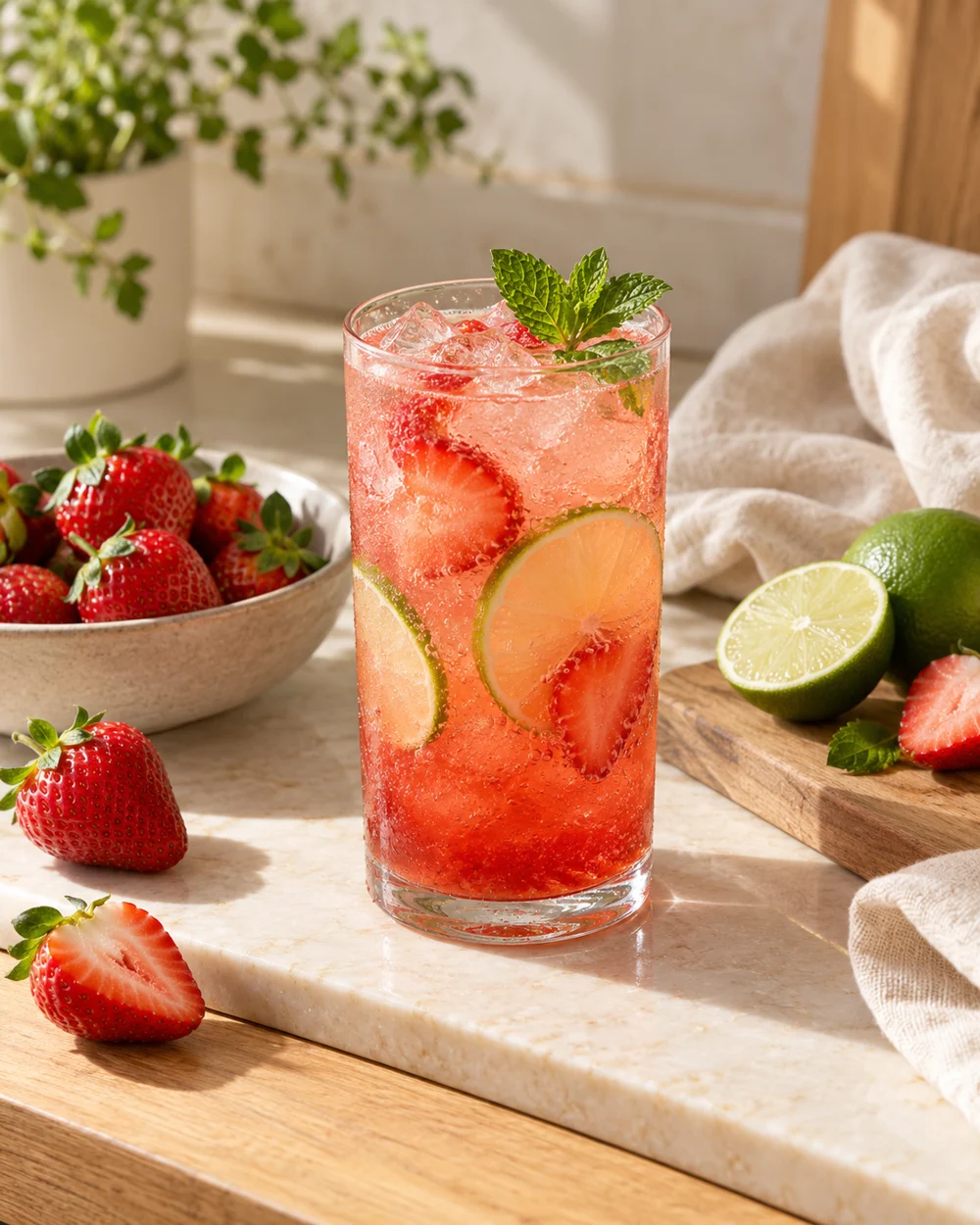
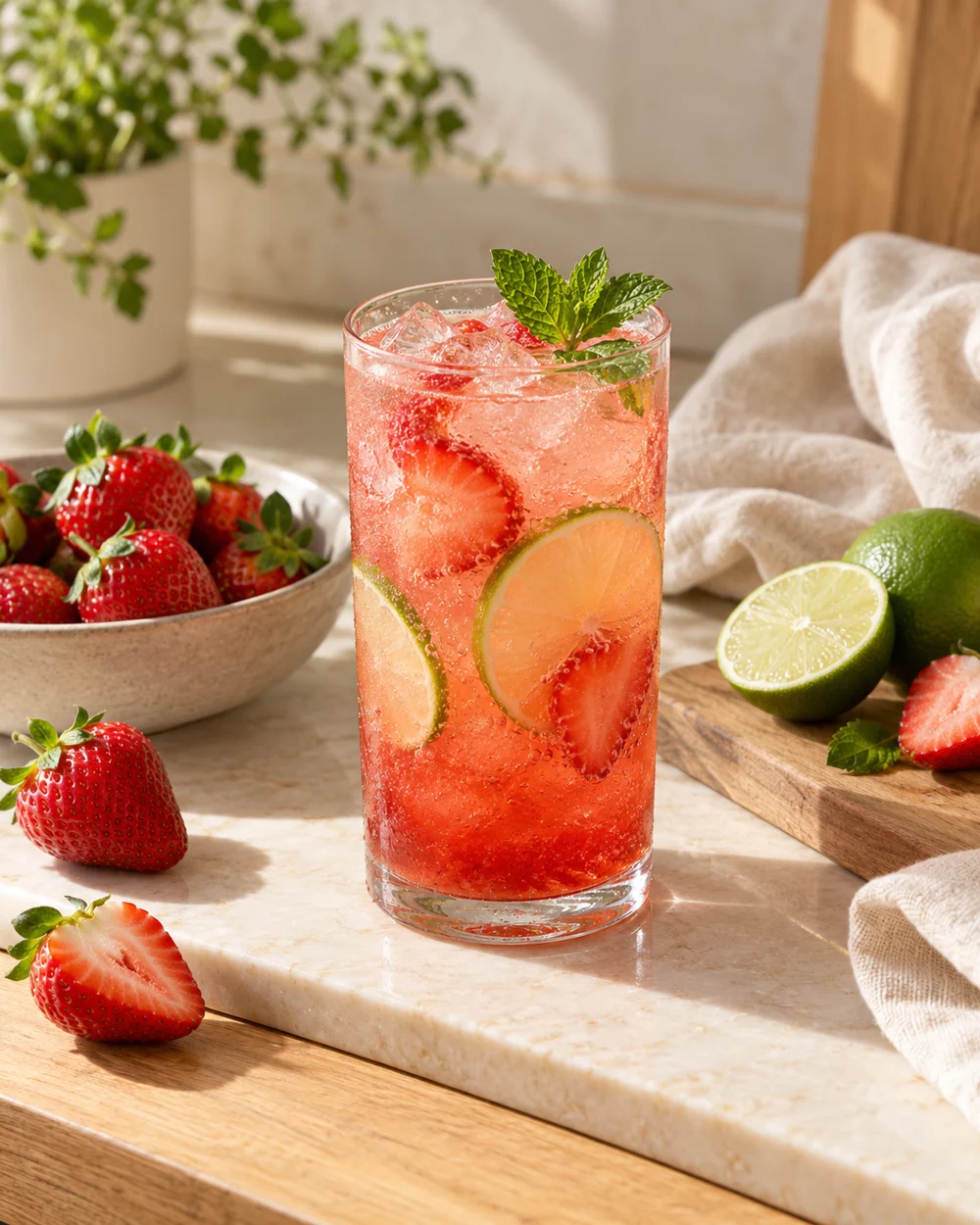
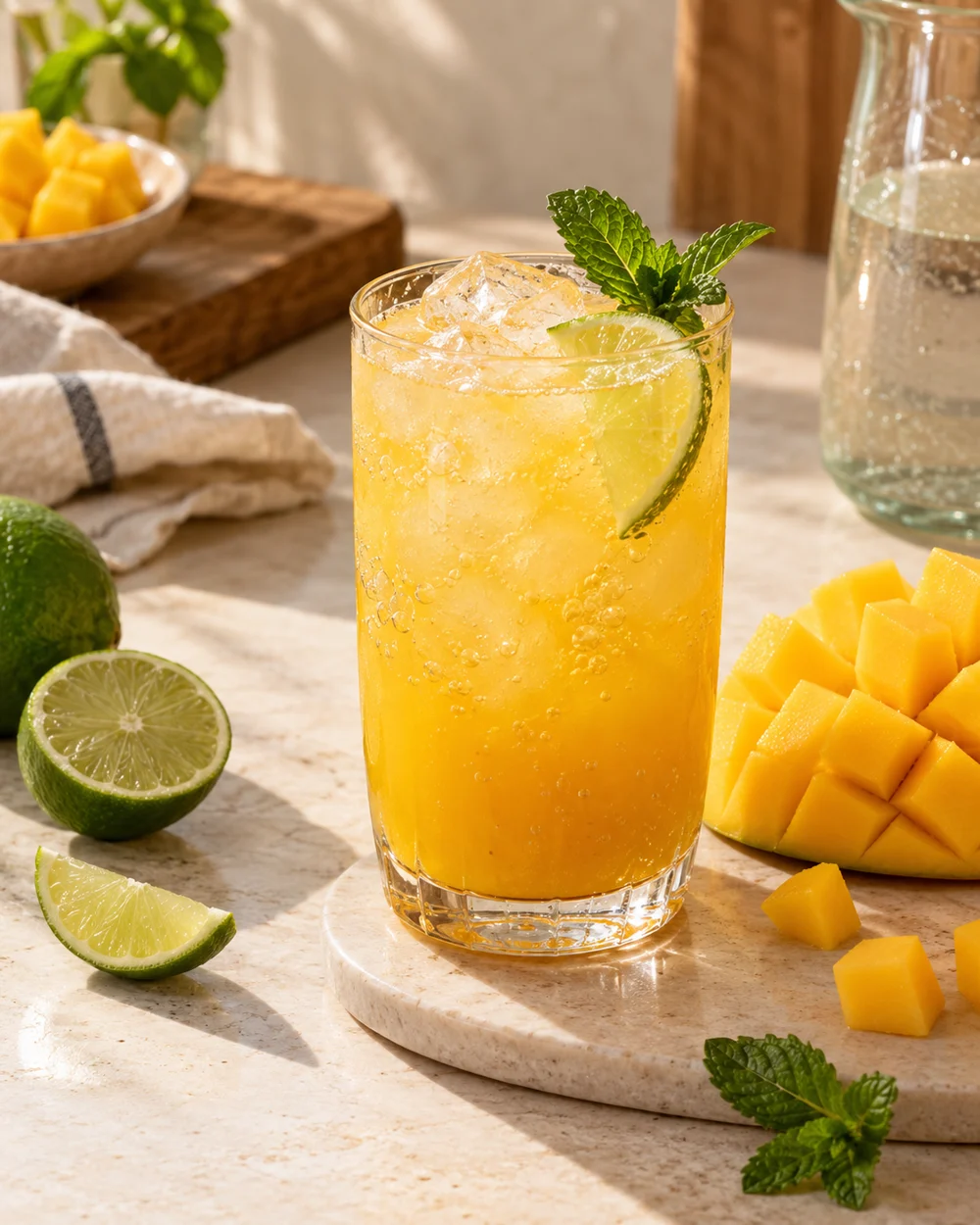
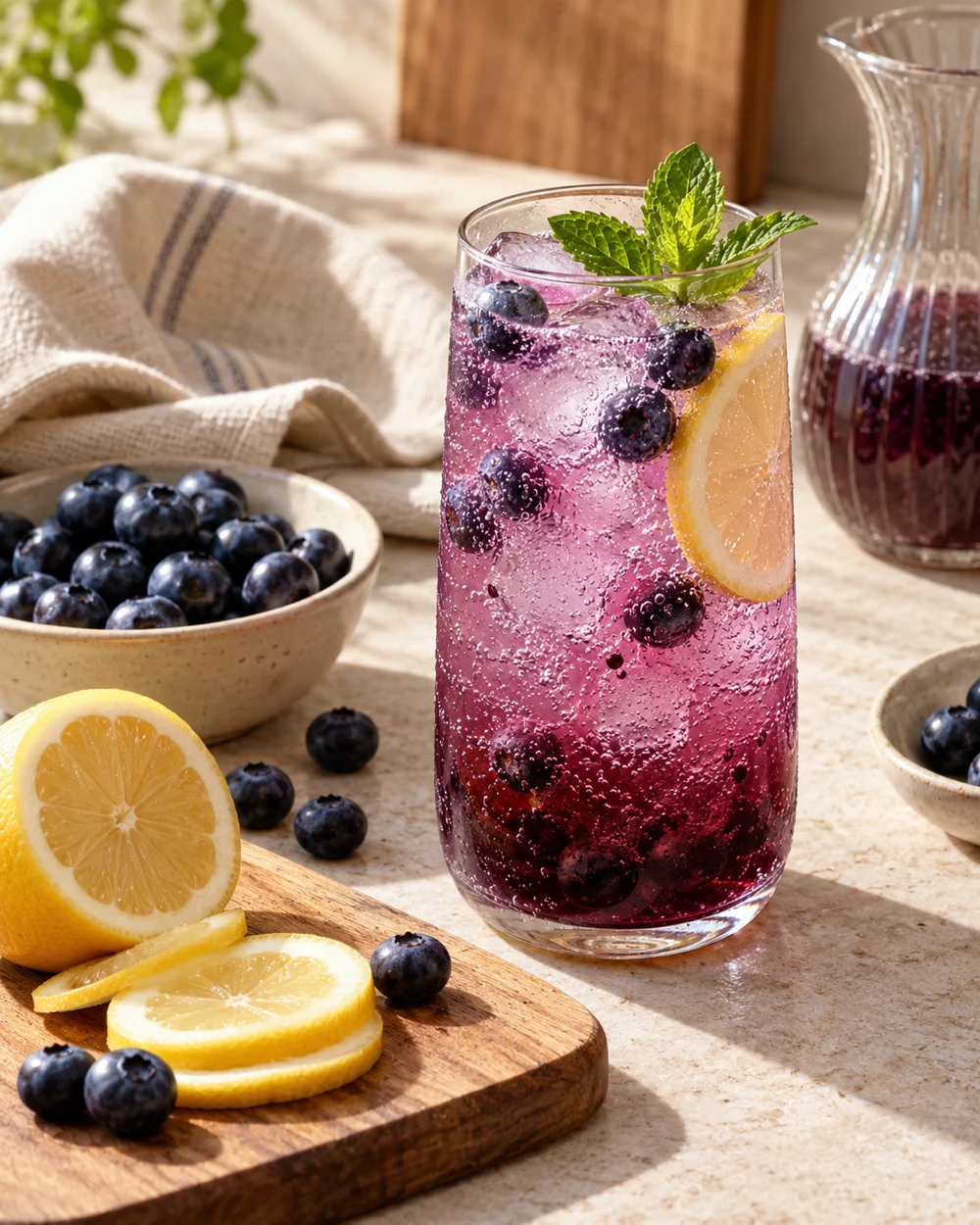
Representative category illustration reused from our editorial library; it does not depict this specific project or a tested result.
Syrup Placement and Temperature Management
Measure the fruit syrup into the bottom of a clean, dry glass before introducing ice or sparkling water. For an illustrative serving with a total volume of 180 milliliters, deposit 30 milliliters of fruit syrup directly against the base. Keep the syrup thoroughly chilled in the refrigerator at 4 degrees Celsius prior to drink assembly. When cold seltzer contacts room-temperature syrup, the localized temperature spike decreases carbon dioxide solubility at the liquid boundary, prompting rapid outgassing and causing sudden volumetric expansion before the drink can be integrated.
Ice Placement to Minimize Turbulence
Add solid, dense ice cubes gently on top of the syrup layer. Lower each cube into the glass using small ice tongs rather than dropping it from above, which splashes viscous syrup upward onto the dry inner walls. Three or four large cubes chill the base layer effectively while creating an orderly channel for incoming liquid. Smooth ice surfaces minimize disturbance, whereas cracked ice chips expose irregular edges and trapped air pockets that trigger premature degassing and accelerate foam formation.
The Forty-Five Degree Wall Pour
Tilt the tumbler to a steady 45-degree angle in one hand while holding the chilled seltzer bottle in the other. Position the bottle spout close to the inner glass lip and pour a gentle, continuous stream directly down the interior wall. By directing the sparkling water along the smooth glass surface, the liquid glides smoothly into the syrup pocket at the base rather than crashing down with turbulent force. This controlled path confines bubble release to a manageable rise instead of generating a volcanic eruption of foam.
Upright Adjustment and Headspace Clearance
When the rising liquid reaches two-thirds of the tumbler capacity, smoothly pivot the glass back to a vertical orientation. Direct the final portion of the pour directly over the uppermost ice cube to initiate subtle blending between the carbonated water and syrup. Halt the pour when the surface reaches two centimeters below the rim. This deliberate headspace accommodates the natural expansion of rising bubbles and leaves adequate room for gentle stirring without sticky liquid splashing over the edge.
Gentle Integration Without Agitation
Dense fruit syrups settle firmly at the bottom of the glass, but rapid circular stirring strips remaining carbon dioxide and leaves the beverage flat. Insert a long-handled bar spoon straight down along the inner glass wall until it rests on the base. Execute two slow, deliberate vertical lifts, drawing the heavy syrup upward through the center of the ice column before withdrawing the spoon. This measured movement achieves uniform sweetness and color distribution while preserving crisp carbonation throughout the drink.
A little more
to know.
Why do fibrous fruit purees foam more aggressively than filtered simple syrups?
Insoluble fruit pulp, seeds, and pectin fragments provide thousands of microscopic, rough edges that act as heterogeneous nucleation sites, triggering rapid release of dissolved carbon dioxide gas. Filtered syrups lack these suspended solids, which substantially reduces the rate of immediate bubble formation.
Is it better to pour the seltzer into the glass first and add the fruit syrup afterward?
No, pouring dense syrup onto carbonated water causes the heavy syrup to plummet through the sparkling liquid, creating violent internal shear that drives gas out of solution rapidly and leaves an unmixed, sugary pool under flat water.
Original editorial guidance and recipe formulations, not independently kitchen-tested. Times are estimates and depend on equipment and product directions. Cooked bases need additional cooling and refrigeration before cold serving. Images are AI-generated illustrations; appearance and yield may vary. Check actual ingredient labels, allergens, and any certification you require. We do not certify products. Read our approach.
Save to Pinterest ↗ANOTHER IDEA FOR THE COUNTER