Choose Club Soda, Seltzer or Mineral Water for a Fruit Sparkler
Grabbing any sparkling bottle from the cupboard can leave a fruit drink tasting salty, chalky, or strangely flat. Club soda, seltzer, and mineral water are not interchangeable. Each has a different mineral content that changes how it tastes alongside fruit. Reading the label before you open the bottle takes thirty seconds and prevents a wasted batch. This guide walks through what to look for on each label, how to do a quick side-by-side comparison, and how to pour gently to minimize carbonation loss.
Read the note ↓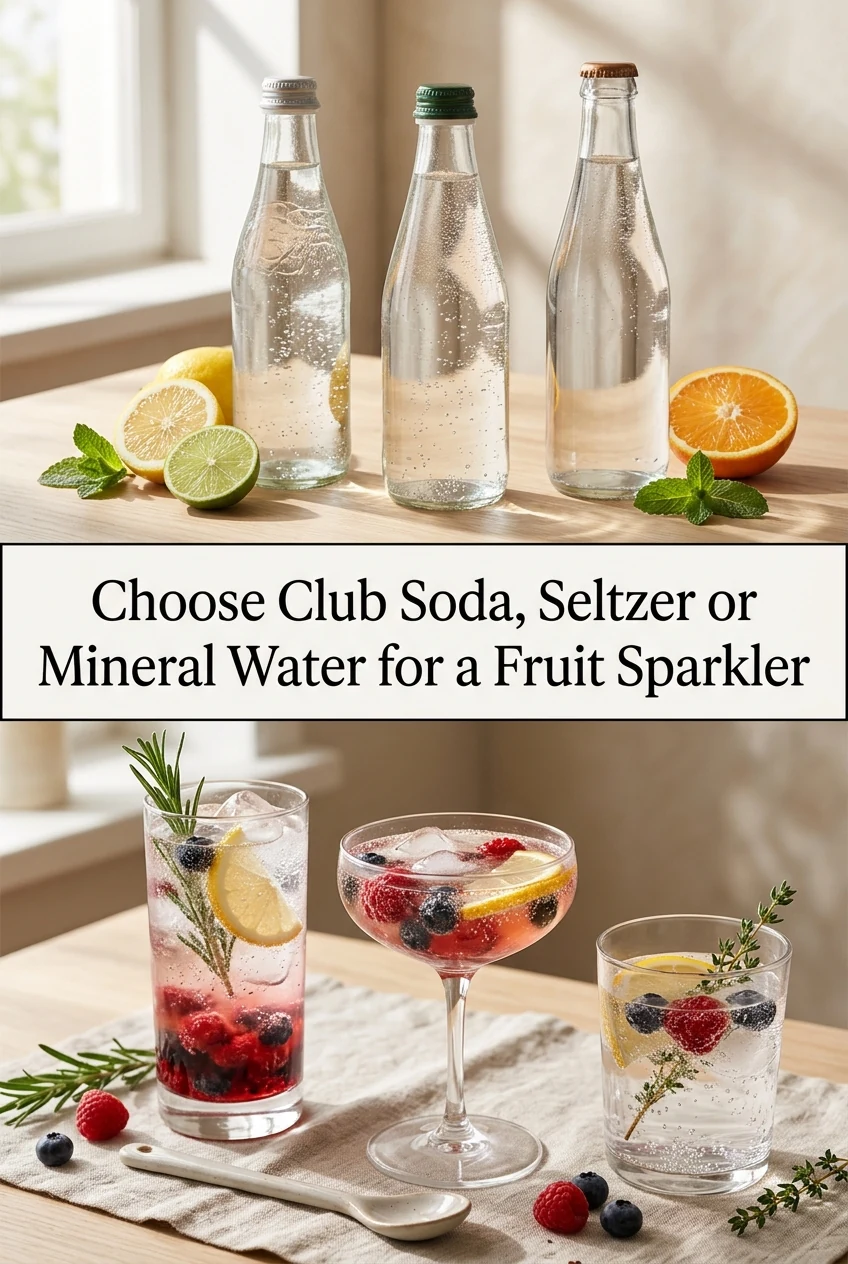
AI-generated editorial concept created for this article. The image is not a technical diagram or a tested result.
Read the Label Before You Open Anything
Turn the bottle over and find the ingredient list. Seltzer typically lists only water and carbon dioxide. Club soda lists water, carbon dioxide, and added minerals such as sodium bicarbonate or potassium sulfate, which create a faintly salty or alkaline taste. Natural mineral water lists the source and its naturally occurring mineral content, which varies by brand. If the label says flavored sparkling water, set it aside entirely; added citrus or berry flavoring will compete with your fruit puree unpredictably.
Chill the Bottles Before Comparing
Cold water holds carbonation better than room-temperature water. Place both bottles in the refrigerator for at least two hours before your comparison. Do not shake them. When you are ready, open each bottle slowly by cracking the cap just enough to release pressure gradually. Pour roughly 60 milliliters of each into two separate plain glasses. Taste each one plain before adding any fruit. Note whether one tastes noticeably salty or has a stronger mineral aftertaste. That impression will carry through into the finished drink.
Make a Simple Berry Puree for the Test
Blend or mash about 80 grams of fresh or thawed frozen berries, then press the pulp through a fine mesh strainer to remove seeds. You should get roughly 60 to 70 milliliters of strained puree. Divide it evenly between two glasses, about 30 to 35 milliliters each. This small quantity is enough to taste the difference without wasting a large amount of fruit. Keep the puree at room temperature for the test so temperature is not a variable between the two glasses.
Pour Slowly Over the Puree
Tilt each glass at a slight angle, the same way you would pour a carbonated drink to reduce foam. Pour the sparkling water down the inside wall of the glass rather than directly onto the puree. Use about 120 milliliters of sparkling water per glass. Stir once gently with a long spoon, just enough to combine. Pouring fast or stirring vigorously releases carbonation quickly. The drink will still lose some fizz over a few minutes regardless of technique; there is no method that fully prevents this.
Record What You Notice and Decide
Taste both glasses and note two things: how the mineral or salt character of the water changes the fruit flavor, and whether one version needs a small addition of sugar or a squeeze of citrus to balance it. Write this down even briefly. For most berry purees, plain seltzer tends to let the fruit flavor read more clearly, while club soda can add a subtle savory edge that some people prefer. Mineral water results vary by brand, so the label comparison step matters every time you switch brands.
A little more
to know.
Can I use sparkling water that has been open in the fridge for two days?
Carbonation decreases noticeably after opening, even with the cap replaced. A two-day-old bottle will produce a noticeably flatter drink. For a side-by-side comparison to be useful, both bottles should be freshly opened.
Does the sodium in club soda affect people on low-sodium diets?
Sodium content varies by brand; check the nutrition panel on your specific bottle for the milligrams per serving. This article does not make dietary recommendations. Consult a qualified health professional for personal dietary guidance.
Original editorial guidance and recipe formulations, not independently kitchen-tested. Times are estimates and depend on equipment and product directions. Cooked bases need additional cooling and refrigeration before cold serving. Images are AI-generated illustrations; appearance and yield may vary. Check actual ingredient labels, allergens, and any certification you require. We do not certify products. Read our approach.
Save to Pinterest ↗ANOTHER IDEA FOR THE COUNTER