Check the Blender Container Fill Line Before Adding Frozen Fruit and Liquid
Frozen fruit does not sit still in a blender. As the blades break it down, the mixture aerates, expands and rises noticeably above its starting level. Loading fruit and liquid to what looks like a reasonable level can still push the contents past the container's marked maximum once blending begins, lifting the lid and spilling the drink. Checking the fill line before you load anything is a one-second habit that prevents a messy and wasteful outcome.
Read the note ↓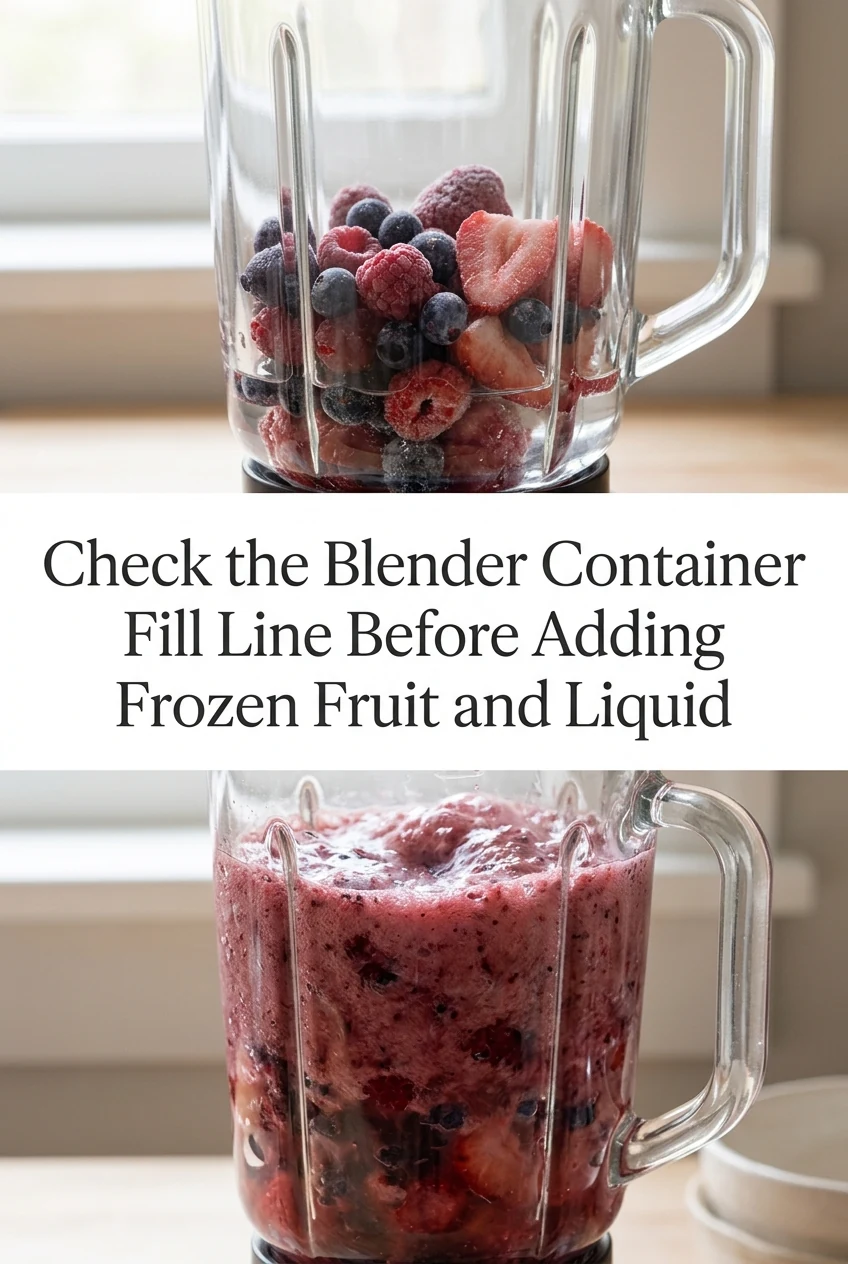
AI-generated editorial concept created for this article. The image is not a technical diagram or a tested result.
Find the Maximum Fill Line on Your Container
Most blender containers have a maximum fill line clearly marked on the side, indicating the highest safe operating level for contents before blending. Depending on the manufacturer, this threshold may be labelled as 'MAX', 'MAX FILL', or indicated by the highest graduation on the measurement scale. These markings reflect working capacity rather than total container volume. Locate this line on your specific container before adding ingredients. If the markings have worn away, check the manufacturer documentation that came with your blender rather than estimating, as overfilling risks spillage, lid displacement, and strain on the motor seal.
Account for Expansion Before Loading
A practical approach is to load frozen fruit and liquid so the combined level sits at least three to four centimetres below the maximum fill line before blending starts. As an illustrative example, if your container's maximum line is at one litre, aim to load no more than 800 to 850 ml of combined fruit and liquid. This is not a universal guarantee for every machine or fruit type, but it gives a reasonable buffer for the aeration that occurs during blending.
Add Liquid Before Frozen Fruit
Pour your liquid into the container first so you can see exactly how much space remains for the fruit. Adding frozen fruit on top of liquid also helps the blades engage more easily at the start, reducing the chance of the motor stalling on a dry stack of frozen pieces. Measure your liquid in a separate jug before pouring so you know the volume going in rather than estimating from the container markings alone.
Hold the Lid During the First Few Seconds
Even with a correctly loaded container, place your hand flat on the lid for the first few seconds of blending. This is a standard precaution, not a sign that the container is overfilled. The initial pulse can create a brief pressure surge before the mixture settles into a steady blend. Use a folded kitchen towel between your hand and the lid if the container runs warm. Do not press down with your forearm or lean your weight onto the machine.
Adjust for Dense or Fibrous Fruits
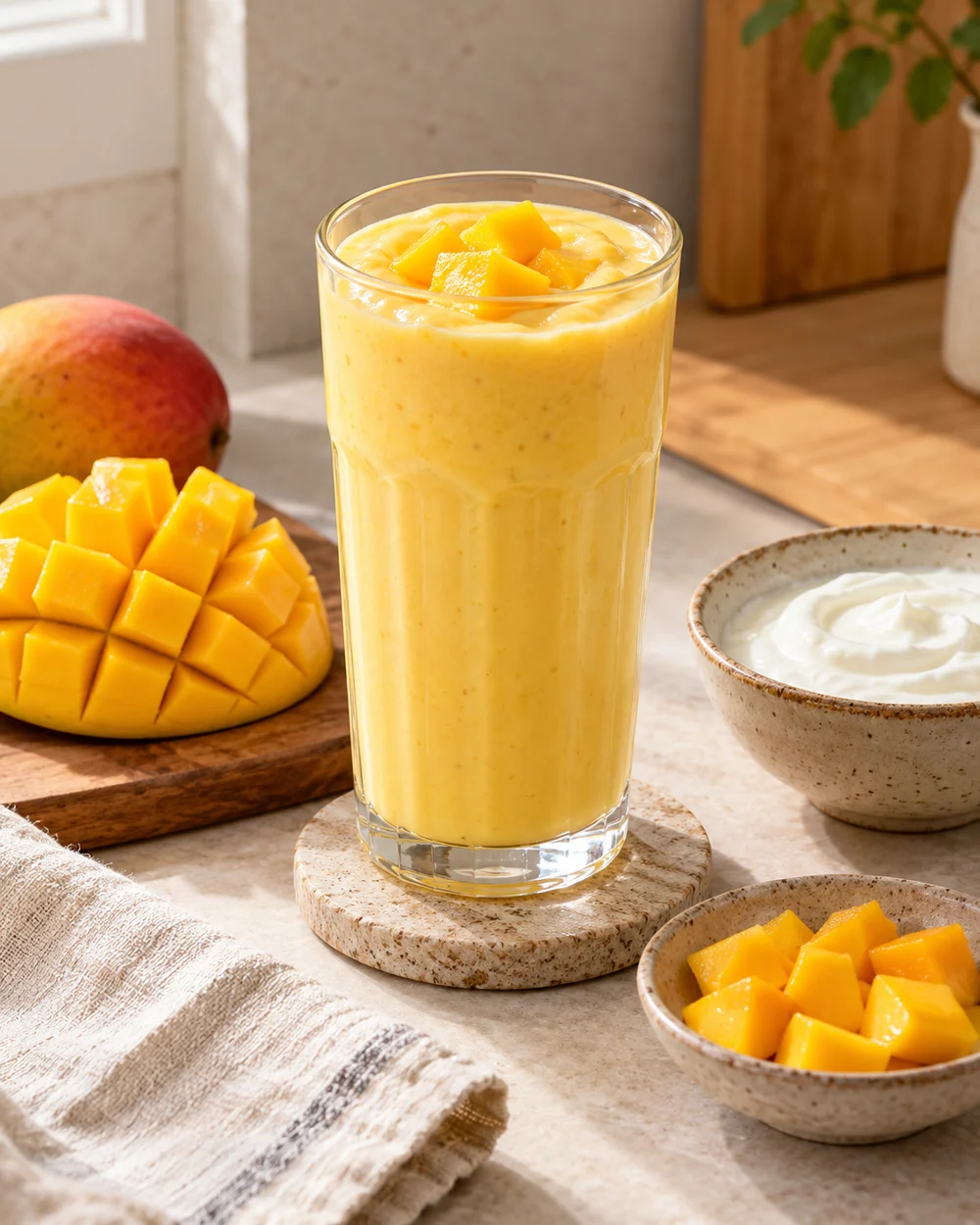
Dense fruits such as frozen mango, pineapple and banana expand more than softer berries because their thick purees trap more incorporated air during blending. If you are using a dense fruit for the first time in a new container, start with a smaller quantity than you think you need and blend in short pulses, checking the level between pulses. You can always add more fruit after the first blend if there is room, but you cannot undo a spill once it happens.
A little more
to know.
Does the fill line change if I am blending only liquid with no frozen fruit?
The marked maximum fill line represents the upper limit for all cold blends, whether purely liquid or mixed with fruit. Some blender manuals specify lower filling levels for thick mixtures or hot ingredients to account for aeration and pressure buildup, but containers do not provide a separate, higher line for liquids alone. Always check your model's manual for recipe-specific limits and never exceed the container's marked maximum line.
Can I stack frozen fruit above the liquid level before blending starts?
You can, but measure the total combined volume mentally before starting. Frozen fruit above the liquid line still counts toward the total that will expand during blending. If the fruit stack reaches the maximum line before blending, remove some before you start.
Original editorial guidance and recipe formulations, not independently kitchen-tested. Times are estimates and depend on equipment and product directions. Cooked bases need additional cooling and refrigeration before cold serving. Images are AI-generated illustrations; appearance and yield may vary. Check actual ingredient labels, allergens, and any certification you require. We do not certify products. Read our approach.
Save to Pinterest ↗ANOTHER IDEA FOR THE COUNTER