Check a Reusable Straw's Diameter Against a Thick Drink
Reusable straws come in a range of internal diameters, and that measurement matters most when the drink you are planning is thick rather than thin. A straw sized for water or iced tea may resist or completely block a dense blended drink, while an oversized opening can feel awkward with a lighter beverage. This article walks through a straightforward home-cafe approach for comparing a straw's actual opening against the intended texture of a drink before you commit to a recipe, so the pairing makes practical sense from the start.
Read the note ↓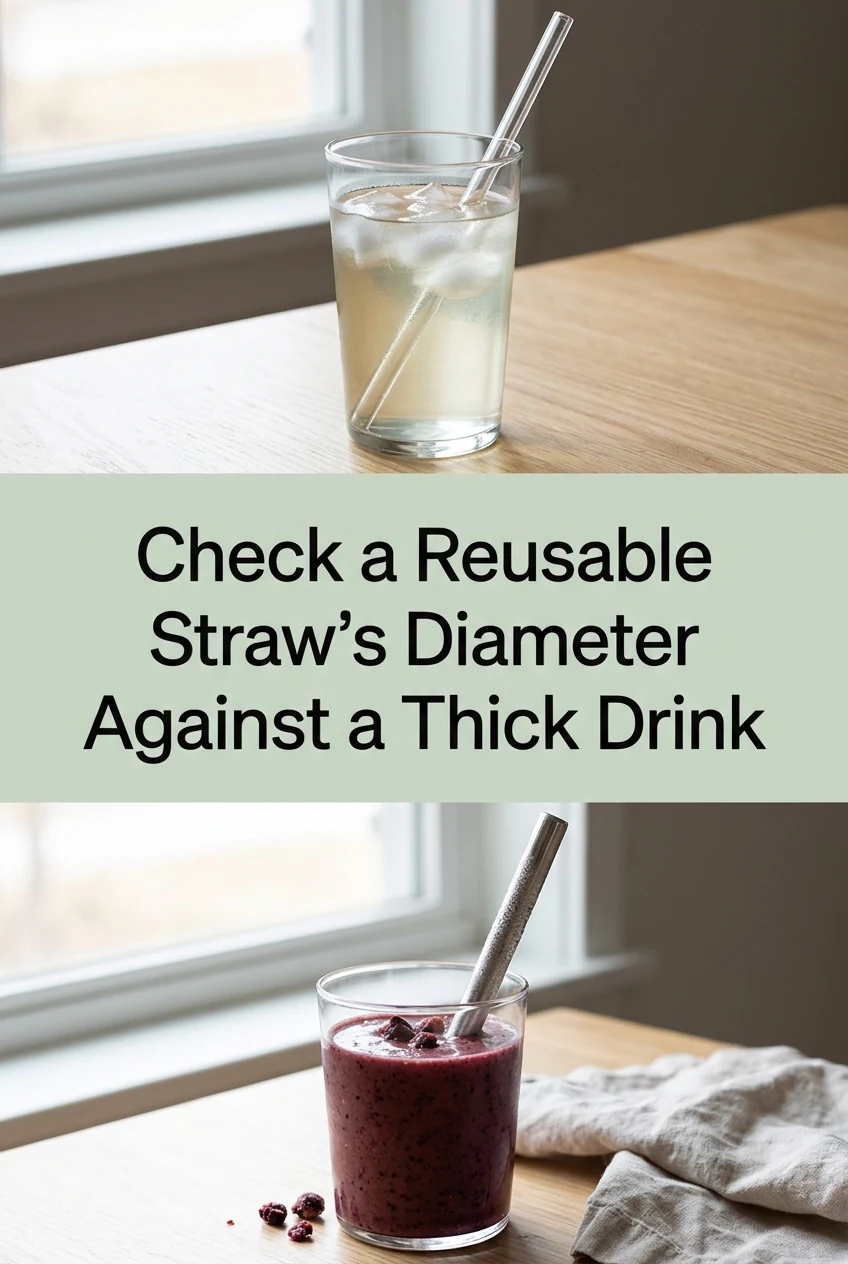
AI-generated editorial concept created for this article. The image is not a technical diagram or a tested result.
Understand What Internal Diameter Means in Practice
The internal diameter of a straw is the measurement across the hollow channel, not the outer wall. Most reusable straw makers print or list this figure in millimetres on the packaging or their website. Common sizes range from roughly 6 mm for standard cold drinks up to 12 mm or wider for boba and blended beverages. A difference of even 2 mm can noticeably change how easily a thick liquid moves through the channel. Before you begin any recipe, locate the internal diameter figure for your specific straw from the maker's own documentation rather than estimating by eye.
Assess the Texture of Your Intended Drink
Drink texture sits on a rough spectrum from thin and pourable to thick and spoonable. A straightforward iced matcha latte made with milk flows easily and suits a narrower straw. A blended frozen drink containing fruit pulp or a thick date-sweetened shake sits at the denser end and needs more clearance. Before matching straw to drink, consider what solids or thickening agents are in the recipe. Whole tapioca pearls, for example, require a straw wide enough for a pearl to pass through freely, which is why boba straws exist as a distinct category. Identify where your planned drink falls on that spectrum before choosing a straw.
A Worked Example: Pairing a Straw with a Thick Mango Lassi
This is an illustrative planning exercise, not a kitchen-tested result. Suppose you want to serve a mango lassi made from blended ripe mango, plain yoghurt, a small amount of honey, and a pinch of cardamom. The blended texture is smooth but noticeably dense, sitting between a thin juice and a milkshake. You have two reusable metal straws: one with a 6 mm internal diameter and one with a 10 mm internal diameter. The 6 mm straw is designed for standard cold drinks according to its maker's documentation. The 10 mm straw is listed by its maker as suitable for smoothies and blended drinks. For a smooth but dense lassi with no solid pieces, the 10 mm straw is the more appropriate starting point based on the maker's own category guidance. The 6 mm straw may work if the lassi is thinned with additional milk, but that changes the recipe. The point of the exercise is to decide the pairing before blending, not after.
Check Cleaning Requirements Before Finalising Your Choice
A wider straw that suits a thick drink also needs adequate cleaning after use, and the method depends entirely on what the straw maker specifies. Some reusable straws come with a dedicated brush sized to their internal diameter; others are listed as dishwasher-safe on the top rack only; some silicone straws can be turned inside out for rinsing according to their maker's instructions. Do not assume a cleaning approach that the maker has not described. If your chosen straw requires a brush and the brush supplied does not reach the full length of the channel, check whether the maker offers a longer brush or a different cleaning recommendation. Thick drinks leave more residue, so confirming the cleaning method is part of choosing the right straw, not an afterthought.
Prompt Refrigeration and Recipe Notes for Thick Drinks
Thick drinks made with dairy, yoghurt, or fresh fruit are perishable and should be refrigerated promptly if not consumed immediately. This is standard food-handling practice, not a storage lifespan claim. If your recipe includes vanilla flavouring, use only a product explicitly labelled as alcohol-free, as many conventional vanilla extracts contain alcohol as a carrier. Honey used as a sweetener is suitable for adults but is not recommended for infants; follow general food-safety guidance relevant to who will be drinking the beverage. Once you have confirmed the straw diameter, the cleaning method, and the ingredient suitability, the home-cafe pairing is straightforward to repeat each time you make the same drink.
A little more
to know.
How do I find the internal diameter of a reusable straw if the packaging is lost?
Check the maker's official website or contact their customer support directly. The internal diameter is a product specification the maker can confirm. Avoid estimating by inserting objects, as this does not give a reliable figure and may not match the maker's stated measurement.
Can I use a wide boba straw for a thin drink like iced tea?
A wider straw will allow a thin drink to flow through without resistance, so it is not a blockage issue. The practical consideration is comfort and control, since a very wide opening can make sipping a thin liquid feel less controlled. Whether that matters is a personal preference rather than a suitability problem in the way that a narrow straw struggling with a thick drink is.
Original editorial guidance and recipe formulations, not independently kitchen-tested. Times are estimates and depend on equipment and product directions. Cooked bases need additional cooling and refrigeration before cold serving. Images are AI-generated illustrations; appearance and yield may vary. Check actual ingredient labels, allergens, and any certification you require. We do not certify products. Read our approach.
Save to Pinterest ↗ANOTHER IDEA FOR THE COUNTER