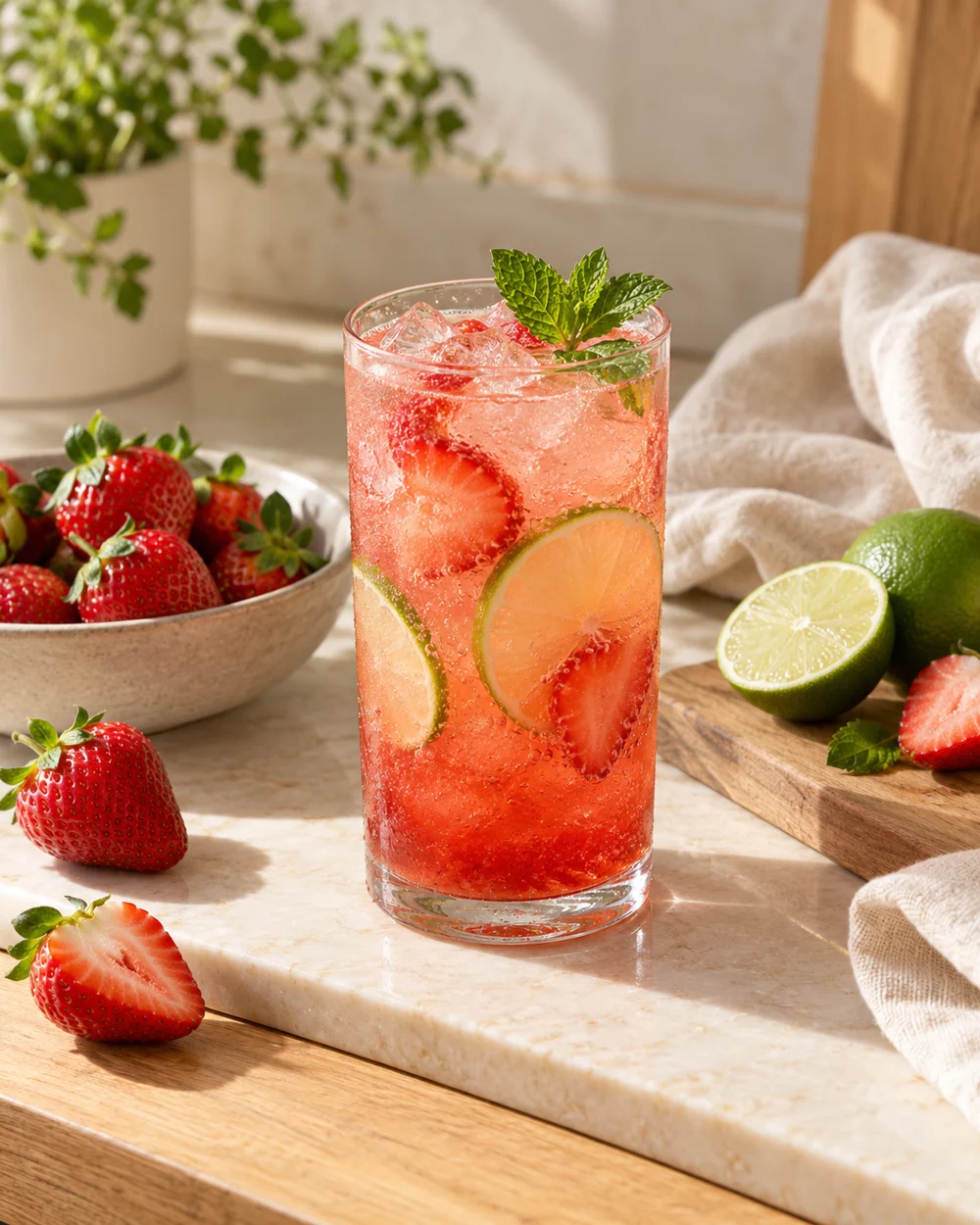
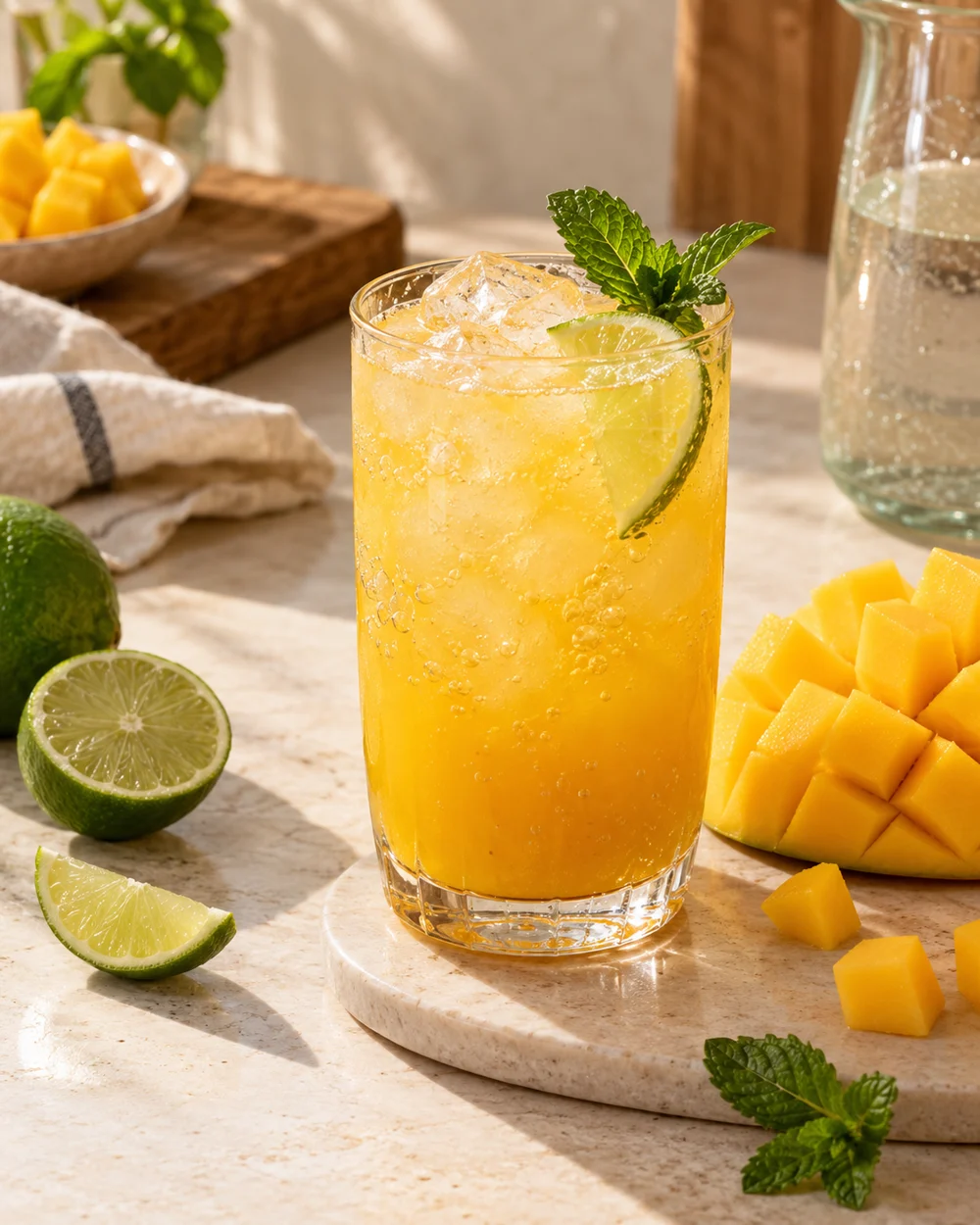
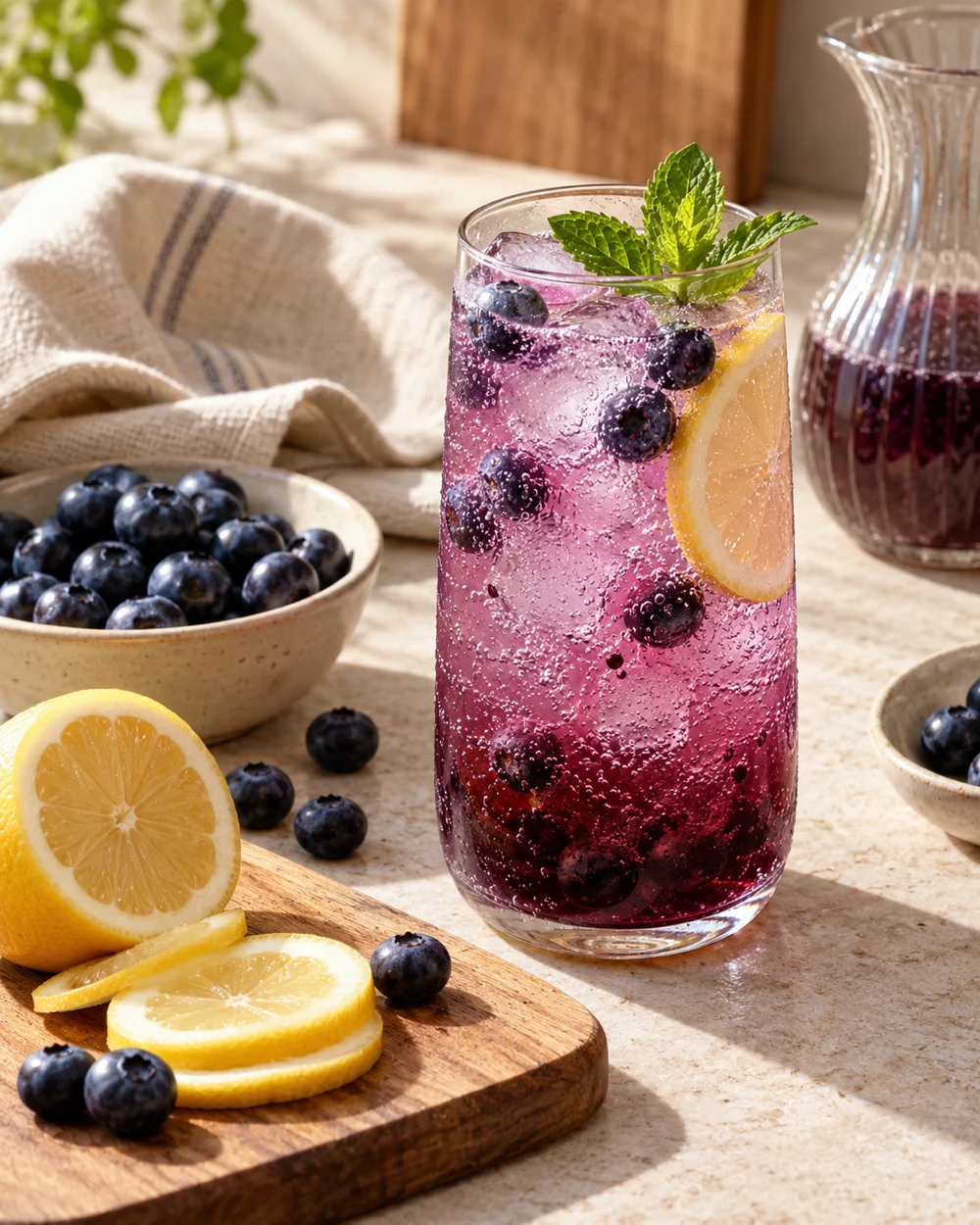
Build a Sparkling Iced Oolong Drink by Brewing a Strong Concentrate and Adding Soda Last
Adding soda water to a warm or room-temperature tea causes immediate carbonation loss and a flat result. The solution is to brew oolong as a short, concentrated steep, chill it completely before touching the soda, and pour the soda last into a cold glass. This sequence preserves the bubbles and lets the tea flavour come through clearly. The guide covers steep time, concentrate ratio, chilling method, and the exact assembly order for a single 350 ml serving.
Read the note ↓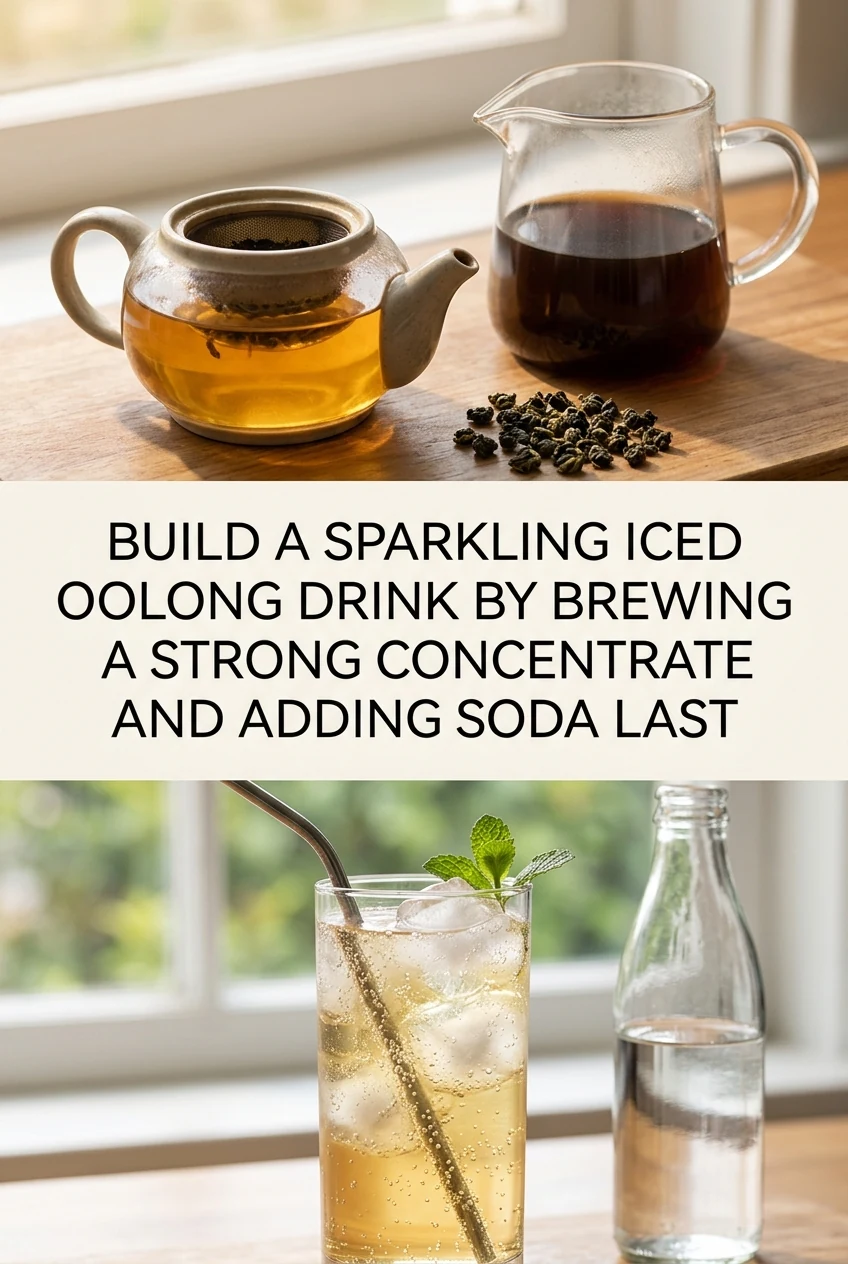
AI-generated editorial concept created for this article. The image is not a technical diagram or a tested result.
Brew a Concentrated Oolong Steep
Use 6 g of loose oolong leaf for every 120 ml of water heated to approximately 90 degrees Celsius. Steep for 3 minutes, then strain immediately. This produces a concentrate roughly twice the strength of a standard cup. Steeping longer than 3 minutes at this temperature can introduce noticeable bitterness that becomes more prominent once diluted with plain soda water. The 120 ml concentrate will be diluted to a finished 350 ml drink, so the flavour needs to be assertive at this stage.
Chill the Concentrate Completely
Pour the strained concentrate into a heatproof container and chill it thoroughly before building the drink. You can accelerate this by placing the container into an ice-water bath for 10 to 15 minutes, or by letting it cool and refrigerating it until completely cold. Pouring warm concentrate over ice and then adding soda is a shortcut that melts the ice rapidly, dilutes the tea unpredictably, and drives off carbonation through residual heat. Starting with a fully chilled concentrate gives you control over dilution and keeps the soda effervescent longer in the glass.
Prepare the Glass and Ice
Fill a 600 ml glass with ice cubes to about two-thirds full before adding any liquid. A glass of this capacity provides sufficient space to accommodate both the ice mass and the 350 ml of liquid without overflowing. Cubed ice melts more slowly than crushed ice and keeps the drink cold without rapid dilution during consumption. Pre-chilling the glass in the freezer for 5 minutes is an optional step that further slows ice melt. Do not add the concentrate or soda until the glass is fully iced, as the cold mass protects carbonation upon pouring.
Assemble in the Correct Order
Pour the 120 ml of chilled oolong concentrate over the ice first, then add 230 ml of cold soda water by tilting the glass slightly and pouring down the inside edge rather than directly onto the ice. This gentle pour reduces agitation and retains more carbonation. Stir once with a long spoon using a single slow lift from the bottom rather than a circular stir, which releases bubbles rapidly. The finished drink should appear lightly effervescent rather than foamy.
Adjust Sweetness Without Disrupting Carbonation
If sweetness is needed, stir a prepared simple syrup into the chilled concentrate before adding soda, not after. Adding syrup after the soda causes unnecessary agitation. A starting point for a lightly sweet result is 10 ml of simple syrup per 350 ml finished drink, though this is an illustrative quantity rather than a fixed rule. Honey dissolved in a small amount of warm water and then chilled works similarly and can be stirred into the concentrate during the chilling stage.
A little more
to know.
Can I make the concentrate a day ahead and store it?
Yes. Store the strained concentrate in an airtight container in the refrigerator and use it promptly for optimal flavour. Brewed oolong gradually oxidises and loses its delicate floral or toasty aromatic nuances over time, and soda water cannot revive a tired base.
Does the type of oolong affect whether this method works?
The method works across oolong styles, but lightly oxidised oolong produces a more delicate, floral concentrate while darker roasted oolong gives a fuller, slightly toasty result. Choose based on preference; the steep time and temperature guidance here applies to both general categories.
Original editorial guidance and recipe formulations, not independently kitchen-tested. Times are estimates and depend on equipment and product directions. Cooked bases need additional cooling and refrigeration before cold serving. Images are AI-generated illustrations; appearance and yield may vary. Check actual ingredient labels, allergens, and any certification you require. We do not certify products. Read our approach.
Save to Pinterest ↗ANOTHER IDEA FOR THE COUNTER